Why the money is decided here
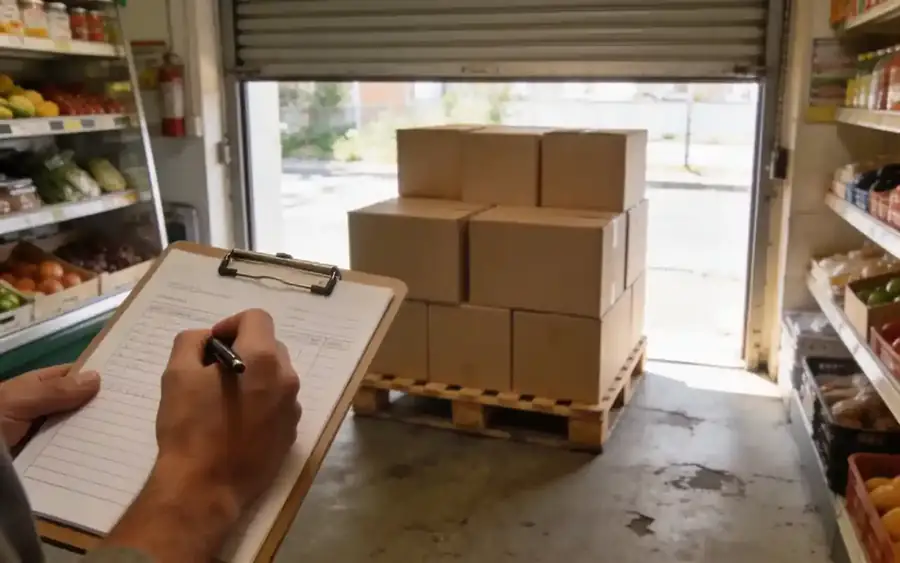
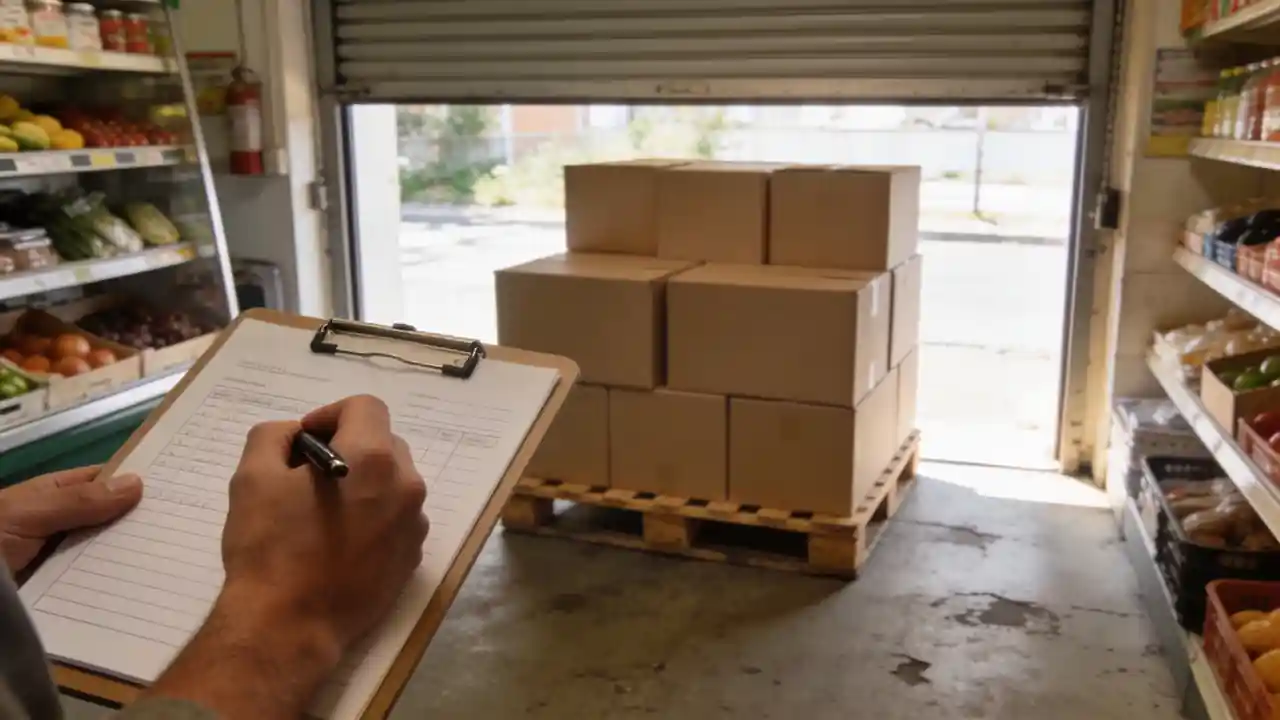
Goods receiving is the few minutes when the shop pays out money without having sold anything. Every other process has a way back: you can change a price, rearrange a shelf, correct next week's order. Receiving doesn't — a signed delivery note means you have acknowledged that you received what is on it.
The shortfall isn't dramatic, either. It isn't a missing pallet, it's two yoghurts, one damaged crate, a line that appears on the paper but wasn't in the van. Individually these are small; together they are exactly the kind of shrinkage that nobody can explain months later.
The four steps of receiving
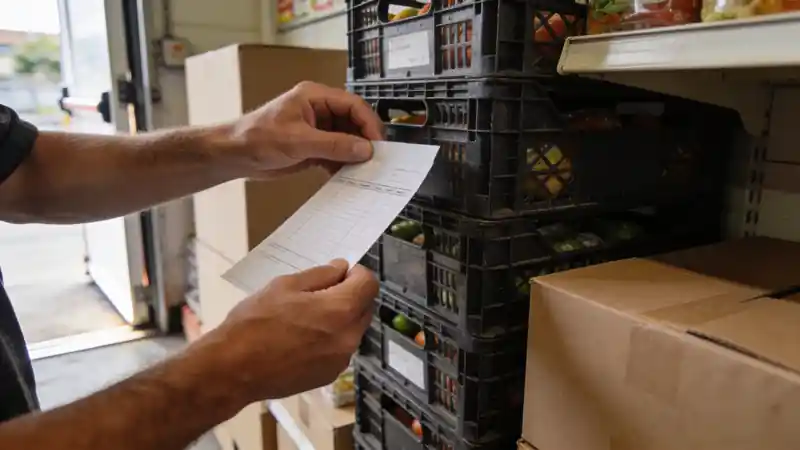
- 11. Quantities against the delivery noteDon't look at what's in the van and count that — read the paper and count against it. The two directions are not the same: starting from the paper, a missing line stands out too, not just what is there.
- 22. Quality and datesDamaged packaging, a broken crate, frozen goods that have thawed — and the date. A short-dated batch isn't a fault, but accepting it should be your decision: you're the one who has to sell it before it expires.
- 33. Price and termsDoes the price on the delivery note match what you agreed, and is the promised discount or credit there? This is the point where a supplier negotiation either takes effect in practice or quietly disappears.
- 44. Discrepancy on the paper, THEN signIf anything is wrong, it goes on the delivery note while the driver is still there, on both copies. A phone call afterwards is a complaint with an uncertain outcome — a line written on the paper is a fact.
Putting it away is part of receiving
Receiving doesn't end with the signature, it ends when the goods are in their place. The time in between is the most dangerous: an unopened box standing in the back room is stock only the person who took it in knows about.
- Chilled and frozen goods go first, ahead of everything else — that isn't organisation, it's the condition of the product.
- Whatever fits on the shelf should go straight out: stock put in the stockroom gets handled twice, and sometimes forgotten.
- What does go to the stockroom goes to its own fixed place, not wherever there happens to be room.
- New batches go behind the old — in the stockroom too. Same rule as on the shelf.
- The date should be visible on the box: if it isn't, write it on with a marker as you put it away.
- Empty packaging goes to its own place immediately, or there'll be nowhere to unload the next delivery.
What the stockroom should look like
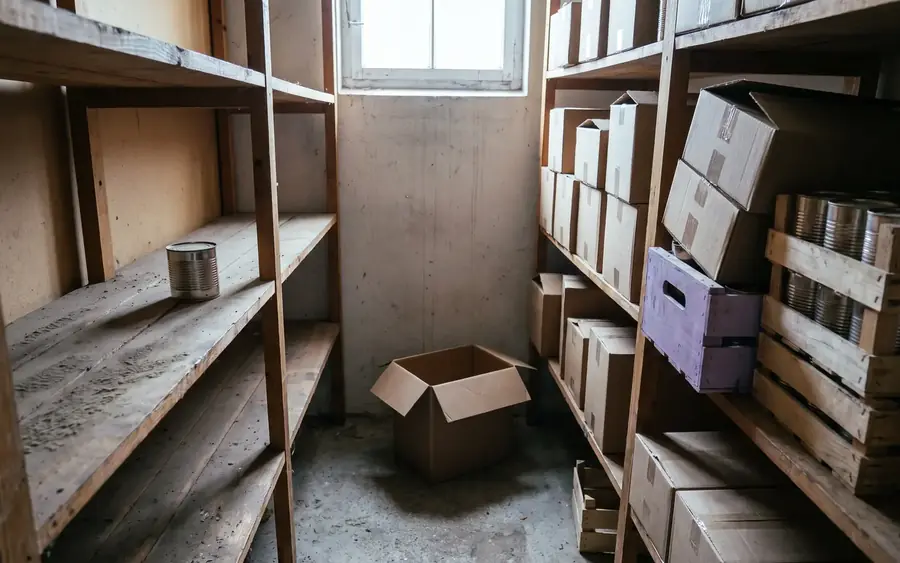
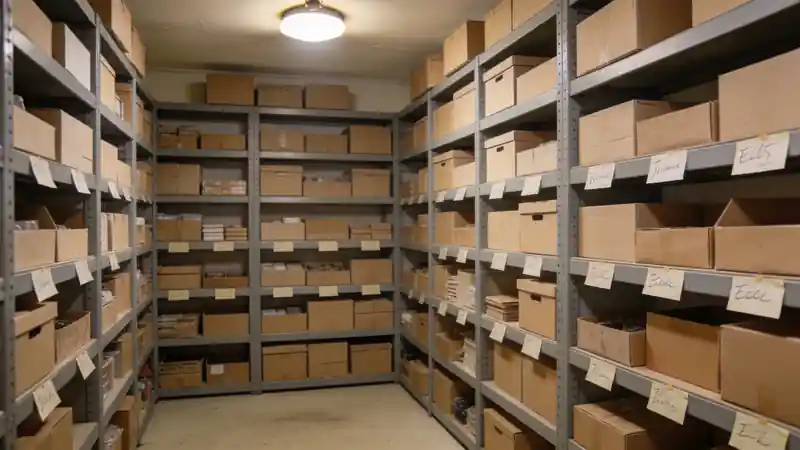
A stockroom isn't storage, it's the shop's buffer. Its order isn't an aesthetic question: it decides whether you can say within thirty seconds if you still have something or need to order it.
| Zone | What belongs here | Why |
|---|---|---|
| The strip by the door | Nothing permanent | Deliveries arrive here — if it's full, receiving jams |
| Eye-level shelf | Fast-moving, frequently fetched lines | These get collected several times a day |
| Bottom shelf | Heavy, large-pack goods | Because of lifting, and because they're needed less often |
| Top shelf | Slow-moving, long-life stock | Hard to reach up here — what's here is rarely checked |
| Chilled storage | Chilled only, nothing else | Mixed storage is why the door stays open |
| Separate, marked place | Damaged goods and returns | So they never end up on the shelf by accident |
Who should take the delivery?
Receiving is the job where having the same person do it matters most. It isn't about trust: someone who takes delivery from the same supplier several times a week sees at a glance when something is off — fewer crates, different packaging, a line missing that is always there.
- Have one main receiver and one deputy — not whoever happens to be free.
- The receiver shouldn't be on the till at the same time. If there's nobody else, let the driver wait two minutes.
- A new colleague should watch it twice before taking a delivery alone.
- Keep a short written list of the four steps where receiving happens — not instead of training, but after it.
- If the receiver finds a discrepancy, they shouldn't need permission to write it on the paper. Make that their call.
- For high-value or repeatedly problematic lines, use two people: one counting, one keeping the paperwork.
What not to do
- Don't sign the paper before you've counted. After signing, the burden of proof moves to you.
- Don't accept a batch you know won't sell before its date. That's where "we'll manage somehow" begins.
- Don't store boxes on the floor. It isn't only hygiene: what you can't walk around, nobody checks.
- Don't have a "miscellaneous" shelf in the stockroom. Whatever goes there, nobody ever finds on purpose again.
- Don't build up weeks of buffer stock of anything perishable. Stock standing in the stockroom is paid-for money that isn't moving.
- Don't leave receiving to someone on their first day — this is a job where routine genuinely counts.
In summary
- Receiving is four steps: quantity, quality and dates, price and terms, then signing — in that order.
- A discrepancy goes on the paper while the driver is there, on both copies.
- Don't take deliveries at peak time; if you must, have someone whose only job that is.
- Receiving ends with putting away — a box standing in the back room isn't stock, it's risk.
- Every product group in the stockroom needs a fixed, labelled place, organised in zones.
- New arrivals go behind the old in the stockroom too, and the date should be visible on the box.
Frequently asked questions
How long should taking a delivery take?
For a usual small-shop delivery, ten to fifteen minutes, if there's a designated person and space in the stockroom. If it regularly takes far longer, there are usually two reasons: either the strip by the door is full so there's nowhere to unload, or the delivery arrives at the wrong time and the receiver is serving customers as well. Both are fixable, but neither fixes itself.
What should I do if I find a discrepancy?
Write it on the delivery note before you sign, and make sure it goes on the driver's copy too. It's worth photographing a damaged item as well. A discrepancy found after signing is a different category both legally and practically: from then on it isn't part of receiving but a later complaint, whose outcome depends on the supplier.
Do I have to accept short-dated stock?
That's your decision, and it's worth making it deliberately, because afterwards the risk is yours. The useful question is whether it will sell before the date at your usual rate of sale. If not, that batch isn't a discount, it's pre-booked waste. In that case either don't accept it, or ask for an allowance — but make the decision at delivery, not two weeks later.
Do I have to count every single item?
In practice most shops count at unit level: crate, case, outer. That's fine as long as the outers are sealed and undamaged. As soon as a pack is open or damaged, it needs checking by the piece — and it's worth paying particular attention to lines where there have been discrepancies before. Full piece counting makes most sense for high-value and small items.
Where should I store damaged goods and returns?
In a separate, marked place, kept apart from normal stock — and in a way that's obvious at a glance. The commonest mistake is that a damaged item is put temporarily at the end of a shelf, and then someone puts it out in good faith. Separating it isn't about mistrust, it's about the decision not depending on who happens to be in.
How much stock should I keep in the stockroom?
As much as you'll definitely need before the next delivery, plus a narrow buffer of the most important lines. Stock standing in the stockroom is money paid out that isn't moving — and it takes the space receiving needs. If the stockroom is regularly full, that's usually not a storage question but an ordering one: you're bringing in bigger quantities than sell.
How does this connect to shrinkage?
Closely: two of the four main causes of shrinkage start here. One is stock paid for but never actually received, the other is damaged goods that nobody ever wrote off. If receiving is sound, you don't have to guess at stocktake — the difference is either in waste, or in own consumption, or genuinely somewhere else, but at least the field has narrowed.
Say the product's name and it's there on the till.
Boltom App takes the work behind the counter off your hands. You find a product by looking at its photo or saying its name out loud — no codes, no scraps of paper. Whatever leaves the shelf or goes in the bin is recorded right there, not in a notebook. It works alongside your existing till, not instead of it.
- A quick code with a photo — or just say the product's name and the till finds it.
- Staff consumption in three taps, recorded under the person's name.
- Daily waste with its reason: expired, broken, unsellable — totalled up in money.
No card needed · 2 minutes