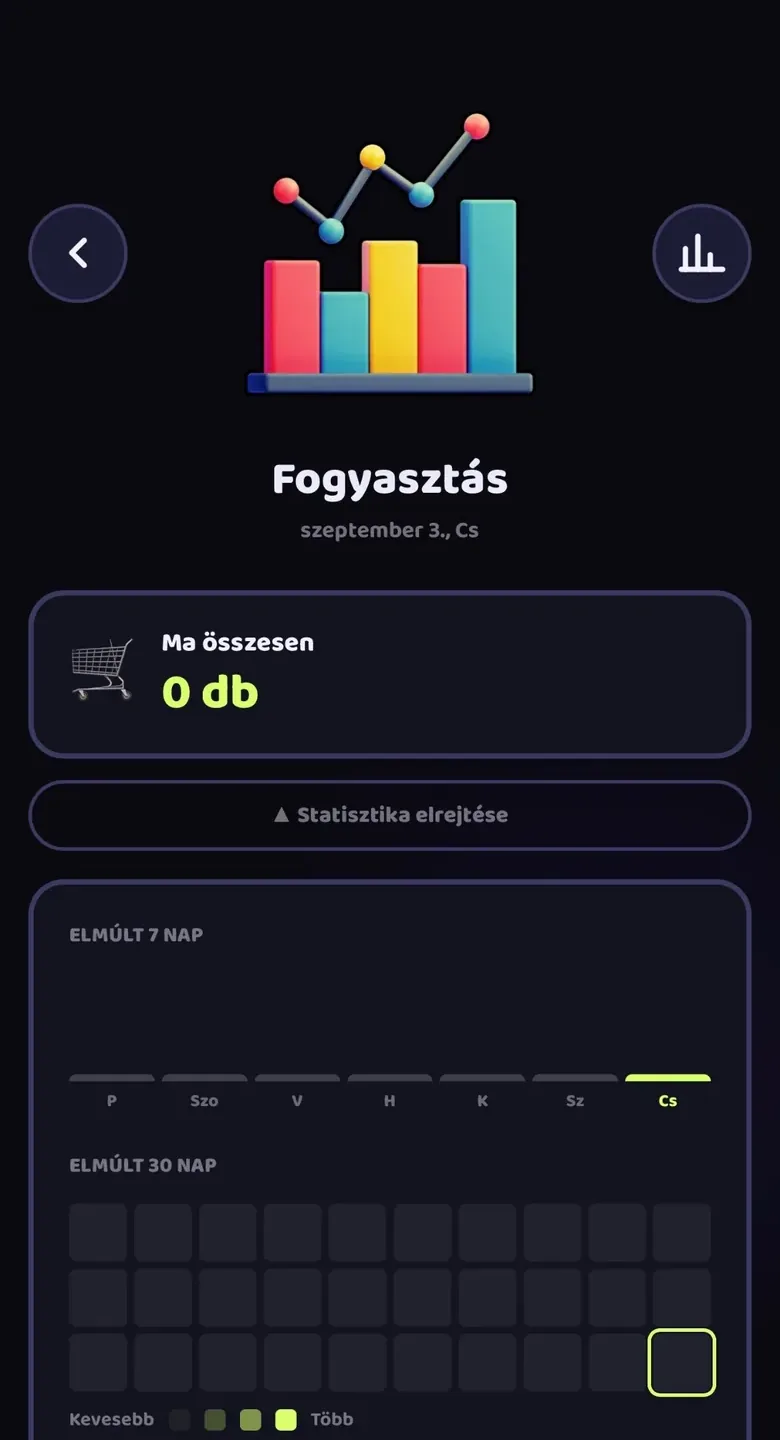
Almost every shop has staff consumption: the afternoon coffee, a sandwich mid-shift, bakery close to its date. That is entirely fine — in many places it is part of the deal. The problem isn't the practice, it's that nothing is recorded. And that gap always resurfaces in the same place: at stocktaking.
Why a shortfall number isn't enough
| What the shortfall contains | What you should do about it |
|---|---|
| Staff consumption — what the team took | Account for it, perhaps set an allowance |
| Waste — expired or damaged | Adjust the ordering quantity |
| Genuine loss | Investigate, change the process |
The result is always the same: the owner either suspects something that never happened, or waves away a real problem because “it's only the coffee”. Neither is good, and the conversation that follows is often worse than the loss itself.
How it works in practice
- 11. ProductScan the barcode or type the quick code — the same search used at the till.
- 22. Who is taking itOne tap from the list of people working in the shop. This is what makes the report usable.
- 33. RecordOne button. The item lands in the daily report and appears as its own line at stocktaking.

Why record it by name?
This sounds like the sensitive part, but it is exactly what makes the system fair. An anonymous entry only tells you that “some amount went internally”, which is barely better than nothing. Attributed entries make clear that what someone took is accounted for — and separate from what is missing. In practice teams accept it for that reason: it takes them out of suspicion rather than putting them under it.
What counts as staff consumption — and what doesn’t?
Most shops never say this out loud, which is exactly why it becomes a source of friction. Everyone means something slightly different by it: one person records only what they actually ate, another includes the bread that was about to expire, a third counts samples given to customers. Without a shared definition, the report can never be compared with itself.
| Situation | Where it belongs |
|---|---|
| A cashier drinks a coffee during the shift | Staff consumption |
| Leftover bakery taken home at closing | Staff consumption — worth flagging separately |
| Expired yoghurt left in the fridge | Waste |
| Broken bottle, dropped stock | Waste |
| A sample given to a customer | Marketing or waste — but keep it out of personal consumption |
| Stock that vanished with no record | Real loss — this is the one you want to find |
How to introduce it without it feeling like surveillance
This part decides whether it will work at all. If the team experiences it as monitoring, one of two things happens: either nothing gets recorded, or it gets recorded and the atmosphere sours. Both are worse than where you started.
- 11. Say out loud that it’s allowedThe first sentence shouldn’t be about recording. It should be that consumption is fine. Recording only follows from wanting a clean year-end.
- 22. Start with yourselfIn week one the owner records their own, visibly. That is what makes it accounting rather than inspection.
- 33. Don’t ask for anything retroactivelyWhat happened, happened. The system starts today; reconstructing the past only creates tension.
- 44. Draw no conclusions in month oneThe first four weeks are always distorted because recording isn’t routine yet. Month two is when the data starts to mean something.

Common mistakes
- Recording without a name. “Two coffees went” gets you no closer to anything.
- Catching up from memory at the end of the week. Nobody can reconstruct it; the number becomes invented.
- A separate notebook or spreadsheet. Unless it lives where the other stock movements live, it won’t reconcile at stocktake.
- Mixing waste and staff consumption. This is the most common one — and it destroys the exact distinction you set out to make.
- Too many fields. Ask for a note, a reason and a quantity, and in two weeks nobody will fill it in.
In summary
Recording staff consumption isn’t about checking up on the team — it’s about making the stock shortfall interpretable at all. Agree what counts, keep the recording under three taps, and always attach a name. Introduce it as accounting, not as a rule, and you won’t have to repair the mood afterwards.
Frequently asked questions
Isn't it insulting to staff?
In practice it works the other way round. What is accounted for cannot become an argument at year end. Introduce it as accounting, and not alongside a tightening of rules.
How long does one entry take?
Three taps, a few seconds. Anything slower and nobody would do it behind the counter.
What's the difference between staff consumption and waste?
Staff consumption is what the team takes or eats; waste is what expired or became unsellable. Both explain a shortfall, but they lead to different decisions.
Does it need separate equipment?
No — the same phone or tablet the till runs on, and any employee can record in their own name.
Say the product's name and it's there on the till.
Boltom App takes the work behind the counter off your hands. You find a product by looking at its photo or saying its name out loud — no codes, no scraps of paper. Whatever leaves the shelf or goes in the bin is recorded right there, not in a notebook. It works alongside your existing till, not instead of it.
- A quick code with a photo — or just say the product's name and the till finds it.
- Staff consumption in three taps, recorded under the person's name.
- Daily waste with its reason: expired, broken, unsellable — totalled up in money.
No card needed · 2 minutes