Why price rises slip
The cost price goes up on a delivery note, from one day to the next. The shelf price only moves when somebody sits down, goes through the list, prints the labels and swaps them over. The time in between is pure loss — not foregone profit, but money you have already paid the supplier and haven't asked the customer for.
And the delay feeds itself. The longer you wait, the bigger the step you need and the more unpleasant it is to take. Someone who hasn't touched their prices for six months faces a rise the customer definitely notices — while the same thing in two or three smaller steps would have been almost invisible. Putting it off doesn't spare the customer; it postpones and magnifies the news for them.
The customer doesn't know every price
This is the key to the whole subject, and most bad decisions come from not separating the two groups. There are a few products whose price a regular knows exactly, because they buy it weekly and see it elsewhere too. And there are several hundred where they have no idea whether it costs a little more than last year.
| Product group | How well the customer knows the price | What to do |
|---|---|---|
| Bread, milk, eggs | Exactly — they buy it weekly | The smallest necessary step, less often |
| Cigarettes, spirits | Often to the penny, and they compare elsewhere | Where the price is fixed or listed, there's nothing to weigh up |
| Soft drinks, coffee, beer | Roughly, partly from promotions | Go to a round number, avoid odd endings |
| Cleaning products, paper goods | Barely — they buy it rarely | This is where the margin can be restored |
| Sweets, snacks | Almost not at all | Rounding fits comfortably |
| Local and one-off lines | Nothing to compare it with | The price is about quality, not competition |
How to do it
- 11. Find where the margin slippedDon't go through the whole list. Start with the lines whose cost price went up in recent weeks — that's where the real shortfall is. The margin is the difference between cost and selling price measured against the selling price; if that number has fallen, the missing part is lost again with every sale.
- 22. Separate out the known-price productsWrite down the five or ten products you know your regulars have memorised. You decide on those separately. Everything else is one group: there, rounding and restoring the margin is effectively invisible.
- 33. On the known ones, make the smallest necessary stepHere the aim isn't to recover it all, it's not to lose on it. It's fine for the margin on these to stay narrower: they bring the customer in, and the rest of the basket pays the difference. Just make that a deliberate decision rather than an accident.
- 44. Round the rest up to a sensible priceOn the less familiar lines the simplest method is rounding up to the next round figure. That restores the margin and speeds up both the till and the change. Odd, many-decimal prices do nothing for a small shop.
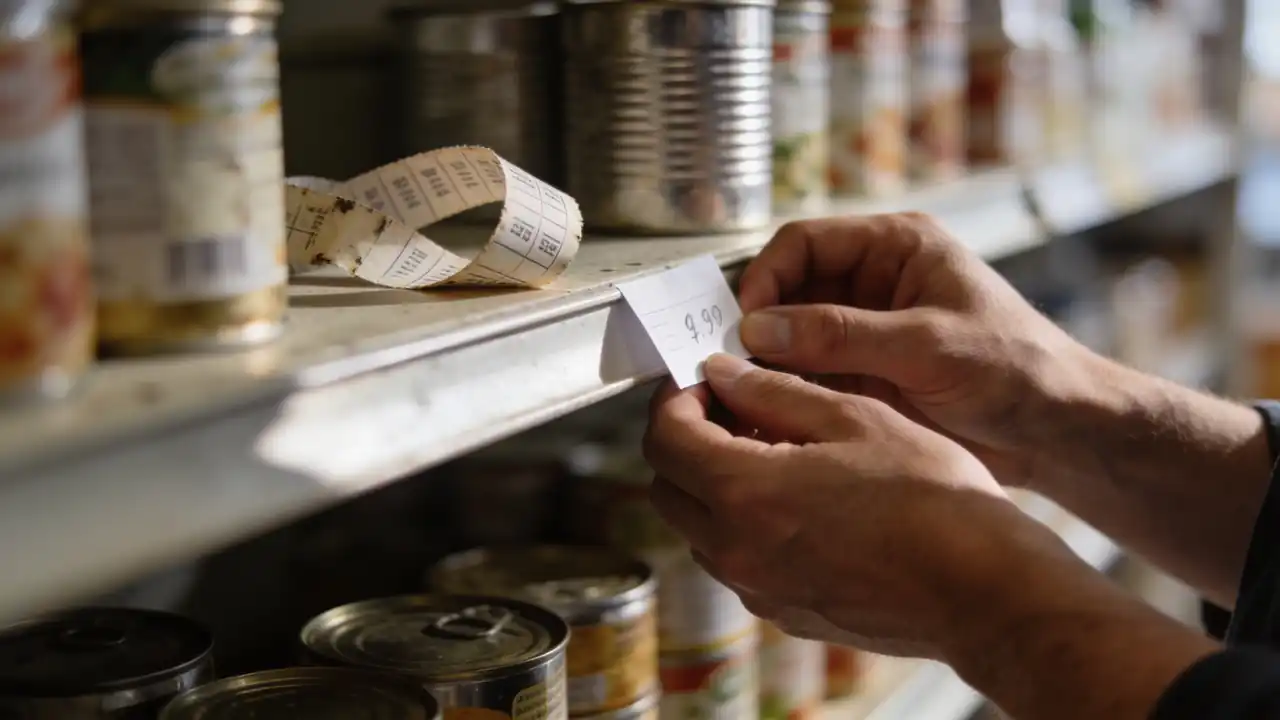
- 55. Change the labels within one dayA re-pricing is good when it goes through within a day: by evening the shelf ticket, the till and the displayed price all say the same thing. A rise that dribbles on for weeks comes up at the counter every single day, and there will certainly be a product where the label and the till disagree.
- 66. Leave it two weeks, then lookThe first few days' takings tell you nothing. After two weeks compare matching weekdays before and after: does it still sell the same. If one product has fallen off noticeably, handle that one on its own — you don't have to undo the whole re-pricing.
What to say to the customer, and what not to
Sooner or later it gets said at the counter: "that was cheaper last time". It's worth being ready for that sentence, because the answer isn't really about the price — it's about whether you take the customer seriously.
- Acknowledge it, don't explain it away. "Yes, we put it up" is one sentence, and there's no argument after it.
- Don't cite a reason you can't back up. A vague explanation invites suspicion; a short fact doesn't.
- Don't say "everything's gone up everywhere". The customer either knows that or doesn't believe it — both are bad answers.
- Don't promise it will come back down if you don't know. A broken promise costs more than the rise itself.
- What you can do instead: offer an alternative. If there's a cheaper size or another brand, show it.
- A regular deserves a word in advance on the one product that matters most to them. Not a discount: courtesy, and it counts for a lot.
What never to do
- Don't raise everything at once by the same percentage. That looks fair in a spreadsheet, but on the shelf it shows up precisely on the known-price products.
- Don't raise prices in a way that leaves the till and the label disagreeing for two weeks. That isn't a price rise, it's a loss of trust.
- Don't shrink the pack instead of the price without saying so. The customer notices eventually, and after that doubts every other price too.
- Don't raise a price during a promotion or right after one. It looks like the promotion is being taken back, which it isn't.
- Don't put it off for six months. What comes out of the delay isn't mercy, it's one big step the customer does notice.
- Don't raise the price of something people barely buy already. There the price isn't the problem — drop the line, or order less of it.
In summary
- Delay costs real money: the cost price has already risen and the shelf price hasn't.
- Five to ten prices the customer knows by heart — decide those separately, with the smallest necessary step.
- On the rest, rounding up restores the margin and speeds up the till.
- The re-pricing should go through within one day: label, till and displayed price all agree by the evening.
- After two weeks compare matching weekdays — that shows you whether you got it right.
- At the counter the short, honest sentence works; explaining it away and unkeepable promises don't.
Frequently asked questions
By how much should I raise it?
There is no single right percentage, because the question isn't the size of the rise but whether your margin returns to the level the shop can operate on. Work out per product how much is missing, and raise by that. If that would be conspicuous on a known-price product, take a smaller step there deliberately, and make up the difference on the less familiar lines.
How do I know whose price the customer knows?
Two signs. One is that the same person buys it weekly — bread, milk, eggs and coffee are like that. The other is that they meet it elsewhere: if a product is in every shop, they have something to compare it with. Anything that sells rarely, or is only available from you, they probably have no reference point for.
Rarely and by a lot, or often and by a little?
More often and by less — but not weekly. The right rhythm is that when cost prices move, you follow within a few weeks. That way every step stays small and there is never a moment when the customer faces one big change. Weekly fiddling is just as bad, though: it makes the shop look unpredictable.
What if sales drop after the rise?
First check that it really is the rise. Compare matching weekdays from the two weeks before and after, and look at what else happened around the shop — weather, school holidays, a competitor's promotion. If one or two specific products fell off, handle those separately; you don't undo an entire re-pricing over one line.
Can I take a price rise back?
You can, but it's rarely worth it, and never quietly. If one product turns out to have lost its sales, put it back — but then say so at the counter to whoever raised it. Frequent up-and-down pricing is worse than a higher price: it tells the customer the shop has no system.
What do I do with the old labels?
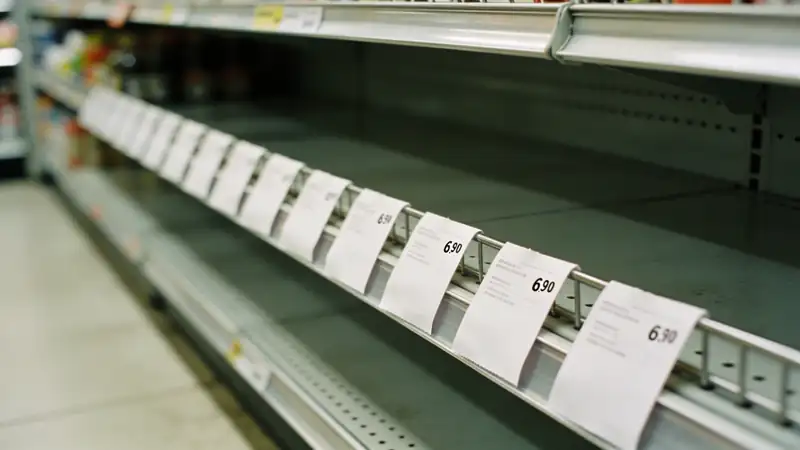
On the day of the re-pricing they all come off, and the old ones leave the shelf immediately. The commonest mistake is two tickets left side by side, or the old one still underneath the new — at which point the customer is quite right to point at the displayed price. The re-pricing is finished when the last old label is in the bin.
Should I raise the promotional price too?
A promotion isn't pricing, it's a separate decision with an end date. Raising the price during it effectively cancels the promotion — better to wait for it to finish and re-price the normal price after. If a promotional price has become loss-making because the cost went up, that promotion is worth ending rather than fine-tuning.
Say the product's name and it's there on the till.
Boltom App takes the work behind the counter off your hands. You find a product by looking at its photo or saying its name out loud — no codes, no scraps of paper. Whatever leaves the shelf or goes in the bin is recorded right there, not in a notebook. It works alongside your existing till, not instead of it.
- A quick code with a photo — or just say the product's name and the till finds it.
- Staff consumption in three taps, recorded under the person's name.
- Daily waste with its reason: expired, broken, unsellable — totalled up in money.
No card needed · 2 minutes