More and more countries run a deposit return scheme for drinks containers, and where there isn't one yet, many are about to launch. From the customer's side it's simple: they pay a little more for a drink in a bottle or can, and when they bring the empty container back, they get the difference back. From the shop's side, though, it's a new flow of money, a new backroom task and a new rule at the counter — all at once.
The most common problem isn't where the sacks go, but the bookkeeping logic. Anyone who records the deposit together with the product price as a single amount will find, a few weeks later, that turnover has gone up, margin has dropped or jumped about oddly, and the till doesn't balance because of refunds. Yet the shop makes not a single unit of profit on the deposit — it just flows through.
This article goes through, in a country-neutral way, what's worth getting right: how to handle the deposit at the till, what to accept and what not to, where and how to store returned containers, how it affects your cash flow, what to do with it at shift close — and how to measure whether it brings extra purchases. A checklist at the end helps with launch week.

What a deposit is, and why it isn't income
A deposit is a fixed amount the customer pays on top of the product price for a drinks container covered by the scheme, and gets back when the container is returned. It isn't a price, a tax or a margin: it's a kind of security that encourages the customer not to throw the container away but to bring it back. The money circulates within the scheme the whole time and stays with no one as profit.
The exact route differs from scheme to scheme, but in many places it looks roughly like this: the producer or importer pays the deposit into the scheme, the supplier charges it to you on your invoice, you collect it from the customer at the counter, you refund it to them on return, and the operator reimburses you for what you paid out. At every step the same amount moves on — which is why we call it a pass-through item.
| Step | Who pays | To whom | Does it affect the shop's result |
|---|---|---|---|
| Purchase | The shop | The supplier, as a separate line on the invoice | No — it's a deposit, not the cost of the goods |
| Sale | The customer | The shop, on top of the product price | No — the shop only collects it |
| Return | The shop | The customer, in cash or as a voucher | No — the shop only refunds it |
| Settlement | The scheme operator | The shop, for the containers taken back | No — the shop gets back what it paid out |
| Handling fee, if any | The scheme operator | The shop, for the work of taking returns | Yes — this is the only item that is real income |
In practice the numbers at the shop can drift, of course: you sell more bottles than come back, or the other way round, because a customer bought the drink elsewhere and returns it to you. That still doesn't make the deposit income — you just hold more or less of it for a while. That's why it needs tracking separately, and why it must never be mixed with product turnover.
At the till: a separate line, not part of the price
The golden rule is simple: the deposit should always appear at the till as a separate line, not built into the product's selling price. If a drink costs 9 units and the deposit is 1 unit, the customer pays 10 units, but the receipt and your records should show two lines: the drink at 9 units and the deposit at 1 unit. Many schemes explicitly require this, because the customer needs to see how much they'll get back.
A round example shows why this matters so much. Say you buy the drink for 6 units, sell it for 9, and the deposit is 1 unit. Recorded correctly, as a separate line, turnover is 9 and the margin is 3 — a third of the selling price. But record it as a single item of 10 units and turnover is 10, the margin on paper is 4, and your shop looks better than it is. If you also add the deposit charged by the supplier to the purchase price, the margin stays at 3 but is only 30 per cent of turnover — the same product, three different numbers.
- Set up a separate item for the deposit on your till — if there are several amounts (for example for glass and for cans), a separate item for each.
- If your till allows it, link the deposit to the product so it's added automatically at the sale. If not, teach the cashier to add it by hand for every drink in the scheme.
- The tax treatment of the deposit often differs from that of the product. Which tax category it falls into for you is something your accountant or the scheme operator will tell you — settle this before launch.
- Don't deduct the amount paid out on returns from product turnover as a negative sale either. It belongs to the deposit item, not to the drink.
- If you also keep a record-keeping app or spreadsheet alongside the till, give the deposit its own category there too, with a purchase price equal to the deposit, so the report doesn't count it as profit.
- In the first week, check the daily summary every evening: if the number of deposit lines roughly follows the number of drinks sold, the team is ringing it up correctly.
If returns work with vouchers — for example the machine or the cashier issues a slip that the customer redeems against a purchase at the till — redeeming the voucher isn't a discount or free goods either. It's the customer's money, paid back from the deposit item. Keep the vouchers until the end of the day, because at shift close and at settlement they are your evidence.
Do you have to take returns — and if so, how
The first question a small shop asks: do I actually have to take returns? The answer differs by country. In some places every shop that sells drinks covered by the scheme must take them back; in others only above a certain floor area or turnover; in some, small shops can ask for an exemption if there's another return point nearby; and in others participation is voluntary but encouraged with a handling fee. The local rules and the scheme operator decide this, not the shopkeeper's gut feeling.
- Is taking returns mandatory for me, and if so, from what threshold (floor area, turnover, product range)?
- Do I only have to take back the container types I sell myself, or everything in the scheme?
- Can I limit the quantity taken back at once, or restrict returns to part of my opening hours?
- Is there a handling fee or compensation for containers taken back, and is it calculated per item, by weight or per sack?
- Who supplies the collection sacks, crates and labels, and who collects them, how often?
- How often, and on the basis of what documents, does the operator settle with me, and how do I report a discrepancy?
- Do I need to sign a contract or register, and is there a deadline before launch?
Manual returns or a machine
If you take returns, you can choose between two basic models: by hand, at the counter, or with a reverse vending machine. With manual returns, the cashier checks, counts and bags the containers, then pays out the deposit. The machine does this by itself: it recognises the mark, compacts or collects the container, and prints a voucher. There's a middle way too: in some schemes the shop collects uncounted containers in sealed sacks, and counting happens at a central site.
| Aspect | Manual returns at the counter | Reverse vending machine |
|---|---|---|
| Investment | Almost none — sacks, crates, a bit of space | Significant; purchase, lease or a device provided by the scheme |
| Space | A corner behind the counter and in the backroom | One or two square metres of shop floor, plus a collection area behind |
| Staff time | Every return takes the cashier's time | The cashier only redeems the voucher |
| Queues | A big sack of bottles holds up the queue | Returns don't happen at the till |
| Accuracy | Counting and recognition errors are possible | The machine counts and checks the mark |
| Hygiene | Sticky containers end up near the counter | Containers stay in the machine and the space behind it |
| Handling fee | Paid in many schemes, typically lower | Paid in many schemes, often higher because it compacts and counts |
| When it pays off | Low daily volume, small floor area | High volume, many returners, a tight counter |
Before deciding, it's worth measuring for a few weeks: how many containers come back each day, at what time of day, and how long one return takes at the counter. If at peak times a queue regularly forms because of a sack of bottles, that's lost time for every other customer in the queue too. But if a few dozen containers come back a day, a machine will hardly pay for its price and its space.

Cash flow: money tied up and settlement
Although the deposit isn't income, it certainly moves money, and in a small shop that can be felt. The supplier charges the deposit on the invoice, which you pay by the due date; the customer pays it to you when buying the drink; but you pay the returning customer immediately, and the operator only reimburses you at settlement. If many bottles come back that weren't bought from you, money leaves your till before it comes back.
Usually the amounts aren't large, but the effect shows up on the worst day of the month: exactly when supplier invoices fall due as well. A small shop that already runs tight can, after a long holiday week, have a noticeable sum out in refunded deposits until the settlement arrives. There's no need to fear it, but you do need to plan for it.
- Know exactly how often the operator settles with you — weekly, fortnightly or monthly — and how many days it takes for the money to arrive.
- Record the number of containers taken back and the amount paid out each day, so you have something to compare against at settlement.
- Always reconcile the operator's settlement with your own records. If sacks are counted elsewhere, this is the only way to spot a difference.
- Keep enough change in the till for refunds, especially on Mondays and after holidays, when the most bottles come back.
- Deposits should be on a separate line on supplier invoices. If they aren't, ask for it, or you won't be able to separate them from the price of the goods.
- The handling fee — if there is one — is real income. Track it separately, because it shows what the work of taking returns is worth to you.
Backroom, hygiene and counting
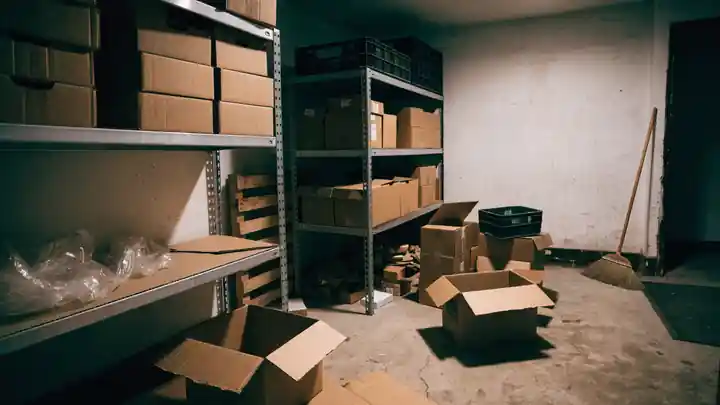
Returned containers aren't stock, but they take up space, and if you don't handle them properly they bring smells, flies and mess. In a small shop's backroom every square metre counts, so it's worth deciding before launch where the sacks and crates will go and how they get from there to collection. The goal is that returned containers never mix with goods for sale.
- Set aside a separate, clearly divided area for returned containers, away from food and fresh goods.
- Use the sacks or crates the operator prescribes, and keep to any sorting by type (for example glass, plastic and metal separately).
- Seal and mark every sack or crate as the scheme requires — in many places it needs a unique label or ID, and that's what your settlement is based on.
- If you count by hand, write on every sealed sack, or on a list kept beside it, how many containers are inside. It's your only evidence if there's a discrepancy.
- Sticky drink residue attracts insects: clean the collection area regularly, and in warm weather ask for more frequent collection.
- Never store sacks in front of the emergency exit or in a walkway, not even temporarily — in the backroom this is the biggest temptation.
- Keep the collection sack behind the counter small, and take it to the back at the end of every shift. The counter isn't a storeroom.
What to accept at the counter — and what not to
The most important rule at the counter: only take back what the operator will also pay you for. Containers in the scheme are typically identified by a distinctive mark and the barcode. If the cashier pays a deposit on an item the operator won't accept, your shop has paid it out of its own pocket — and nobody will reimburse it.
| Case | Accept it? | What to tell the customer |
|---|---|---|
| An intact, marked bottle or can with a readable barcode | Yes | Nothing — this is the normal case |
| A container without the mark, or made before the scheme started | No | No deposit was paid on it, so it can't be returned — it belongs in the recycling bin |
| From another country, with that country's mark | Usually not | The deposit was paid in that scheme, and it can be returned there |
| Crushed, cut up, or with an unreadable barcode | Usually not | Damaged like this it can't be recognised, so we can't take it back |
| Containing liquid or foreign matter | Yes once emptied, if the rules allow | Please pour it out, or bring it back empty |
| A product type outside the scheme (for example a bottle with no deposit on it) | No | There's no deposit on this, so we can't refund it |
| More than the permitted quantity at once, if there's a limit | Up to the limit | You can bring the rest tomorrow or to a larger return point |
The best way to avoid arguments is a small picture sign at the counter or the collection point, showing what the scheme's mark looks like and what you can't take back. That way the cashier doesn't have to explain — just point. If a customer insists and the cashier is unsure, it's better not to take that item back, and to ask them to come back when the manager is in.
Shift close: deposits paid out
Returns also affect the till behind the counter: if you refund deposits in cash, money leaves the drawer without any sale taking place. If nobody records this separately at shift close, the shift closes short and you end up suspecting the cashier of something that was actually fine. Deposits paid out need a trail just as much as takings do.
- 11. Record every returnWith manual returns, the cashier should record the number of containers taken back and the amount paid out, on the till or on a list under the counter. With a machine, the redeemed vouchers are what count — put them in a separate envelope, don't throw them away.
- 22. Total it separately at closeAt shift close, the cashier should first total the deposits paid out: the amount on the list, or the value of the redeemed vouchers. This should be a separate line on the closing sheet, not something deducted from the cash in their head.
- 33. Reconcile with the tillExpected cash is the opening float, plus cash sales, minus deposits refunded in cash. If a difference remains after that, it's a real discrepancy — but at least it isn't caused by returns.
- 44. Reconcile with the backroomThe count on the list should roughly match the number of containers that went into the sacks. There's no need to recount the sack every evening, but a spot check once a week is worthwhile.
- 55. Compare with the settlement weeklyThe daily lists add up to how much deposit you paid out. Compare this with what the operator settles with you. If you're regularly reimbursed less than you paid out, either the counting or the acceptance rules are slipping.
A footfall driver: people who return also buy
Returns aren't only a burden. Someone who brings back a sack of bottles has the money or voucher in hand, and there's a good chance they'll spend it in your shop that same day. A well-run return point can also bring in customers who used to shop elsewhere — especially if there are few return points nearby, or there's always a queue at the machine in larger stores.
Whether that's really true for you isn't something to decide on instinct. Measure it. If the deposit is a separate line at the till and you keep your categories in order, after a few weeks you'll see what happens during and after returns.
- Look at which hours of the day bring the most returns, and how turnover in other categories behaves at those times.
- Compare the four weeks before launch with the four after: has the number of purchases grown, has the average basket changed?
- If returns work with vouchers, see what share of vouchers are redeemed as part of a purchase, and what share are only cashed out.
- Look at drinks sales by product too: if returners regularly buy the same thing again, it deserves a better spot in the fridge.
- Ask the cashier as well: they can see who comes in only to return and who buys something too.
„The deposit isn't yours, but the counter it flows across is. Keep order there and the money moves on in order too.”
Common mistakes
| Mistake | What happens | How to avoid it |
|---|---|---|
| Deposit built into the product price | Turnover is inflated, margin is distorted, and the report doesn't show how many drinks really sell | A separate till line for every deposit amount |
| Returns recorded as negative sales | Product turnover starts jumping about, and on some days even goes negative | Deposits paid out belong to the deposit item, not the drink |
| Taking back unmarked or damaged items | You pay out the deposit, but the operator won't reimburse it | A clear acceptance rule and a picture sign at the counter |
| Deposits paid out aren't recorded | The shift closes short and you suspect the cashier | A separate line on the closing sheet, and vouchers kept |
| Settlement isn't reconciled | For months nobody notices you're reimbursed less than you paid out | Compare the daily lists with the operator's settlement every week |
| Sacks in the walkway or next to the stock | Smells, insects, mess, and awkward questions at an inspection | A separate collection area, regular cleaning and collection |
Checklist for launch week
- You know whether taking returns is mandatory for you, for which containers, and whether there's a quantity limit. If a contract or registration is needed, it's done.
- The till has a separate item for the deposit, for every amount, and you've checked with a test sale that it appears as a separate line.
- You've agreed with your accountant which tax category the deposit falls into, and how the settlement is booked.
- Deposits appear as a separate line on supplier invoices.
- You've set aside the collection area in the backroom, you have the sacks or crates and labels, and you know when collection happens.
- Cashiers know the acceptance rules, and the picture sign showing the mark is at the counter.
- There's a list under the counter or a till item for returned containers, and an envelope for vouchers.
- The closing sheet has a separate line for deposits paid out.
- There's enough change in the till for refunds, especially for the days after the weekend.
- You've noted turnover for the four weeks before launch, so you have something to compare with.
Summary
- The deposit is money passing through: you collect it, you refund it, and the operator settles with you. The only real income is the handling fee, if there is one.
- At the till it's always a separate line, never part of the product price — otherwise turnover and margin are both distorted.
- Whether you must take returns, and on what terms, differs by country; ask the operator and your accountant.
- Manual returns or a machine: daily volume and how busy the counter is decide.
- Only take back marked, intact containers that belong to the scheme, and store them separately and cleanly.
- Record deposits paid out separately at shift close, and reconcile weekly with the settlement.
- Measure whether returners bring turnover — don't assume it.
Frequently asked questions
Is the deposit income for the shop?
No. The deposit is a pass-through item: you collect it from the customer, refund it on return, and the amounts paid to the supplier and refunded to the customer are settled with you by the scheme operator. At no step does it stay with you as profit. The only real income is the handling fee for taking returns, if your scheme has one. Your accountant will tell you exactly how to book it.
Why should the deposit be a separate line at the till?
Because if you build it into the product price, your turnover is inflated and your margin distorted — the report shows income that isn't yours. As a separate line, you can see exactly how many drinks sell and how much deposit passed through the till. Many schemes also require the customer to see the deposit separately on the receipt. On top of that, its tax treatment often differs from the product's, so without a separate line your tax return wouldn't add up either.
Does a small shop have to take back bottles?
That differs by country. In some places every shop selling drinks covered by the scheme must; in others only above a certain floor area or turnover; and in others participation is voluntary. In some places a small shop can ask for an exemption if there's another return point nearby. Ask the scheme operator or the local authority for the exact rule, before launch.
Is a reverse vending machine worth it for a small shop?
It depends on how many containers come back each day, how much space you have, and what cashier time costs. At low volumes manual returns are cheaper and a corner is enough. But if queues regularly form at peak times because of returns, a machine frees up the counter, and in many schemes it earns a higher handling fee too. Before deciding, measure for a few weeks: volume, time of day, and how long one return takes.
What is a handling fee, and am I entitled to one?
In many deposit return schemes the shop taking returns is paid a fee for the work — it covers staff time, space and handling. The amount and how it's calculated differ by scheme: it may be per item, by weight, or vary with the return method. In some schemes containers taken back by machine earn more, because the machine counts and compacts. Whether you're entitled to one, and how much, is something the scheme operator will tell you.
How does the deposit affect the shop's cash flow?
It ties up money for a while. You pay the deposit to the supplier on the invoice, refund it immediately to the returning customer, and only get it back from the operator at settlement. If many bottles come back that weren't bought from you, money leaves the till before it comes back. The sums are rarely large, but it's worth knowing how often settlement happens and how many days it takes to arrive.
What should I do with bottles brought from another country?
Usually you can't take them back. The deposit was paid in the country where the product was bought, and that country's scheme owes it, not yours. If you pay it out anyway, the operator will most likely not reimburse you, and the loss falls on your shop. Tell the customer kindly that the bottle can be returned in the scheme where they bought it.
Can I take back a damaged or crushed can?
That depends on the scheme's rules, but typically not if the mark or barcode can't be recognised. A machine won't accept it either, and with manual returns the operator may reject it later during counting. If you're unsure, it's better not to take it back, and to show the customer the sign at the counter. A rejected can is a smaller problem than a sack that isn't reimbursed.
How should I handle deposits paid out at shift close?
On a separate line. During the shift every return should be recorded — on the till, on a list under the counter, or with a machine, in the redeemed vouchers. At close, total it and deduct it from the expected cash before you calculate the discrepancy. That way, if a shortfall remains, it's a real shortfall, not caused by returns. Every week, compare the daily totals with the operator's settlement.
Where should I store returned bottles?
In a separate, clearly divided area, away from food and fresh goods. Use the sacks or crates the operator prescribes, and seal and mark them as the scheme requires. Clean the collection area regularly, because drink residue attracts insects, and in warm weather ask for more frequent collection. Never put them in front of the emergency exit or in a walkway, not even temporarily.
Do returns really bring in trade?
Many shops find they do, because someone who brings back bottles has the money or voucher in hand and often spends it on the spot. But it varies from shop to shop, so measure it. Compare the four weeks before and after launch: the number of purchases, the average basket, and how turnover in other categories moves while returns are happening. If the deposit is a separate line, you can read this off in a few minutes.
What if the operator reimburses less than I paid out?
First compare your own daily records with the settlement, to see how big the difference is and how long it's been going on. If sacks are counted elsewhere, ask for the count per sack and compare it with your own list. The most common cause is that items the operator doesn't accept are being taken back at the counter. If your rules are in order and the difference persists, report it to the operator in writing, in the way the scheme prescribes.
Say the product's name and it's there on the till.
Boltom App takes the work behind the counter off your hands. You find a product by looking at its photo or saying its name out loud — no codes, no scraps of paper. Whatever leaves the shelf or goes in the bin is recorded right there, not in a notebook. It works alongside your existing till, not instead of it.
- A quick code with a photo — or just say the product's name and the till finds it.
- Staff consumption in three taps, recorded under the person's name.
- Daily waste with its reason: expired, broken, unsellable — totalled up in money.
No card needed · 2 minutes