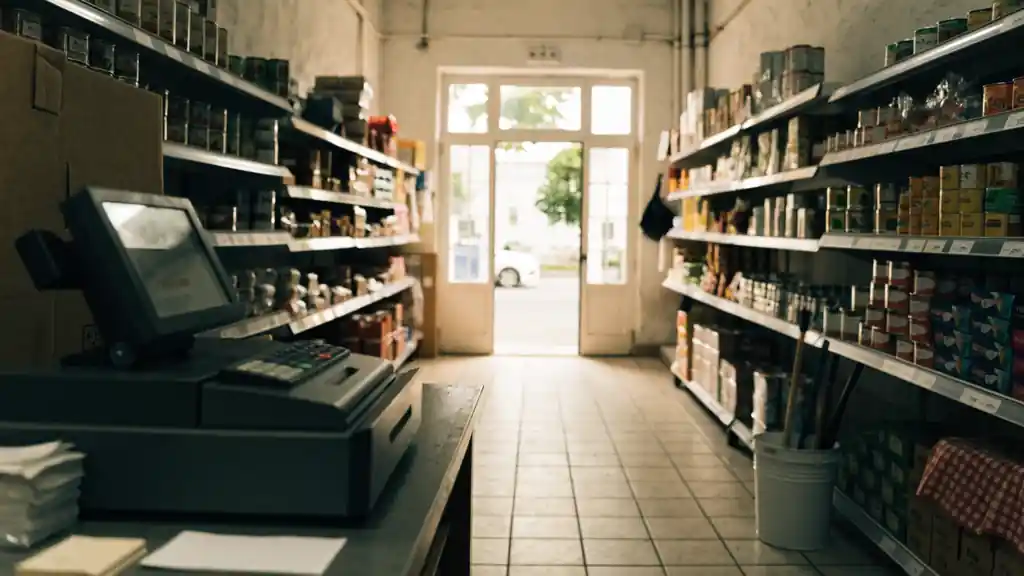
The subject of theft usually starts emotionally: somebody is caught, or an empty gap on the shelf is noticed, and from then on everyone is watching everyone. That is understandable, but it leads in the wrong direction. Shop loss isn't an event but a continuous leak — and in most small shops its main source isn't what the shopkeeper assumes.
So this article has two halves. The first is about measuring: how to separate out how much is waste, how much is staff consumption, how much is a delivery error, and how much is left as a real shortfall. The second is about what can be done from behind the counter if that real shortfall does turn out to be significant — through layout, habits and a few tools.
One thing is worth saying up front: the aim isn't that nobody should be able to steal. That cannot be achieved, and in trying, the shop becomes an unpleasant place. The aim is that stealing should be harder and riskier than it is worth — while the customer doesn't feel like a suspect.
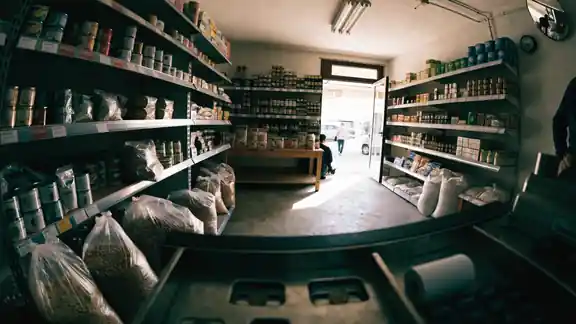
Measure first: how much theft is there really?
Stock loss is a single figure that blends several completely different things. Until they are separated, there is no way to know what should be improved — and there is a good chance you are tackling whichever one is smallest.
| Source | What causes it? | How does it show? | What can be done? |
|---|---|---|---|
| Waste, spoilage, breakage | Dates, a chiller failure, damaged packaging | Daily waste recording with a reason | Order quantities and first-in-first-out order |
| Staff consumption | Staff take something and don't write it down | Recording by name, on the spot | Simple recording, three taps |
| Short delivery | Not everything invoiced actually arrived | Item-by-item checking against the note | A receiving routine, counting before signing |
| Mis-keyed sales at the till | The wrong quick code, a missed item | Per-product discrepancies in the report | Photo quick codes, training |
| Customer theft | Goods taken without payment | Whatever is still missing after the above | Layout, greeting, tools |
| Internal theft | Staff, till manipulation | Discrepancy by shift, a pattern | Frequent shift closing, by name |
So the practical order is: record waste and staff consumption with a reason and a name, introduce item-by-item receiving, look at per-product discrepancies in the report — and treat whatever is still missing after that as theft. In many shops that figure is considerably smaller than feared; in others it is precisely at this point that it becomes visible which lines are disappearing regularly.
Layout beats vigilance
Shoplifting is largely opportunistic: in most cases it isn't planned in advance but arises because the chance presented itself. So the best defence isn't that somebody is being watched, but that the chance doesn't arise at all.
- A clear sightline from the counter. Tall shelving shouldn't cut off the view down the aisles. Turning a unit or swapping it for a lower one is worth more than a camera.
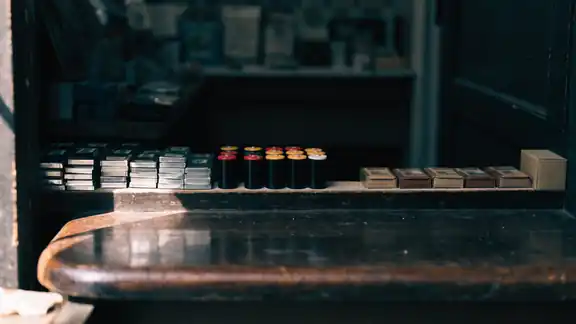
- Small and expensive goes behind the counter. Razor blades, batteries, memory cards, perfume, premium spirits — what fits in a pocket and costs a lot shouldn't be freely reachable.
- A mirror for the blind spots. Corners and the area behind the chiller are the critical ones; a convex mirror is cheap, and the sight of it deters on its own.
- No hidden corner. Where a customer disappears from view, anything can happen. This is usually caused by shelf height, not by the floor plan.
- The entrance visible from the counter. Every point on the way out should be in view — the moment of leaving is the riskiest one.
- A tidy shelf. On a tidy shelf a gap is noticed immediately; in a mess it goes unnoticed for days.
- Lighting. A poorly lit corner invites the attempt, and makes finding out afterwards harder too.
Being spoken to: the cheapest tool
If only one thing can be introduced, let it be this: everyone who walks in gets a greeting and a glance. That isn't surveillance but service — and it works precisely because it is courteous. Someone who knows their face has been seen and that they have been spoken to is far less likely to try.
The same rule works during the visit. If someone stands in front of a shelf for a long time, a "can I help you with anything?" is right in both possible cases: whoever is genuinely looking for something gets help, and whoever had something else in mind gets a signal without being accused. It is the one tool that costs nothing and doesn't damage the customer experience — quite the opposite.
Cameras: what they are and aren't good for
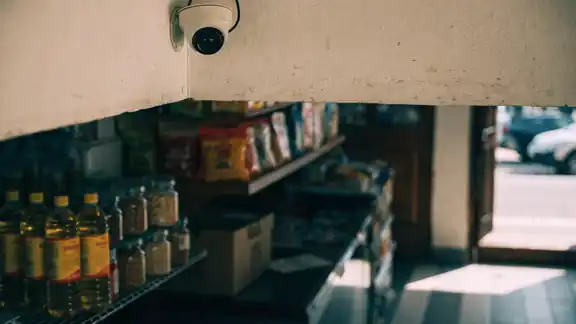
A camera is useful, but not in the way many people think. It doesn't prevent: the fact that something is being recorded doesn't stop anyone in that moment. What it genuinely helps with is this: its presence deters, it proves things afterwards, and — the point raised least often — it can also be used to clarify internal processes.
| What it is good for | What it isn't good for |
|---|---|
| Deterrence: a visible camera reduces attempts | It doesn't stop anyone in the moment |
| Clarifying afterwards: what actually happened | It doesn't replace presence in the shop |
| Disputes: misunderstandings around the till | It doesn't fix a disorderly process |
| Understanding the pattern of internal discrepancies | It doesn't replace measuring and recording |
In practical terms two cameras are usually worth more than six: one above the counter and till, one on the entrance and the way out. A system of many cameras suits a large floor area; in a small shop those two points cover the main risk.
What to do in the moment
This is the part to think through in advance, because there won't be time then. The most important rule is simple, and it comes before everything else: no goods are worth as much as the assistant's physical safety. In a small shop there is typically one person behind the counter — a scuffle has no good outcome.
- 11. Speak to them, don't accuse"Can I help? Would you like me to take that to the counter for you?" — this sentence offers a way out, and in most cases that is where it ends. A direct accusation, by contrast, turns it into a confrontation immediately, even when you are right.
- 22. Stay near the counter and stay visibleDon't follow them down the aisles and don't block their way. Your presence and the line of sight do the work on their own; physically closing in escalates.
- 33. Don't physically detain anyoneThe legal conditions for this differ by country, while the risk is real everywhere. No package of goods is worth an injury or a legal consequence.
- 44. If it happened, write it down at onceWhen, what, how much, what they looked like. This is what a police report needs, and it is what builds the pattern: which time of day, which shelf, what product.
- 55. Record it as a lossDon't let it dissolve into general stock loss. Recorded separately, in three months you will see whether it really is a problem or was a one-off.
- 66. Look at what made it possibleWhich shelf, with what line of sight? There is nearly always a layout reason. Changing that is cheaper and more durable than being more vigilant.
„The aim isn't that nobody can steal. It is that it shouldn't be worth it — and that the customer shouldn't feel like a suspect meanwhile.”
Internal loss: the uncomfortable chapter
This is hard to talk about, which is why it often goes unaddressed. Yet both the literature and practice show that a significant part of shop loss doesn't come from customers. That doesn't mean you should be suspicious — it means the system should be built so that the temptation doesn't arise.
- Make the correct route easy. If recording staff consumption takes three taps it gets done; if it means writing in a notebook in the stockroom, it doesn't.
- Close shifts often, by name. What is needed isn't stricter checking but shorter stretches — that way a discrepancy shows immediately, not at the end of the month.
- Have a clear rule about what staff may take. An unclear situation is worse than a strict rule: nobody knows where the line is.
- Record discounts and voids too. If a void leaves no trace it is the easiest route; if it carries a name, it dries up by itself.
- Don't let one person do the stocktake. A second pair of eyes isn't mistrust; it also protects the person doing it.
- Talk about it openly, not in hints. A remark like "somebody's taking things" poisons everyone, and precisely fails to reach whoever it is about.

What not to do
- Don't accuse without evidence. A wrong accusation can have legal consequences, and word of it travels far further than the value of the goods.
- Don't detain or search anyone. The rules differ by country, while the risk is always real.
- Don't put up threatening signs. A "all thieves will be prosecuted" tone addresses the ninety-nine per cent of customers who don't steal.
- Don't lock everything away. If the customer can't pick anything up, they buy less too — the defence can cost more than the loss.
- Don't treat it as theft before measuring. There is a good chance waste, staff consumption or a short delivery is behind it.
- Don't leave the till unattended for a single minute. The commonest real loss doesn't go from the shelf but from an open drawer.
- Don't build an atmosphere of suspicion. A regular customer lost costs more than the goods that might disappear.
Summary
- Separate first: waste, staff consumption, short deliveries, keying errors — what remains is the real theft.
- Layout beats vigilance: sightlines, small and expensive behind the counter, no hidden corner.
- A greeting and a "can I help?" are the most effective and cheapest tools.
- A camera deters and proves, but it doesn't prevent and doesn't replace order.
- In the moment, staff safety comes first; the rules on detaining differ by country.
- Against internal loss it isn't strictness that protects but an easy correct route and frequent, named shift closing.
Frequently asked questions
Frequently asked questions
How do I know whether people really are stealing from me?
By ruling out the other causes first. Record waste daily with a reason, record staff consumption by name, introduce item-by-item goods receiving, and look at per-product discrepancies. Whatever is still missing after that — especially if it is the same few lines, regularly — is the real shortfall. In many shops that figure is considerably smaller than expected, and that is exactly why it is worth measuring before anyone assumes anything.
What gets stolen most often from a small shop?
Whatever is small, expensive and easy to pass on: razor blades, batteries, energy drinks, perfume, quality spirits, memory cards, certain toiletries. The common feature is the ratio of size to price. So the simplest defence isn't vigilance but moving those products behind the counter or right beside it — where they have to be asked for.
Is it worth installing a camera?
For deterrence and for clarifying things afterwards, yes; for prevention on its own, no. In a small shop two well-placed cameras (above the till and facing the entrance) are typically worth more than six badly placed ones. Do note, though, that the handling of recordings is subject to different rules in different countries — the notice sign, the retention period and who has access all have to be settled in advance according to local requirements.
What should I do if I catch someone?
First don't accuse, speak to them: "Can I help? Would you like me to take that to the counter?" That offers a way out, and in most cases it ends there. Don't follow them down the aisles, don't block their way, and don't physically detain them: the legal conditions differ by country while the risk is real everywhere. No goods are worth your physical safety — particularly if you are alone in the shop.
Should I report it?
That depends on the situation and the country, but two things are generally true. One: a report needs specific details — when, what, to what value, what footage exists — so it is worth writing it down immediately. Two: whether to report can be decided case by case, but the RECORD should always be made. That is what builds the pattern, and it is what shows whether this is a regular phenomenon or a one-off.
How do I defend the shop without making it unpleasant?
The key is that the defence should look like service, because mostly it is. A greeting, a "can I help?", tidy shelves and good sightlines are all things that ninety-nine per cent of customers experience as a positive. Threatening signs, locked cabinets over everything and a suspicious look, by contrast, address the people who don't steal — and they are the ones who go elsewhere because of it.
How much loss counts as normal?
There is no universal figure, because it depends heavily on the range: a shop carrying fresh goods and bakery works with a higher waste percentage from the outset than one selling long-life food. The usable benchmark isn't a general value but YOUR OWN time series: if the separated real shortfall grows month by month, that is a problem, even if the value looks low. That is why it has to be recorded separately, not lumped together.
What if I suspect my own staff?
Don't be suspicious — shorten the stretches. Close shifts often, by name, each with its own opening float — that way a discrepancy shows immediately and is attributable to a person, rather than at month end and smeared across everyone. Alongside that, make the correct route easy: if recording staff consumption takes three taps, it gets done. Hinting is the worst approach: it poisons everyone and precisely fails to reach whoever it is about.
Does putting up a sign saying cameras are in use help?
Yes; a significant part of the deterrence comes from the notice itself, not from the recording. In many countries such notice is in any case required, so this isn't only a marketing question. The tone of the sign matters, though: a factual, standard notice creates a different effect from a threatening message — the latter also makes honest customers uncomfortable.
What should I do about the risk around the till?
The drawer should never be left open and unattended, not even for a minute. Have a rule for how much cash may stay in it at most, and take anything above that away several times a day. If you work alone and have to leave the counter, close the drawer — this is the one point where a large sum can disappear in seconds, and precisely for that reason it is the commonest source of real loss.
Is it worth employing a security guard?
In a small shop it typically isn't worth it: the monthly cost is likely to exceed what theft costs you. Before that comes up, it is worth doing the cheap things — layout, sightlines, moving small expensive goods, greeting people, tidy shelves — because together those usually cut the loss more than one person's presence, and they don't weigh on your costs continuously.
What should I do if I have a repeat offender?
Keep a record of every incident: time, product, value, description, footage. The pattern helps on its own — if it turns out to be always the same time of day and the same shelf, then it comes down to layout and timing, not luck. The specific legal steps (barring someone, reporting) differ by country, so it is worth finding out locally what route is open to you.
First find out how much of the loss is real.
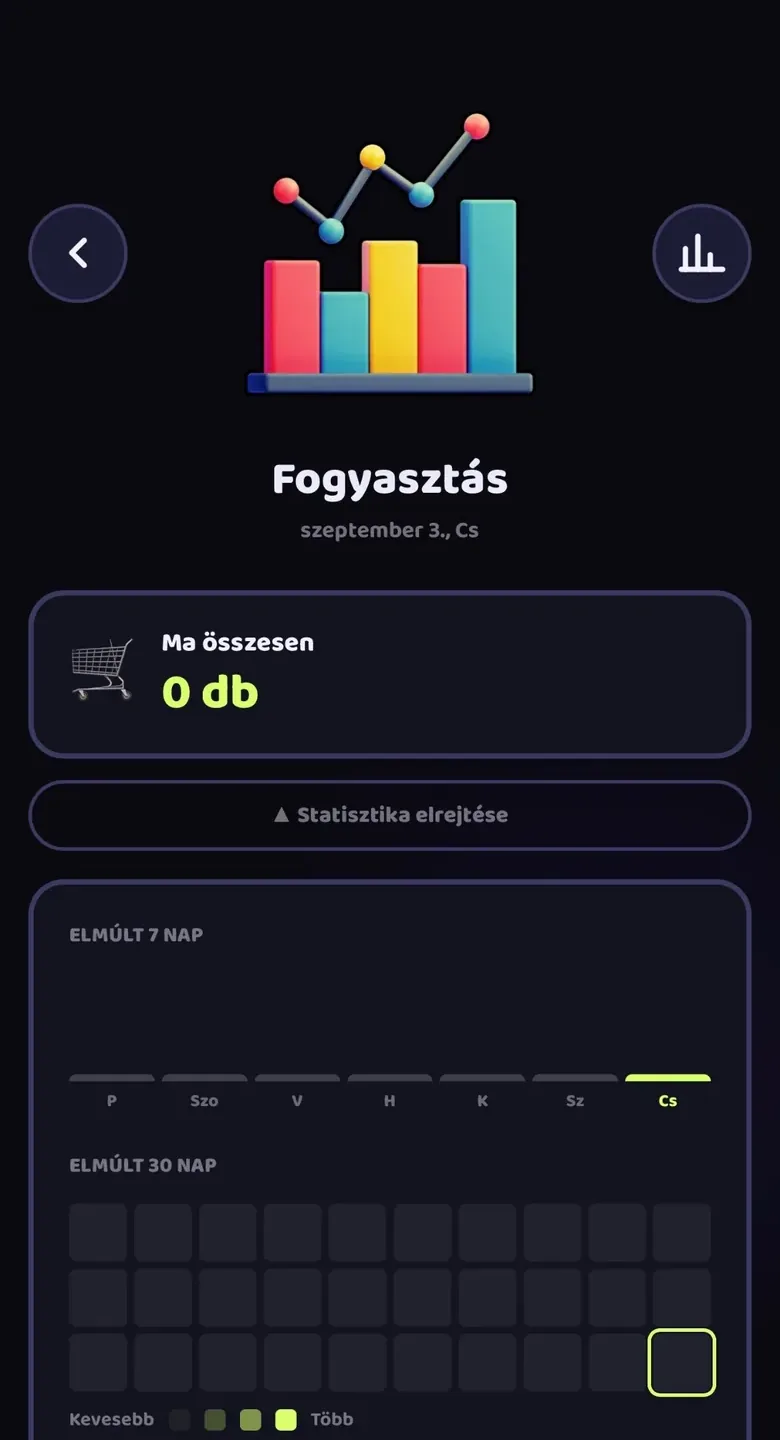
In Boltom App waste and staff consumption are recorded by name, in three taps. Whatever is still missing after that is the real question — and that can be acted on.
- Waste and staff consumption recorded separately, with a reason and a name.
- A monthly total in money: how much went which way.
- What remains after that is the actual shortfall — not guesswork.
No card needed · 2 minutes