It is nine in the evening, three young people are at the back of the queue, and one of them puts a can of beer and a packet of cigarettes on the counter. He could be twenty, he could be sixteen. Four people are waiting behind him and the assistant is alone. This happens in every small shop every day, and the person at the till has a few seconds to get it right.
Most mistakes are not made out of bad intent but out of awkwardness: we don't want to offend, we don't want to hold up the queue, and the customer asks so confidently that surely he is over eighteen. That is exactly why it should not be left to the assistant to decide when to ask for ID. With a simple internal rule, a few practised phrases and an owner who stands behind them, the awkward moment becomes routine.
This article is about what happens at the till. Which licence you need to sell age-restricted products is covered in our article on permits (What licences and permits do you need to open a shop?), and preventing theft has its own article (Shoplifting and shrinkage) — here they come up only as far as they affect the work behind the counter.
Why the person at the till is responsible, and why mistakes are expensive
Age-restricted products differ from every other product in that someone has to make a decision at the moment of sale: is this customer allowed to buy it? That decision is not made by the owner in the stockroom, nor by the till, but by whoever is standing behind the counter. In many places responsibility is therefore twofold: the rules can hold both the assistant personally and the shop as a business to account.
The cost of a mistake is usually out of all proportion to what you earn on a can of beer or a packet of cigarettes. Exactly what can happen depends on local rules, but the typical consequences are similar:
- A fine for the shop and, in many places, a separate one for the assistant — typically rising for repeat offences.
- Suspension or withdrawal of the alcohol or tobacco licence, which in a small shop can take away a significant share of sales.
- Temporary closure or a ban on selling age-restricted products.
- Reputation: in a small community word spreads fast about which shop you "can buy from" — and parents hear it too.
- The burden on the employee: someone who has made a mistake once and been fined finds it hard to go back behind the counter with peace of mind.
So age checking is not a matter of courtesy but one of the shop's biggest risks — one you can keep almost entirely under control with a rule, a few phrases and a notebook.
The internal rule: who to ask for ID
Nobody can judge age by looking. A sixteen-year-old can be tall, bearded and confident; a twenty-five-year-old can be short and young-looking. If the rule is "ask for ID if they look underage", the assistant is guessing every time — and will sometimes guess wrong.
The proven solution is a safety margin: under the shop's internal rule, you ask for ID from everyone who looks a few years younger than the legal age limit. The assistant then does not have to decide whether the customer is seventeen or eighteen, only whether they look thirty or twenty. That question is much easier and goes wrong far less often.
| The age limit where you are | Suggested internal threshold | Why |
|---|---|---|
| 16 (for some products, in some places) | ID from everyone who looks younger than 21 | Five years' margin: the difference between fifteen and twenty is often not visible at a glance |
| 18 | ID from everyone who looks younger than 25 | The most widespread practice; a customer who looks under twenty-five is never a matter of "guessing" |
| 20 or 21 | ID from everyone who looks younger than 25–30 | The higher the limit, the harder it is to decide by looking, so a bigger margin is needed |
| Several products with different age limits | One shared threshold, set to match the highest limit | The assistant should not have to remember a different rule for each product |
Write the internal rule down in one sentence, put it up behind the till and tell every member of staff. It is also worth displaying it to customers on a neutral sign saying that the shop asks for ID from everyone who looks younger than a given age. The sign takes a lot of weight off the assistant: they are not personally doubting the customer, they are applying the shop's rule.
What to accept as ID, and what not to
Exactly which documents are acceptable is set by local rules, and it is worth putting the list up behind the till. The general principle, though, is the same almost everywhere: an original, valid, official photo ID that shows the date of birth.
| What the customer shows | Generally | What to look out for |
|---|---|---|
| National ID card, passport | Acceptable | It must be original and valid, the photo must match, and check the date of birth — not just whether they have it with them. |
| Driving licence | Acceptable in many places | If local rules accept it, check it just as you would an ID card. |
| Student card, travel pass, club card | Not enough in many places | Accept it only if local rules explicitly allow it; when in doubt, don't. |
| Digital ID in an official app | Local rules decide | Where it is accepted, the assistant knows what the genuine display looks like — a screenshot is not it. |
| Photocopy, photo on a phone, screenshot | Not acceptable | A photo could have been taken of anyone at any time, and it is easy to alter. |
| Expired or damaged ID | Generally not | If the photo or the date cannot be read clearly, don't sell. |
| Someone else's ID, "my brother's" | Not acceptable | If the photo is not of the customer, it is as if there were no ID at all. |
Checking the ID is not just a glance, either. A few simple habits help a lot:
- Ask the customer to take it out of their wallet and hand it to you. You cannot properly check an ID shown through a plastic sleeve from a distance.
- Look at the photo, then at the customer, then at the date of birth. Don't rush — this is two seconds, not an interrogation.
- Count back from today's date. It helps to have a small note behind the till with the year of birth after which a customer cannot yet buy — and to update it at the start of every year.
- Feel it: a genuine ID has consistent material, edges and surface. If something seems odd, you don't need to prove anything — it is enough not to sell.
- Give the ID back; don't keep it and don't photograph it. Confiscating it is not your job, and the personal details are none of your business.
What to say, word for word
Most assistants do know the rule — what they don't know is how to say it. Without a practised phrase, whatever comes out in the moment is either too harsh or too hesitant, and the customer picks up on both. The phrases below are worth learning word for word and adapting to your own style.
| Situation | Say this | Don't say this |
|---|---|---|
| Asking for ID | "Could I see some ID, please? We ask everyone who looks under 25." | "How old are you, anyway?" — or eyeing the customer suspiciously in silence. |
| No ID on them | "Sorry, I can't sell this without ID. I'm happy to ring up the rest." | "Just this once, but bring it next time." |
| The ID shows they are underage | "Thank you. I can't sell you this one yet, but the rest is fine." | "Caught you!" — or a lecture about what their parents would say. |
| An adult is clearly buying it for a young person | "I can't sell this now. If someone is buying it for a minor, I'm not allowed to serve them." | "I know you're buying it for him, don't lie." |
| A friend or regular | "Sorry, it applies to everyone here — I have to ask you too." | "I'll take your word for it." |
| The customer argues | "I understand it's annoying. I can't change it — it's the shop's rule." | Explaining yourself, bargaining, or: "Fine, take it, just go." |
| The customer shouts or threatens | "I can't sell this. Please leave the shop, otherwise I'll call for help." | Shouting back, or stepping out from behind the counter to go up to them. |
Difficult situations at the till
The clear cases are simple: there is ID, or there isn't. The difficult cases are the ones where the rule is clear but the situation puts pressure on the assistant. It is worth agreeing in advance what to do in each.
An adult buying for a minor
A young person waits outside or browses the shelves, then an adult brings the beer to the counter and hands it over. This is a proxy purchase, and in many places it is just as prohibited as selling directly. If you can see that the product is clearly being bought for a minor — they chose it together, money changed hands, the young person said what they wanted — you can politely refuse. You don't need proof; doubt is enough.
Friends, neighbours, a regular's children
A small shop's strength is that you know your customers — with age limits, that becomes its weakness. A regular's sixteen-year-old son is just as underage as a stranger, and "he's just getting it for his dad" is exactly the situation described under proxy purchases. If the rule applies to everyone equally, you don't offend the person you know either: you are not singling them out, you are simply not making an exception for them.

A group at the till
When a group of friends shop together and one of them pays, the question is who the product is for. Good practice is to ask for ID from everyone clearly involved in a group purchase. If one of them has none, or is underage, you don't sell the age-restricted product — even if the person paying is an adult.
An aggressive customer
A refusal sometimes triggers anger. The rule then is that safety comes before the sale, but the refusal does not change either. Don't argue, don't explain yourself, don't step out from behind the counter. Calmly repeat the same sentence, and if things get out of hand, call for help. Afterwards, write in the notebook what happened. Handling complaints has its own article (Customer complaints at the till) — but with age limits, no still means no even if the customer is unhappy.
A queue behind them
The most common reason to give in is not a threat but hurry: the queue is long, the customer impatient, the ID at the bottom of a bag. Say it: "I'll wait while you find it — I'll serve the next person in the meantime." The queue can wait two minutes — a fine or a suspended licence will not.
Protect the person who says no
An assistant will ask for ID consistently only if they are sure the owner stands behind them. If they hear even once "oh come on, we know that lad" or "we lost a good customer because of you", next time they will rather not ask. So the rule is not decided at the till but by what you say afterwards.
- Say it in advance and unambiguously: anyone who refuses a sale in line with the rule is right — even if the customer complains afterwards.
- Never ask for an "exception" — not for a friend, not for a regular, not for your own family. If the owner makes an exception, the rule is gone.
- If a customer complains about a refusal, you talk to them, not the assistant. Your answer is the same: it is the shop's rule.
- Praise anyone who held firm in a difficult situation. One sentence is enough, but it matters.
- If someone gets it wrong and sells, don't shame them; look together at what led to it: the queue, pressure from the customer, an unclear rule? Fix the system.
„An assistant does not become consistent by knowing the rule, but by knowing that if they say no, the owner has their back.”
The refusals log
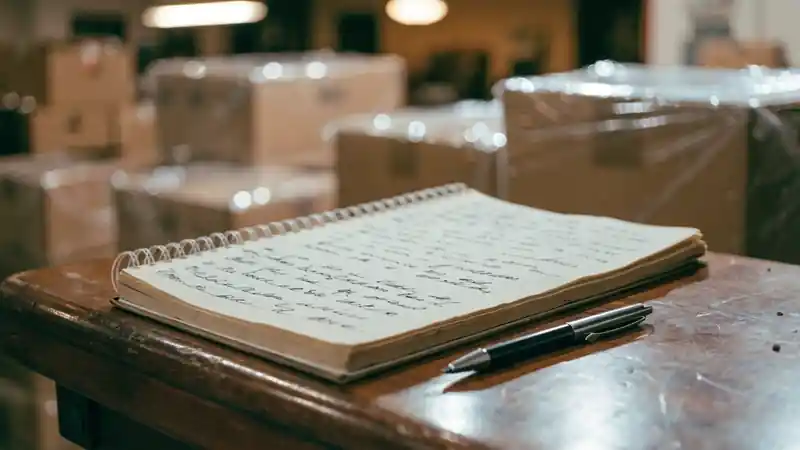
A refusals log is a simple notebook under the counter where every refused age-restricted sale goes in. You don't need software for it, nor the customer's name or details — just enough to show that the rule is actually applied.
- Date and time.
- Which product it was: beer, wine, spirits, cigarettes, e-cigarettes, energy drinks, lottery tickets.
- A short description: no ID, underage, suspected proxy purchase, the customer became aggressive.
- The assistant's name or initials.
The log protects in several ways. If a question comes up after an inspection or a complaint, the shop can show that it refuses sales regularly — that the rule does not exist only on paper. If an angry customer later claims otherwise, the entry backs up the assistant's memory. And the owner can see from it which shift and which hour the difficult cases come in — where more help or a more experienced assistant is needed.
When a test purchaser comes in
In many places the authorities or an appointed organisation check shops with test purchases: a young customer, sometimes close to the age limit, tries to buy an age-restricted product. Where, how and with whom this can happen is a matter for local rules. For the shop, the point is always the same: you cannot recognise a test purchaser, so the only shop that passes for certain is one where the rule applies to every customer, at every hour, in the same way.
Some shops run their own internal test: a young person they know, below the internal threshold but already an adult, tries to buy, and afterwards you talk through what happened. This is not a trap for the assistant but practice — and a good opportunity for praise if everything went well.
Arranging the shelves and the counter
Checking does not start at the till but where the product stands. The harder it is to reach age-restricted goods without going through the assistant, the fewer awkward moments there are.
- Tobacco, e-cigarettes and refills should be behind the counter, reachable only through the assistant. In many places this is required anyway.
- Keep alcohol within sight of the till if you can, not in the most hidden corner of the shop.
- Don't mix energy drinks and age-restricted products with goods aimed at children — neither on the shelf nor in the impulse spot in front of the till.
- Behind the till, display the internal rule, the list of accepted IDs and the year-of-birth note.
- Facing customers: a neutral sign saying that the shop asks for ID from everyone who looks younger than a given age.
It is also worth knowing when age-restricted products sell. If you put them in their own category — on paper or in a till app such as Boltom App, where the report shows sales by category and by the hour — you can see which shift needs your most confident assistant at the till. The assistant still has to check the age; the report only shows where the pressure is greatest.
Training in 10 minutes
A new assistant does not need to learn the law, but what to do when a young-looking customer puts beer on the counter. Ten minutes is enough if you do it at the till and the new colleague actually says the phrases out loud rather than just hearing them.
- First 2 minutes — why: what the shop's risk is, and that the assistant can be held responsible too. One sentence saying the owner always has their back.
- Next 2 minutes — the internal rule: who to ask for ID, which products it applies to, where it is displayed.
- Next 2 minutes — the ID: what to accept, what not to, how to check it, where the year-of-birth note is.
- Next 3 minutes — the phrases: they say the request, the refusal and the reply to an argument out loud. Role-play it twice, once with a difficult customer.
- Last 1 minute — the notebook: where it is, what to write, and that every refusal goes in.
Common mistakes
| Mistake | Why it's a problem | How to avoid it |
|---|---|---|
| The assistant decides by looking | Nobody can judge age accurately, and sooner or later a mistake will happen | An internal threshold above the legal limit, and ID from everyone below it |
| The ID is only looked at from a distance | You can't tell whether the photo matches or exactly when the customer was born | Take it in your hand: photo, face, date of birth — in that order |
| Accepting a photo or photocopy | An image could be of anyone and is easy to alter | Only original, official photo ID, from the list set by local rules |
| An exception for a friend | From that day the rule exists only on paper, and staff can see it | The rule applies to everyone, including the owner's family |
| Giving in because of the queue | Hurry is the most common cause of a wrongful sale | A practised phrase: "I'll wait while you find it — I'll serve the next person in the meantime." |
| No record of refusals | After an inspection or a complaint the shop cannot show the rule is applied | A simple notebook under the counter: date, time, product, short description |
| The owner overrules the assistant afterwards | Next time the assistant would rather not ask for ID | The assistant who refuses is always right — the owner deals with the complaining customer |
Putting it in place step by step
If you have no written rule now, a working system can be in place within a week. Most of the work is one-off: write it down, put it up, train people. After that, daily practice and the owner's consistency keep it alive.
- 11. Check the local rulesWrite down which products are age-restricted where you are, what the age limit is, which ID is acceptable and who carries the responsibility. If you are unsure, ask the licensing authority or your trade association.
- 22. Decide on the internal thresholdChoose an age a few years above the legal limit, and if there are several limits, match the highest. Write it down in one sentence.
- 33. Rearrange the shelves and the counterTobacco and e-cigarettes behind the counter, alcohol within sight of the till, age-restricted products away from goods aimed at children.
- 44. Put the rule upBehind the till: the internal rule, accepted IDs, the year-of-birth note. Facing customers: a neutral sign saying the shop asks for ID from everyone who looks younger than a given age.
- 55. Put out the notebookA notebook under the counter with four columns: date and time, product, short description, assistant. Tell everyone that every refusal goes in.
- 66. Train everyoneRun the ten-minute training at the till with every member of staff, saying the phrases out loud. Also tell them that whoever says no is always right.
Once a quarter, go through this short checklist as if you were the test purchaser:
- Is the internal rule written down, and can every member of staff say it from memory?
- Is the list of accepted IDs and an up-to-date year-of-birth note displayed behind the till?
- Can tobacco and e-cigarettes be reached only through the assistant?
- Is there a sign facing customers about the rule?
- Have entries gone into the notebook in the past few weeks? If it has been empty for months, people are probably not asking for ID.
- Has every new member of staff had the training and said the phrases out loud?
- Have you recently made an exception, or told anyone off for refusing a sale?
Summary
- The person at the till decides on and is responsible for an age-restricted sale, and the price of a mistake affects the whole shop.
- The internal rule puts a safety threshold above the legal age limit so the assistant does not have to guess.
- Accept only original, official photo ID; a photo, a photocopy or someone else's ID is not ID.
- The practised phrases refer to the rule, not the customer, and don't change because of the queue or a friend.
- The owner backs the assistant who refuses and never asks for an exception.
- A simple refusals notebook proves the rule is applied — while the age limit, product range and penalties always follow local rules.
Frequently asked questions
Who should I ask for ID when selling alcohol or tobacco?
The rules typically expect you to ask anyone whose age is in doubt — but in practice it pays to follow an internal rule. Many shops ask for ID from everyone who looks a few years younger than the legal limit — for example under 25 when the limit is 18. That way the assistant does not have to guess between seventeen and eighteen, only decide whether the customer clearly looks older. The exact age limit and product range are set by local rules.
What ID can I accept?
As a general principle, an original, valid, official photo ID showing the date of birth — typically a national ID card, a passport and, in many places, a driving licence. Whether a student card or a digital ID is acceptable is decided by local rules. Put the list of accepted documents up behind the till so every assistant follows the same one. When in doubt, don't sell the product.
Can I accept a photo of an ID on a phone?
Generally not. A photo or photocopy could have been taken at any time, of anyone, and is easy to alter, so it does not prove the customer is who they say they are. Where an official digital ID exists, that is a different matter — but it too can be accepted only in line with local rules and in its genuine display. A screenshot is not that.
What should I say if the customer has no ID?
Briefly and politely: "Sorry, I can't sell this without ID. I'm happy to ring up the rest." Don't bargain, don't explain yourself, and don't say "just this once". If the customer argues, repeat that it is the shop's rule. If the ID turns up, you can of course serve them.
What should I do if an adult buys the product for a minor?
If you can see that the purchase is clearly for a minor — they chose it together, money changed hands, the young person said what they wanted — you can politely refuse. In many places this is just as prohibited as selling directly to a minor. You don't need to prove anything; doubt is enough. Say that you can't serve them in that case, and write it in the notebook.
What should I do if the customer becomes aggressive?
Safety comes before the sale, but the refusal does not change. Don't argue, don't step out from behind the counter, and calmly repeat the same sentence. If things get out of hand, ask them to leave the shop and call for help. Afterwards, write in the notebook what happened and tell the owner.
Who is liable if alcohol is sold to a minor: the assistant or the owner?
This differs by country, but in many places both: the assistant can be personally liable and the shop as a business. The owner's responsibility typically also includes having a rule, training and checks in place. That is why it is worth writing the rule down, recording the training and logging refusals. The authorities or a lawyer can tell you the exact rules on liability.
What is a refusals log for?
To show that the rule is actually applied. After an inspection or a complaint the shop can show that it refuses sales regularly, and in a dispute it backs up the assistant's memory. The owner can also see from it which hour and shift the difficult cases come in. A notebook with four columns is enough: date and time, product, short description, assistant.
Should I write the customer's name in the log?
It is not necessary and generally not recommended. The purpose of the log is to keep a record of the incident, not to collect data about the customer. It is enough to write when, which product and why you refused the sale, and who was at the till. Don't photograph the ID or copy its details either.
What is a test purchase, and how do I prepare for it?
In many places the authorities or an appointed organisation check shops by having a young customer try to buy an age-restricted product. Where and how this can happen is a matter for local rules. There is only one way to prepare: the rule must apply to every customer, at every hour, in the same way. You cannot recognise a test purchaser, so the shop that passes is the one where asking for ID is routine, not the exception.
Can I ask for ID even if the customer is clearly an adult?
If the customer is clearly well above the internal threshold, you don't need to. But if they look below it, or it is doubtful, the shop's rule lets you ask — and requires you to. An adult customer will at most feel awkward for a moment, and many take it as a compliment. The phrase "we ask everyone" makes this smooth too.
Does Boltom App check the customer's age?
No. Boltom App does not check age, does not scan ID and does not keep a refusals log — that is the job of the assistant and the notebook under the counter. What it helps with: you can put age-restricted products in their own category, so the report shows their sales separately, and the hourly breakdown shows which hours they sell in. From that you can see which shift needs your most confident assistant.
Say the product's name and it's there on the till.
Boltom App takes the work behind the counter off your hands. You find a product by looking at its photo or saying its name out loud — no codes, no scraps of paper. Whatever leaves the shelf or goes in the bin is recorded right there, not in a notebook. It works alongside your existing till, not instead of it.
- A quick code with a photo — or just say the product's name and the till finds it.
- Staff consumption in three taps, recorded under the person's name.
- Daily waste with its reason: expired, broken, unsellable — totalled up in money.
No card needed · 2 minutes