Why refrigeration in particular?
In a food shop refrigeration is the only equipment that runs regardless of opening hours, day and night, every day of the year. The lights go off at eight, the till goes home — the chiller doesn't. That is why refrigeration is typically the single largest item in a small shop's annual electricity use.
That is bad news and good news at once. Bad, because it is constant. Good, because whatever runs constantly rewards even a small fix constantly — a bad door seal works against you every night, and a repaired one works for you every night.
Measure before you do anything
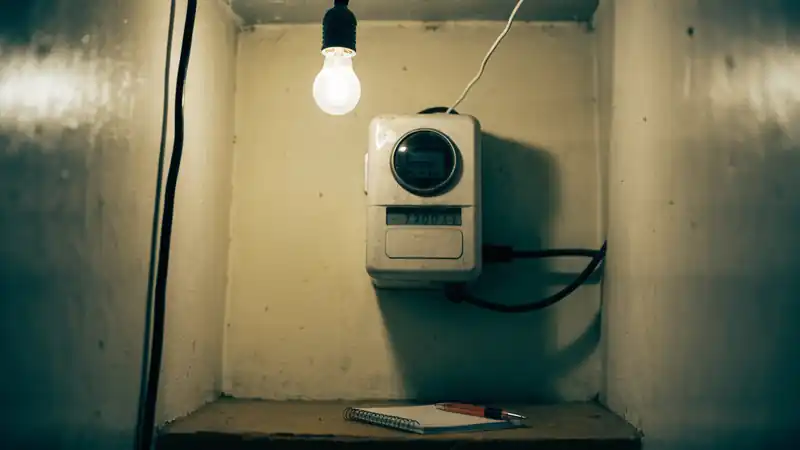
- 11. Read the meter at the same timeOnce a week for a month, always on the same day at the same hour. That gives you the baseline: how much goes even when nothing special is happening.
- 22. Read it after closing and before openingTwo readings at either end of one night give you the overnight consumption — the bill that belongs purely to refrigeration and machines on standby. That number is the most revealing one you'll get.
- 33. Look at the rating platesEvery chiller, freezer and oven has a plate with its rated power. That isn't actual consumption — a chiller doesn't run continuously — but it shows the order of magnitude and which machine is the heavyweight.
- 44. Work out a unit figureMonthly kWh ÷ monthly turnover. On its own that number means nothing, but it is comparable month to month — and if it jumps, something has deteriorated rather than turnover having grown.
The chiller: five things that are free
Before anyone talks about a new machine, here is what costs nothing but an hour's work. These aren't tricks: a fridge uses a lot because it struggles to shed its heat, or because it keeps warming up again.
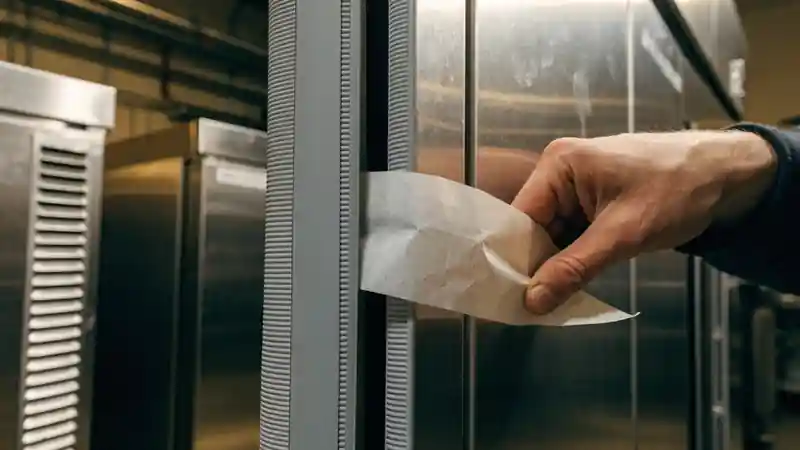
- Door seal: if you can close a sheet of paper in the door and then pull it out easily, the seal isn't sealing. This is the most common and cheapest fault there is.
- Condenser (the grille at the back or underneath): if it's dusty the unit can't shed heat, so it works harder. Vacuum it twice a year.
- Placement: a chiller shouldn't stand next to an oven, a radiator or a sunlit window, and needs space behind and above it for air.
- Filling: air doesn't circulate in an overpacked chiller. It doesn't just use more — it cools worse, so waste goes up too.
- Door opening: the most frequently wanted line shouldn't sit in the deepest cabinet, or that's the door being opened all day.
Lighting and heating
After refrigeration, lighting is the next big item, because it too runs for many hours. Here, though, replacement is usually simple and pays back quickly — the real question is where, and how much.
| Item | What to check | What can be done |
|---|---|---|
| Shop floor lighting | How many hours a day it runs | Switchable by zone, not all in one go |
| Window and sign | Whether it runs after closing | A timer — the sign brings no customers at three in the morning |
| Stockroom, toilet | Whether it gets left on | A motion sensor; this is where it really pays |
| Chiller's own lighting | Whether it's needed at night | Can be switched off after closing; the cooling still runs |
| Heating | Whether it runs beside the cooling | Don't heat where an open chiller stands — the two work against each other |
When is replacement worth it?
Replacing an old chiller is a serious outlay, so it shouldn't be decided on a feeling. The calculation is simple and takes three figures: what the current one uses, what a new one would use, and what the new one costs.
Payback = the price of the new machine ÷ the value of the energy saved in a year. If that number is smaller than the years the old machine has left, it's worth it; if it's larger, maintaining the old one is the better deal. Don't leave two things out of the sum: the old machine's repair costs (which grow over the years), and the fact that a poorly cooling unit also produces waste — and waste is money too.
What not to do
- Don't switch the chiller off overnight. That isn't a saving, it's a food-safety risk and waste — and cooling back down uses more than holding temperature would have.
- Don't set it colder "to be safe". Every unnecessary degree is consumption, and spoilage is prevented by a steady temperature, not by extra cold.
- Don't decide on one month. Refrigeration uses more in summer — only compare like periods.
- Don't believe a percentage you didn't measure. A savings claim is worth something when it shows up in your own overnight reading.
- Don't put off the seal. It is the one fault that costs money day after day and takes ten minutes to find.
- Don't forget to compare against turnover. If the bill went up but so did turnover, there may be nothing wrong at all.
In summary
- Don't expect an amount from an article: electricity is priced by contract, and yours has to be measured.
- Two readings at either end of one night show what refrigeration takes on its own.
- Seal, condenser, placement, filling, door opening — five free fixes.
- A night cover is the shortest-payback purchase in a shop with open chillers.
- For replacement the question is payback: price ÷ annual saving, against the machine's remaining years.
- Always put the bill next to turnover, or you don't know what it grew relative to.
Frequently asked questions
How much does a shop chiller use?
There is no general answer: it depends on size, age, whether it's open or has doors, and how warm it is around it. Here is how to find yours: read the meter after closing and again before opening, on a night when only the refrigeration is running. The difference is your number — an average read in an article is not.
Does the door seal really matter?
Yes, and it's the most common fault. Put a sheet of paper in the door, close it, and pull: if it comes out without resistance, warm air is going in continuously. The machine compensates for that all day — this is the fault that costs money every hour.
Is it worth switching to LED lighting?
Usually yes, but the order is the other way round: first look at where light burns for nothing. A stockroom lamp running six hours a day for no reason costs more than replacing it saves. Switching and timing first, then the bulb.
Can I switch the chiller cabinet off at night?
No. The cold chain for food mustn't be broken, and cooling back down in the morning uses more than holding temperature overnight anyway. What you can do: switch off the cabinet's own lighting, and cover an open cabinet — both cut consumption without putting the stock at risk.
How do I know if a machine is deteriorating?
From it using more under the same conditions than it used to. That is why it's worth repeating the overnight reading a few times a year, always in a comparable period. If the figure climbs while nothing has changed, look at the machine: seal, condenser, or the cooling circuit itself.
How long does a new chiller take to pay for itself?
That can only be worked out with your own numbers: the price of the new machine divided by the value of the energy saved each year. For the saving, compare your current machine's measured consumption with the new one's rating plate. If the payback is longer than the years the old machine would still last, maintenance is the better deal.
Is it worth switching electricity supplier?
Worth looking at, but cut consumption first. Changing supplier is a one-off difference of a few per cent; a bad seal takes the same amount every year. The order is: measure, free fixes, then contract — and only after that, investment.
Say the product's name and it's there on the till.
Boltom App takes the work behind the counter off your hands. You find a product by looking at its photo or saying its name out loud — no codes, no scraps of paper. Whatever leaves the shelf or goes in the bin is recorded right there, not in a notebook. It works alongside your existing till, not instead of it.
- A quick code with a photo — or just say the product's name and the till finds it.
- Staff consumption in three taps, recorded under the person's name.
- Daily waste with its reason: expired, broken, unsellable — totalled up in money.
No card needed · 2 minutes