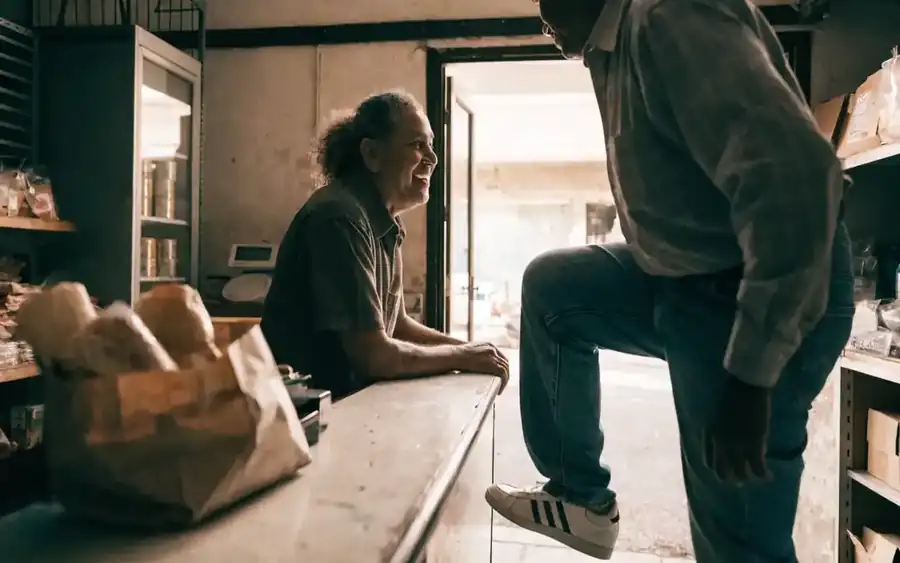
It's 7.59 in the evening. You've half counted the takings, the mop bucket is waiting by the door and the keys are already in your hand. Then the door opens, someone steps in, gives you a lovely smile and says: ‘I'll just grab one thing!’ You both know that isn't true. Ten minutes later they're at the counter with a full basket, asking whether you've got any more of that bread out the back, because this one's a bit pale.
If you've ever stood behind a counter, a very specific face has just popped into your head. Difficult customers are part of the furniture in every small shop, and let's be honest: the best stories are about them. They're also how the shop pays its bills. Most of them don't mean any harm; they're in a hurry, unsure, having a rotten day, or simply seeing how far they can go. You don't have to enjoy the awkward moment, but it's worth being ready for it, because a prepared assistant is a calmer assistant, and a calm assistant sorts things out faster and better.
In this article we introduce the 10 most common difficult customer types, with a bit of affectionate humour, because laughing is the cheapest stress relief there is. Then comes the serious part: a phrase that works for each one, and where to draw the line. We look at when to call a colleague, when to say no and when to ask a customer to leave, how much time a difficult case costs at peak time, what the team should decide in advance, and how to wind down after a tough moment. The steps for handling complaints are covered in Customer complaints at the till: how to handle them so the customer comes back, and speeding up the queue in Shorter queues at peak time: how to speed up service in a small shop.
The 10 customer types every shop assistant knows
These types aren't labels to stick on anyone's forehead; they're situations that come round again and again. The same lovely old lady can be a regular on Monday, a haggler on Friday and, if it's raining, a museum visitor too. Once a situation has a name, it's easier to laugh about it with the team, and easier to work out a good answer in advance. The table below is worth printing and keeping under the counter — or pinning up in the staff corner so your colleagues can add their own.
| Type | How to spot them | A phrase that works | When to draw the line |
|---|---|---|---|
| 1. The museum visitor — ‘Just looking’ | Has been reading the back of the same biscuit tin for twenty minutes, and gives the same answer to every question. | ‘Have a good look round — if you need anything, I'm at the counter.’ | Almost never: today's browser is tomorrow's customer. Only pay attention if they're fiddling about out of sight behind the shelves, or watching you rather than the goods. |
| 2. The last-minute dasher — ‘I'll just grab one thing!’ | Bursts in a minute before closing, and the one thing turns into a full basket. | ‘Of course — we close in five minutes, so what do you need most?’ | If they'd start another lap after closing. You serve whoever's already inside, but no new laps. |
| 3. The phone call — ‘Yeah… no… hang on, I'm in the shop’ | Stays on the phone while paying, answers your question to the person on the other end, and rummages for their purse one-handed. | ‘I'll wait till you're finished — I'll just serve the next person meanwhile, OK?’ | When the queue grinds to a halt. Move on to the next customer and come back to them once they've hung up. |
| 4. The haggler — ‘What if I take two?’ | Asks for a discount on everything, from the yoghurt near its date to this morning's bread. | ‘Prices are the same for everyone here. If you take two, I'll be twice as pleased.’ | If they ask a third time. A polite, clear no is enough, and only someone the team rules authorise can give a one-off discount. |
| 5. The time traveller — ‘This used to be half the price’ | Remembers exactly what butter cost years ago, and shares it with you every single visit. | ‘You're right, lots of things have gone up — for us too, when we buy it in.’ | There's no line to draw; let them say it. If they try to start a debate about prices, don't take the bait, and don't start justifying yourself. |
| 6. The VIP — ‘I'm a regular, I'm entitled to it’ | Has been coming here for years, and has concluded from this that no rule applies to them. | ‘We're so glad you've been coming to us all these years — and that's exactly why we do it the same way for everyone.’ | When they ask for something nobody else could have: credit, putting things aside for weeks, skipping the queue. Loyalty deserves attention, not its own set of rules. |
| 7. The stockroom explorer — ‘You must have more out the back’ | Is convinced there are fresher, nicer and more plentiful goods hidden in the back than on the shelf. | ‘I've checked: what we've got is out on the shelf. More comes in tomorrow morning.’ | If they'd follow you into the stockroom, or send you off rummaging at peak time. Customers don't go in the stockroom, and you don't leave the counter. |
| 8. The quality inspector | Squeezes every loaf, opens every box, and would taste the biscuits before buying them if they could. | ‘I'm afraid we can't open this one, but I'm happy to tell you what's inside.’ | If they leave opened or squashed goods behind. Ask them nicely not to open things, and deal with anything opened according to the shop's rules. |
| 9. The just-one-question — ‘Just a quick question…’ | Steps up past the queue and takes over the counter with a single question. | ‘I'll be with you in a moment, I'll just serve the people in the queue first.’ | Always, straight away and the same for everyone. The queue is watching you, and expects you to be fair. |
| 10. The volcano — ‘Get me the manager!’ | Talks loudly and angrily, addresses the whole queue, and demands to see the boss. | ‘I can see you're annoyed. Tell me what happened and I'll see what I can do.’ | If they threaten you, insult you personally or start throwing things. You don't argue, you call a colleague and, if needed, get help. Your safety comes first. |
The ones who take your time: the browser, the last-minute dasher, the phone call
The museum visitor is the most harmless difficult customer — not really difficult at all, just lengthy. They wander every aisle, study the labels on the jams, pick up a bottle of oil, put it back, and if you ask whether you can help, reply in mild alarm: just looking. The best thing to do is reassure them that's absolutely fine, and leave them to it. Someone who can browse in peace will know next time what they can find at yours. Someone who feels watched won't come back. Only look their way more often if their behaviour is less about browsing and more about staying out of sight — that's covered in Shoplifting and shrinkage: what can be done from behind the counter.
The last-minute dasher is a legend of the end of the shift. They don't mean any harm: they've only just got home, they're tired too, and they've still got dinner to sort out. The problem isn't that they come in; it's when closing time doesn't mean anything. The tried-and-tested rule is simple: anyone who's in before closing gets served, but you politely let them know how long there is, and there are no new laps. If you put the ‘Closing soon’ sign out ten minutes early, or say it once in a friendly voice, there'll be far fewer arguments. And if lots of people regularly turn up in the last few minutes, that's no longer about the customers; it's about your opening hours.
The phone call is a special case, because they don't actually have a problem with you; they're just not really there. They carry on talking while paying, answer your question to the person on the line, and dig for their purse at the bottom of their bag one-handed. Don't take it as a personal insult, and don't stand there waiting stiffly: if the queue has stopped, let them know nicely that you'll serve the next person in the meantime and come back to them once they've hung up. Most people nod gratefully at this, and some are embarrassed enough to end the call. The counter isn't a phone box, but good manners are catching.
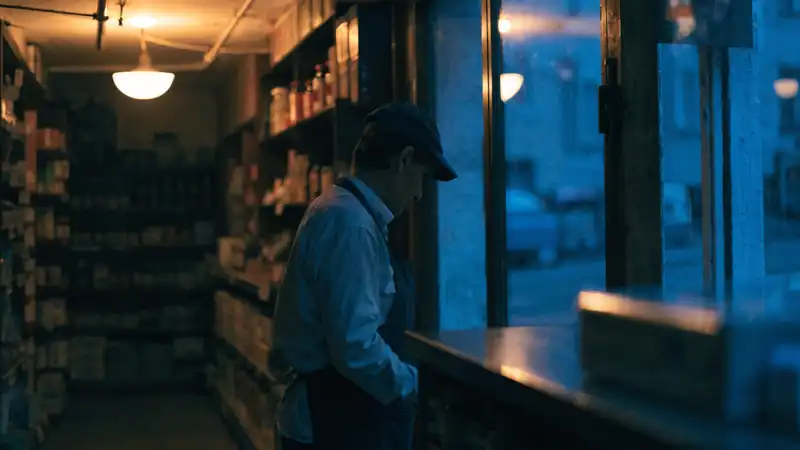
The ones who test the price: the haggler, the time traveller, the VIP
The haggler keeps the spirit of the market stall alive in your shop. They want a discount for two, half price on anything near its date, a freebie with the slightly dented tin, and if it worked once, they'll try again next time. They're not cheating, just negotiating — which is exactly why you need to know the answer. If the shop has a rule for reducing goods near their date or damaged goods, explain it and apply it the same way for everyone. If it doesn't, a polite, smiling no is enough. The worst thing is yes one day and no the next, because then every purchase becomes a negotiation, and customers go looking for the assistant who gives in.
The time traveller isn't there to argue but to reminisce. They know exactly what bread, milk and butter cost years ago, and tell you every time. They're the only difficult customer where there's no line to draw: let them say it, agree with whatever's true — lots of things have gone up — and don't launch into a lecture on pricing. If you start grumbling about wholesale prices too, the conversation will go on and on and the queue will melt away. After one short, sympathetic sentence, get back to serving. Time travellers, incidentally, are often your most loyal customers: they remember the old prices because they've been shopping with you for years.
The VIP is the regular's shadow side. They've been coming for years, they know your name, and they've concluded from this that they're owed something nobody else gets: credit until the end of the month, something put aside for a fortnight, a jump up the queue, or a discount because ‘I always shop here’. Regulars are a shop's greatest treasure and they genuinely deserve attention: their name, their favourite loaf, a kind word. But attention isn't the same as an exception. If one person gets their own rules, everyone else sees it and will ask for the same next time. How to keep regulars without playing favourites is covered in Regulars: how to make people come back.
- Say the rule once, and don't explain it three times. The more you justify it, the more it turns into a bargaining session.
- If there's an official offer, point it out. Hagglers love winning something, and a displayed multi-buy offer is exactly that.
- Don't be the judge. ‘That's not my decision’ — and it's true, if the team has a shared rule.
- Don't take it personally. Haggling isn't about you, it's about money, and most customers take a no with a smile if you say it nicely.
The ones who test the rules: the stockroom explorer, the quality inspector, the just-one-question
The stockroom explorer is convinced the shelf is just the shop window and the real treasure is in the back. Fresher bread, bigger eggs, colder water, and of course more of whatever has just run out. Sometimes they're right, and then it really is worth a look. At peak time, though, a rummage in the back leaves the counter empty for three or four minutes, and everyone in the queue can see that one person has had special treatment. The tried-and-tested answer: if there's no queue, you have a look; if there is, you tell them when new stock comes in. Customers don't go into the stockroom, for reasons of both safety and hygiene.
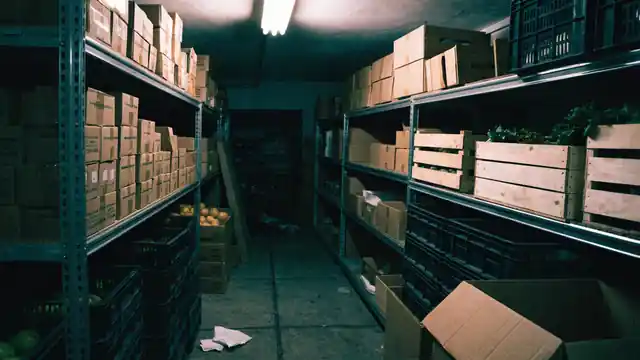
The quality inspector tries everything out before buying. They squeeze the bread, turn the tomatoes over, open the egg box and, given half a chance, would open the bag of biscuits to see what they're like. Opening the egg box is fine — anyone checks for broken ones. The trouble is goods that have been opened, squashed or half unwrapped, which nobody will buy afterwards. The phrase that works is short and friendly: we can't open this one, but I'm happy to tell you what's inside. If people often ask what something looks like inside, put out a photo or an opened sample, and the temptation disappears.
The just-one-question is the queue's worst enemy. They don't join the queue; they step up to the counter from the side and start with ‘just a quick question’, which then turns into a purchase. At that point you're not dealing with one customer but with the whole queue, who are watching what you do. Let it happen once and everyone sees that it works here. The rule should be simple and without exceptions: whoever is in the queue goes next. The phrase that works doesn't offend, and doesn't leave the person unanswered either: I'll be with you in a moment, I'll just serve the people in the queue first. The queue almost always rewards this with a grateful nod.
The one who brought a bad day with them: the volcano
The volcano is the rarest type but the most memorable. They talk loudly, address the whole queue, and sooner or later out comes the line: ‘Get me the manager!’ The cause is often tiny — the wrong change, a product that's run out, a word they misheard — but the shop is rarely what's behind the anger. Someone's had bad news, lost their job, has a poorly child, or today this was simply the last straw. That doesn't excuse rudeness, but it helps you not take it personally. The volcano isn't trying to beat you; they're trying to let off steam — and you happen to be standing there.
The most important rule with a volcano: don't add fuel. Don't raise your voice, don't argue about who's right, and don't start explaining yourself in front of the queue. Speak more quietly and more slowly than they do, name the feeling — ‘I can see you're annoyed’ — and ask what happened. Most people calm down after a few sentences if they feel they've been listened to. If they do have a genuine complaint, the complaint-handling steps take over from there, and our article on customer complaints covers those. And if they ask for the manager and there's someone to call, call them: that's not defeat, it's a fresh pair of eyes on the situation.
There is, however, a line where a volcano becomes a danger. If they threaten you, insult you personally, throw things or harass other customers, that's the end of serving them, and your own safety comes first. Don't argue, don't block their way, don't try to usher them out, and don't stay alone with them: call a colleague and, if needed, get help, in line with local rules. What to watch out for on the evening shift, and what to do if a situation turns threatening, is covered in Shop security: cash, closing up, the evening shift and robbery.
Where to draw the line: calling a colleague, saying no, asking someone to leave
Most shop assistants swing between two bad extremes: either they put up with everything, because ‘the customer is always right’, or they snap back at the wrong moment and that's when real trouble starts. The answer is to go in stages. If the team knows in advance which situation belongs at which level, nobody has to decide in the heat of the moment, and nobody feels left on their own. The levels are worth talking through, writing down and going over with new staff too — training new staff is covered in How to train a new shop assistant in 3 days: a 7-step guide.
| Level | When | What to do | Sample phrase |
|---|---|---|---|
| 1. Handle it yourself | Annoying but not offensive: haggling, hurrying you, grumbling, asking lots of questions. | Stay polite, state the rule once, and offer what you can. | ‘I'm afraid I can't do that, but what I can do is…’ |
| 2. Call a colleague | They keep repeating themselves, are holding up the queue, or you can feel your patience running out. | Hand over to someone fresh. That's not weakness, it's teamwork. | ‘I'll ask my colleague, they'll help you.’ |
| 3. Say no | A request against the rules: opening packs, credit, skipping the queue, serving after closing. | A short, clear no, explained once. Don't bargain and don't justify yourself. | ‘I can't do that. It applies to everyone here.’ |
| 4. Ask them to leave | Personal insults, harassing other customers, drunk or unpredictable behaviour. | In a calm voice, once, ideally with a colleague present. Don't touch them and don't block their way. | ‘I can't serve you like this. Please leave the shop now.’ |
| 5. Get help | Threats, violence, throwing things, a weapon or something that looks like one. | Don't argue, don't play the hero, keep your distance, and get help in line with local rules. | No phrase matters more than your safety. |
- 11. Stop for a breathBefore you answer, take a deep breath and put down whatever's in your hand. Your first reaction is rarely your best; your second one is actually yours.
- 22. Speak more quietly than they doVolume is catching. If you speak more quietly and slowly, the customer will turn it down too, because otherwise they're the only loud one in the shop.
- 33. One sentence, one ruleSay once what's possible and what isn't, and don't justify it three times. A long explanation sounds like haggling; a short, calm sentence sounds like a rule.
- 44. Offer what you canPut a yes next to the no: fresh stock comes tomorrow morning, this is on offer right now, my colleague will look into it. A line is easier to accept when there's somewhere to step.
- 55. Hand over if you need toIf things don't calm down, or you feel your patience going, call a colleague. A fresh face can often settle in half a minute what had already become an argument with you.
- 66. Afterwards, let it goOnce it's over, jot down two lines about what happened, have a glass of water and tell your colleague. The next customer is a new story, not the sequel.
How much time does a difficult case cost at peak time?
A difficult customer doesn't just cost you your nerves; it costs the queue time too. At peak time you can even put a figure on it. Let's work it out in neutral units. In a small shop, a sale at peak time takes 40 seconds on average. A difficult case — haggling, a phone call at the till, a rummage in the back, an argument — can easily take 4 minutes, which is 240 seconds. That's 240 − 40 = 200 seconds extra. If six people are queueing meanwhile, each of them waits 200 seconds longer: together that's 6 × 200 = 1,200 seconds, or 20 minutes of waiting between them. In the same time, 200 / 40 = 5 customers could have been served.
Some of that waiting is lost in money, too. Suppose that with every difficult case one customer in the queue gives up: puts down their basket and shops elsewhere. The average basket is 8 units and the margin is 25 per cent, so each abandoned purchase costs 8 units of turnover and 8 × 0.25 = 2 units of profit. With three difficult cases a day, that's 3 × 8 = 24 units of turnover and 6 units of profit a day. Over a month with 26 trading days, it's 3 × 26 = 78 lost purchases, 78 × 8 = 624 units of turnover and 624 × 0.25 = 156 units of profit. That isn't the customer's fault; it's the fault of the situation where one long case brings the whole queue to a standstill.
| Difficult cases at peak time per day | Lost purchases per month (26 days) | Lost turnover (8-unit basket) | Lost profit (25% margin) |
|---|---|---|---|
| 1 | 26 | 208 units | 52 units |
| 2 | 52 | 416 units | 104 units |
| 3 | 78 | 624 units | 156 units |
| 5 | 130 | 1,040 units | 260 units |
The lesson isn't that you should fob off difficult customers quickly. It's that at peak time one long case shouldn't stop the whole queue. If you need to spend longer with someone, ask them to step aside for a moment while you serve the next person, or call a colleague to take over the queue. In the quiet morning hours a long chat is a gift; at peak time it comes out of everyone else's time. The other tricks for speeding up the queue are covered in Shorter queues at peak time: how to speed up service in a small shop.
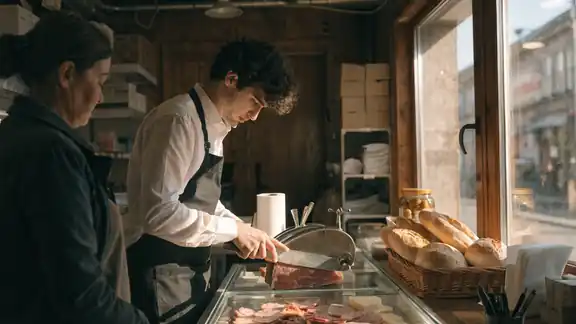
Shared rules for the team: what's allowed
A difficult customer looks for the weakest link. If one assistant gives a discount and another doesn't, if one opens the box and another won't, customers quickly learn who to try it on with, and which assistant gets branded ‘the strict one’. That's unfair on staff too: whoever sticks to the rule becomes the baddie. The answer is a short list of shared rules that the owner decides, the team knows, and everyone applies the same way.
| Question | Who decides | Suggested basic rule |
|---|---|---|
| One-off discount | Only the owner or a designated manager | Assistants don't give one-off discounts. What they can give is the displayed offer, the same for everyone. |
| Goods near their date or damaged | The assistant on shift, following the written rule | A reduction fixed in advance, clearly marked. Not up for negotiation. |
| Opening packs, tasting | Nobody, except a sample put out for that purpose | Sealed goods aren't opened. If people often ask what's inside, put out a photo or an opened sample. |
| Putting things aside | The assistant on shift | For a short time, with a name and a time, say until the end of the day. No putting aside for weeks. |
| Credit, ‘I'll pay you tomorrow’ | Only the owner | As a rule, no. If at all, only for an agreed circle, in writing, and never decided by the assistant at the counter. |
| Serving around closing time | The assistant on shift | Anyone who came in before closing gets served. Nobody is let in after closing, regulars included. |
| Going into the stockroom | Nobody | Customers can't go into the stockroom. If something needs finding, the assistant looks, and only when there's no queue. |
| Exchanges, returns | According to the shop's complaints rule | The same process for everyone. The details are in the article on complaints. |
- Put up whatever can be put up. The closing time, the displayed offer and a ‘please don't open sealed goods’ sign say the rule for you, and the customer doesn't take it personally.
- The rule applies to everyone. The regular, the neighbour, the owner's friend — otherwise everyone else will ask for an exception too.
- The owner should back the staff. If an assistant applied the rule and the customer complains, don't judge the assistant in front of the customer. Afterwards, in private, you can talk about what might have gone better.
- If you make an exception, tell the team. An exception only the customer knows about becomes an argument on the next shift.
- You can say no nicely. For good examples of saying no calmly and firmly, see Alcohol and tobacco at the till: age checks, asking for ID and how to say no.
Shop assistants are human too: winding down and avoiding burnout
A difficult customer lasts three minutes. The aftermath, though, the assistant carries round all afternoon: they look at the next customer a bit more tensely, answer their colleague a bit more curtly, and that's the story they tell at home in the evening. If it's like that every day, it turns into burnout. Standing behind a counter is emotional work too: smiling when you don't feel like it, and staying calm when someone is shouting at you. You can't switch that off, but you can organise things so nobody carries it alone.
- You've earned a minute to wind down. After a difficult case, if the queue allows, nip out the back for a minute, have a glass of water, or just look out of the window. The next customer deserves your fresh attention.
- Tell someone. A quick ‘you'll never guess what just happened’ to a colleague is worth more than any training course. A shared laugh is the best detox there is.
- Don't take it home. If you write down what happened in the notebook, your brain can let it go. What's written down doesn't need replaying in the evening.
- Don't always be the strict one. If the same assistant always gets the difficult cases, swap roles and share the load.
- Watch for the signs. If a colleague's answers keep getting shorter, they complain about customers more and more, or flare up at every little thing, that's not bad intent but tiredness. Talk about it before they hand in their notice.
- Praise whoever handled a situation well. Calmly settling a volcano is as much of an achievement as a good day's takings.
„A difficult customer lasts three minutes. If the team laughs about it together afterwards, it only stings for three minutes too.”
What the shop can learn from situations that keep coming back
If ten people a day ask the same question, it's no longer the customers' fault; it's a signal to the shop. Difficult customers often show you where something isn't clear: the price, the opening hours, the shelf or the rule. It's worth keeping a tally in a notebook for a week of which difficult situations come up, and then looking together at which ones a sign, a shelf or a rule could prevent.
- If lots of people ask whether there's more out the back: fill the shelf before the peak, and if something has run out, put up a sign saying when it's due back.
- If there's a lot of haggling: have a clearly displayed multi-buy or time-of-day offer, so the shelf answers the ‘how much for two’ question.
- If lots of people come in the last few minutes: put the ‘Closing soon’ sign out ten minutes before closing, and think about whether it's worth adjusting your opening hours.
- If something often gets opened: put out a photo, a description or an opened sample so customers can see what they're buying.
- If people push in past the queue: mark clearly where the queue starts and where questions can be asked.
- If people keep asking the same thing about prices: make sure every price label is in place and easy to read. You'll still chat with the time traveller, but at least you won't be arguing about the price.
- If difficult cases cluster in one part of the day: put two people on then, and make sure nobody handles the difficult cases alone.
Summary
- Most difficult customers aren't bad people: they're in a hurry, unsure, having a rotten day, or seeing how far they can go. They're how the shop pays its bills, so the aim is a good outcome, not winning.
- Have a tried-and-tested phrase for every type that keeps coming back: friendly, short, and about the rule, not the person.
- Draw the line in stages: handle it yourself, call a colleague, say no, ask them to leave, and if there are threats, get help.
- You don't argue with an aggressive customer, you don't block their way, and you don't stay alone with them. Your safety comes first.
- Refusing service, banning someone, camera footage and intervening for security all depend on local rules — check the local regulations.
- At peak time one difficult case can mean 200 seconds extra; in the example three a day cost 156 units of profit a month if one customer gives up each time.
- The team should agree in advance what's allowed, you've earned a minute to wind down after a difficult case, and the shop should learn from whatever keeps coming back.
Frequently asked questions
How should I deal with a difficult customer in a shop?
Stay calm and polite, and talk about the rule rather than the person. Speak more quietly and slowly than they do, say once what's possible and what isn't, and offer what you can. If things don't calm down, call a colleague; that's not weakness, it's teamwork. If the customer is threatening or aggressive, don't argue but get help, because your own safety comes first.
What are the most common types of difficult customer?
In small shops the regular cast includes the one who's just looking, the one who dashes in at the last minute, the one on the phone at the till, the haggler, the one who remembers the old prices, and the regular who thinks they're entitled to everything. You'll also often meet the stockroom explorer who's sure there's more out the back, the quality inspector who opens everything, and the just-one-question who steps up past the queue. The rarest but most memorable is the loud, angry customer demanding the manager. These aren't labels but situations: the same customer can be one type today and another tomorrow.
What should I say to a customer who asks for a discount?
One short, friendly sentence is enough, for example: ‘Prices are the same for everyone here.’ If there's a displayed offer, point it out, because hagglers love winning something. Don't explain yourself three times, because the more you justify it, the more it becomes a bargaining session. Only someone the team rules authorise should give a one-off discount, otherwise customers will look for the assistant who gives in.
Do I have to serve someone who arrives a minute before closing?
In most shops the sensible rule is that anyone who's come in before closing gets served, but is told how much time there is. Let them know nicely that you're closing in five minutes, and ask what they need most. Don't let anyone in after closing, regulars included, because one exception quickly becomes a habit. If lots of people regularly come in during the last few minutes, it's worth having a think about your opening hours too.
What should I do if someone pushes in front of the queue?
Stop them kindly but straight away: ‘I'll be with you in a moment, I'll just serve the people in the queue first.’ Do this the same way with everyone, regulars and friends included. The queue is watching what you do and expects you to be fair. If it happens often, mark clearly where the queue starts.
What should I say when a customer asks if there's more out the back?
If there's no queue and there really might be stock in the back, have a look, because sometimes they're right. At peak time, though, don't leave the counter to go searching; tell them honestly what there is and when new stock is due. Customers shouldn't go into the stockroom, for reasons of both safety and hygiene. If lots of people ask this every day, fill the shelf before the peak, or put up a sign saying when it's due back.
How should I handle a shouting, angry customer?
Don't raise your voice, and don't argue about who's right, especially not in front of the queue. Speak more quietly and slowly, name the feeling, for example ‘I can see you're annoyed’, and ask what happened. Most people calm down after a few sentences if they feel they've been listened to. If they have a genuine complaint, the complaint-handling steps take over from there, and if they ask for the manager and there's someone to call, call them.
When can I ask a customer to leave the shop?
If they insult you personally, harass other customers, or are drunk and behaving unpredictably, you can bring the service to an end. Say it in a calm voice, once, ideally with a colleague present: ‘I can't serve you like this, please leave the shop now.’ Don't touch them, don't block their way, and don't try to usher them out. Exactly when you may refuse service or ban someone depends on local rules, so check the local regulations.
What should I do if a customer is threatening or aggressive?
Don't argue, don't play the hero, and keep your distance. Don't block their way, don't stay alone with them, and call a colleague and, if needed, get help, in line with local rules. No goods, money or argument are worth anyone getting hurt. Afterwards, write down what happened and tell the owner during the shift; safety on the evening shift is covered in our article on shop security.
Is the customer always right?
Not literally: customers have a right to respect and good service, but not to everything they ask for. A rule that applies to everyone isn't rudeness; it's fairness to all the other customers. The aim isn't to win the argument, but for the situation to end well and the customer to come back. But if a customer is hurting you or others, they can no longer matter more than the team.
How do I avoid taking the stress of difficult customers home with me?
After a difficult case, if the queue allows, take a minute to wind down: have a glass of water, nip out the back, or just take a deep breath. Tell a colleague, because a shared laugh takes a lot of the sting out. Jot down in two lines what happened, because what's written down doesn't need replaying in the evening. If the strain stays high, talk to the owner about it, because burnout is easier to prevent than to fix.
How do I prepare the team for difficult customers?
List together the difficult situations that come up most often in your shop, and come up with a phrase that works for each one. Agree together what's allowed: who can give a discount, what can be opened, how long things can be put aside, how closing time works. Talk through the levels as well: when to call a colleague, when to say no and when to get help. Go through all of this with new staff in their first few days, because difficult customers don't wait for training to finish.
Say the product's name and it's there on the till.
Boltom App takes the work behind the counter off your hands. You find a product by looking at its photo or saying its name out loud — no codes, no scraps of paper. Whatever leaves the shelf or goes in the bin is recorded right there, not in a notebook. It works alongside your existing till, not instead of it.
- A quick code with a photo — or just say the product's name and the till finds it.
- Staff consumption in three taps, recorded under the person's name.
- Daily waste with its reason: expired, broken, unsellable — totalled up in money.
No card needed · 2 minutes