Sooner or later someone knocks on every small shop's door with the offer: become a parcel pickup point, let us put a parcel locker outside, take bill payments or phone top-ups. The pitch always sounds the same: no investment needed, customers will come in, and there is a small fee for every parcel. On a quiet morning it sounds like an attractive side income.
The reality is more nuanced. In most places the per-parcel fee is small, while the parcel takes up space, handing it out takes time, and the contract puts liability on you. What is a good deal for one shop lengthens the queue at the counter in another and annoys precisely the regulars. The difference almost never comes down to the fee, but to whether the customer who comes for a parcel buys anything else, and when they come.
This article helps you base the decision on numbers. We look at the two kinds of income, a worked example in neutral units, counter time and space, the difference between a parcel locker and handing out at the counter, the other services briefly, the sensitive points of the contract, and how to measure during a trial whether it pays off for you.
Two kinds of income: the fee and the extra sales
A parcel point has two sources of income, and they are very different. One is the fee the provider pays for every parcel handed out or accepted — it is certain, but usually small, and generally arrives monthly, based on a statement. The other is the extra sales: the customer who comes for their parcel also picks up a soft drink, a loaf of bread or a chocolate bar at the counter. This is uncertain, but in most shops it provides the real value.
- The fee can be calculated straight away: number of parcels times the fee per parcel. It is just rarely large, and the provider decides how much it is.
- The extra sales depend on how many parcel customers buy something, how much, and at what margin. That is decided not by the contract but by the shop's range and layout.
- Only what the customer would not otherwise have bought from you counts as extra sales. If your regular already came in every day and now picks up a parcel too, that is not new business.
- The most valuable parcel customer is a new face: someone who never came in before gets to know the shop, and some of them later come back without a parcel.
A worked example: does it pay off on paper?
The example below is a small shop on a housing estate, in neutral units. The fee, the margin and the wage will be different in your market, but the calculation works the same way. We have taken the hourly wage cost as 10 units and the average basket as 10 units too — replace them with your own figures.
| Item | Value in the example | Note |
|---|---|---|
| Parcels handed out per day | 30 | An average weekday; more on Mondays and before holidays |
| Fee per parcel | 0.5 units | Set in the contract, usually small |
| Fee income per day | 15 units | 30 × 0.5 |
| Parcel customers who also buy | 20% = 6 people | Only those who would not otherwise have shopped with you |
| Their average basket | 10 units | A drink, a bakery item, a small extra |
| Extra sales per day | 60 units | 6 × 10 |
| Extra profit at a 25% margin | 15 units | 60 × 0.25 |
| Counter time | 60 minutes | 30 parcels × 2 minutes: finding, identifying, signing |
| Wage cost of the counter time | −10 units | One hour of work at 10 units |
| Net result per day | 20 units | 15 + 15 − 10 |
| Net result per month (26 days) | approx. 520 units | Only about 130 of this comes from the fee once counter time is deducted |
The example shows two things. First, the fee on its own barely stays positive: if handing out a parcel takes three minutes instead of two, the counter time costs 15 units, and the entire fee income goes on it. Second, the share of parcel customers who buy is the decisive number. If only 5 per cent of parcel customers buy instead of 20, the extra profit falls to a quarter — at 30 per cent, it grows by half. That is why during the trial it is not the parcel count but the parcel customers' purchases that need measuring most precisely.
„The parcel fee pays for the counter time. The profit comes from the customer who picks up a loaf of bread along with their parcel.”
Counter time and queues: the hidden cost
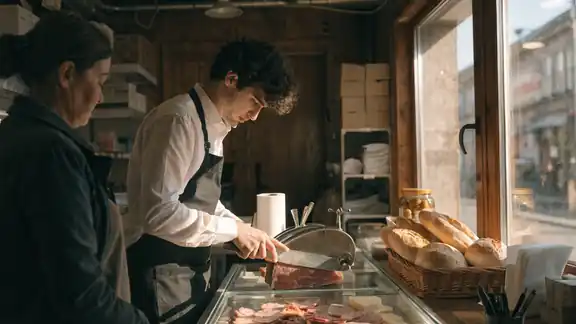
In the example we counted counter time as a wage cost, but its real cost is often higher. If handing out parcels falls on a quiet morning, when the assistant has time anyway, the counter time is almost free. But if it falls in the morning or after-work rush, when five people are standing at the till with a loaf and a pint of milk, every parcel slows the queue down. Some of the waiting customers go elsewhere next time — and no statement will ever show that loss.
- Look at when parcel customers come. Many come after work, right in the shop's evening peak — if parcel traffic falls then, a queue is all but guaranteed.
- Keep the parcels close to the counter on an organised shelf, so a handover isn't spent searching the stockroom. Searching is the biggest part of counter time.
- At peak times, serve the shopping customers first and fit the parcels in when the queue clears for a moment — a sign or a single sentence is enough to explain this.
- If there are two of you, at peak times one serves and the other hands out parcels. If parcel volumes stay high, this becomes part of the staff rota too.
- Returned and outgoing parcels take more time than a handover, with labelling, weighing and paperwork. Ask in advance what you have to do in those cases.
Space, shelving and the Christmas peak
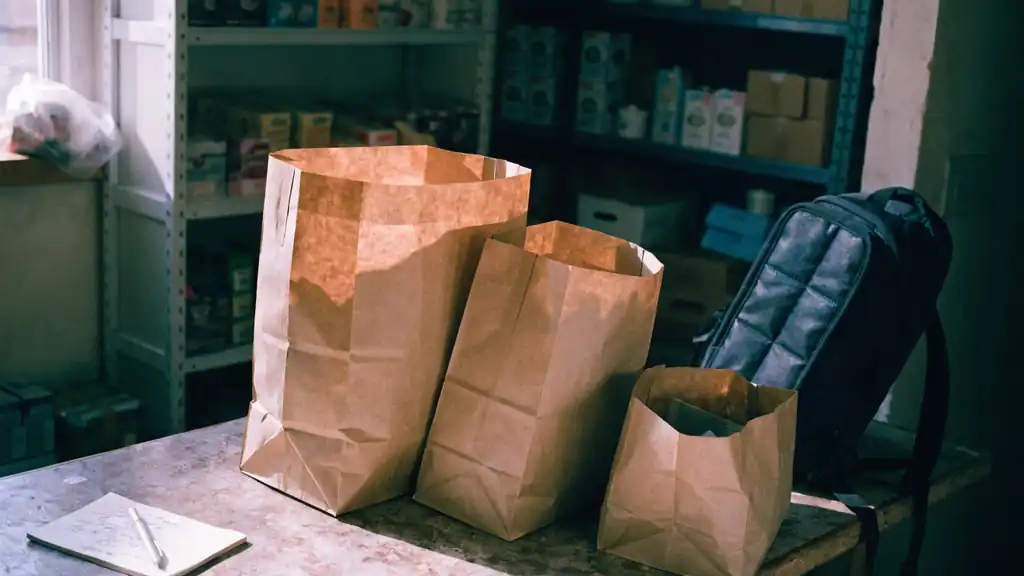
Parcels need space, and that space comes out of the stockroom or from behind the counter. On an average day one or two shelves are enough, but parcel traffic is not even: on Mondays, during sales periods and above all before Christmas it can multiply. At those times parcels sit where your own stock would otherwise be — just when the Christmas stock arrives too. How much to order for that period is covered in our article When to place the Christmas order, and how much to order; with parcels, you have to share that space as well.
- Set aside a separate shelf or cupboard just for parcels, and plan a reserve space for the peak season — not in the walkway and not on the shop floor.
- A parcel is not your stock, but while it is with you, you are responsible for it. Store it where customers can't reach, and where it is safe after closing too.
- Ask the provider how many parcels you need to be able to hold at once, whether there is an upper limit, and what happens when the space is full.
- The provider takes uncollected parcels back after a set time. Keep an eye on whether this happens properly, because old parcels take up the most space.
A parcel locker outside or handing out at the counter?
Many providers offer not counter handover but a locker in front of the shop or next to the entrance. In that case the shopkeeper usually provides only the space and the electricity; the courier puts the parcels in, and the customer takes them out. It is less work — but the customer doesn't come into the shop either, unless they want to.
| Aspect | Parcel locker outside the shop | Handing out at the counter |
|---|---|---|
| Income | Usually a site rent or electricity fee, less dependent on parcel numbers | A per-parcel fee that grows with the volume |
| Space | Outside or in the entrance area, no load on the stockroom | Shelving in the stockroom or behind the counter, a lot in peak season |
| Counter time | Almost none | A few minutes per parcel |
| Customer traffic in the shop | Only those who step in of their own accord — many only come as far as the locker | Every parcel customer comes up to the counter |
| Risk | Lower: the parcel is not in your care | Higher: you are liable for the parcels you hold |
| What it needs | Space, a power connection, often the landlord's permission | Shelving, opening hours, a trained assistant |
A locker can bring extra sales too, but you have to work for them deliberately. If the locker stands next to the entrance, the shop window, a sign about fresh pastries or a drinks fridge by the door can bring some of them in. If the locker stands on the other side of the shop, round the corner, most customers won't even notice that there is a shop there.
Other services: bill payments, top-ups, key cutting, printing
Besides a parcel point, other services can find their way into the shop too. Each has its own logic, but three questions are the same for all of them: how much money has to be handled, who is responsible if something goes wrong, and how much time it takes at the counter.
| Service | Cash handling | Liability | Counter time |
|---|---|---|---|
| Bill payments | A lot of other people's cash in the till, which has to be transferred or handed over | For recording the payment correctly and passing the money on | Medium, a few minutes per customer |
| Phone top-ups, top-up vouchers | The top-up value is other people's money; the fee or commission is small | Top-ups sent to the wrong number, misuse | Short, but you have to explain every error |
| Key cutting | The fee is yours, cash handling is simple | A badly cut key, maintaining the machine | Longer, several minutes per key at the machine |
| Printing, photocopying | Small amounts, many little items | Machine faults, the customer's files | Varies, sometimes a lot because of the technology |
Bill payments and top-ups hold a trap: the amount passing through the till is large, but it isn't yours. If you don't keep it separate, daily turnover jumps, the till is full of cash, and it is easy to think the shop is doing well. The real income is only the fee or commission. So always record services separately from your own product sales, and count other people's money separately when you cash up too.
The contract: what to check before signing
Providers' contracts are usually pre-written, and a small shop can rarely change much in them. That makes it all the more important to read them and know what you are taking on. The points below are worth going through one by one, and where something is unclear, ask in writing.
| Contract point | What it can mean | What to ask |
|---|---|---|
| Exclusivity | You can't be a pickup point for any other provider | How long it lasts, and whether it also covers lockers or other services |
| Liability for lost or damaged parcels | You pay the value of a parcel that goes missing with you | Is there a cap, how must things be proven, is insurance needed |
| Required opening hours | You must be open at set hours and report any change | What happens during holidays, illness or a shortened day |
| Notice period | You can't get out for weeks or months | Is there a trial period, and on what terms can you give notice |
| Seasonal peak | Before Christmas you have to accept several times as many parcels | Is there a cap on stored parcels, and what if the space fills up |
| Fee and settlement | How much, how often and on the basis of what statement they pay | Can the fee be changed unilaterally, and how can you check the parcel count |
How to measure whether it pays off
The parcel point offer is always about the fee, but the decision rests on the extra sales and the counter time — and those can only be measured in your own shop. If possible, take it on for a two- to three-month trial first, and measure during that time. A week or two is not enough, because customers need time to get used to collecting their parcels from you.
- Measure the counter time: on a few days, note with a stopwatch or on a sheet how long a handover takes, and how many parcels fall in the peak hours.
- Count the parcel customers' purchases: on a tally sheet by the till, mark how many buy something else, and roughly how much.
- Compare the months before and after the launch: total turnover, hour-by-hour sales and profit by category.
- Watch for new faces: how many parcel customers later come back without a parcel too. That is the long-term value.
- Check the parcel count on the monthly statement, and compare it with your own notes.
Common mistakes
- Counting only the fee. The fee pays for the counter time; if you don't measure the extra sales, you don't know whether it pays off.
- Treating every parcel customer's purchase as extra sales. A regular who already came in is not new business.
- Not thinking about the pre-Christmas peak. December is when you find out that the stockroom is too small and the queue too long.
- Signing a contract with a long notice period and no trial. If it doesn't pay off, you can't get out for months.
- Keeping the parcels you hold on the shop floor or on an open shelf. One missing parcel can wipe out several months of fees.
- Looking at the other people's money from payments and top-ups together with your own turnover. The till is full, yet the profit is small.
- Forgetting that your opening hours have become an obligation. The provider has to be told about an early closing or a holiday too.
Steps: how to get started
- 11. Work out your own example in advanceEstimate the expected daily parcel count, the fee, the share of extra sales and the counter time, and fill in the table above with your own figures. If the fee doesn't even cover the counter time, the extra sales have to bring in everything.
- 22. Look at your hoursBased on your hour-by-hour sales, work out when the shop is at its peak and when the assistant has time. Ask the provider when parcel customers usually come.
- 33. Read the contractGo through exclusivity, liability, the required opening hours, the notice period and the seasonal peak. Ask for a trial period or a short notice period, and clear up doubtful points in writing.
- 44. Prepare the spaceSet aside a lockable shelf, or one out of customers' reach, near the counter, and plan a reserve space for the peak season. Train the assistants in the steps for handing out, identifying customers and handling returns.
- 55. Measure for two to three monthsNote the counter time, the parcel customers' purchases and the new faces, and record service fees in a separate category. Compare the months with the period before the launch.
- 66. Decide on the numbersAt the end of the trial, work out the real net result: fee plus extra profit, minus the cost of the counter time. If it is positive and the queue isn't putting customers off, stay; if not, give notice, or ask about a locker instead.
Checklist
- I have worked out my own example: daily parcel count, fee, share of extra sales, average basket, margin and counter time.
- I know when parcel customers come, and whether that clashes with the shop's peak hours.
- There is a shelf for parcels out of customers' reach, and reserve space for the pre-Christmas peak.
- I have read the contract: exclusivity, liability, required opening hours, notice period, fee and settlement.
- There is a trial period or a short notice period, and I know how I can get out.
- I record service fees and other people's money separately from my own product sales.
- After two or three months I decide by comparing the periods before and after the launch.
Summary
- A parcel point brings two kinds of income: the small but certain fee, and the uncertain but often larger extra sales.
- The fee usually pays for the counter time; the profit comes from the customer who buys something along with their parcel.
- The biggest hidden cost is the queue at peak time — look at when parcel customers come.
- A parcel locker means less work and fewer customers; handing out at the counter means more work and more sales.
- In the contract, liability, the required opening hours, exclusivity and the notice period matter most.
- Measure during a two- to three-month trial, and decide on the numbers from before and after the launch.
Frequently asked questions
Is it worth it for a small shop to be a parcel pickup point?
It is worth it if the per-parcel fee and the profit on extra sales together exceed the cost of the staff time spent handing out parcels. The fee on its own usually only pays for the counter time; the real value comes from the customer who buys something along with their parcel. It also matters that parcel customers don't load the counter in the shop's busiest hours. A two- to three-month trial is the most reliable way to find out how it works out for you.
How much can you earn with a parcel pickup point?
The per-parcel fee differs by provider and by country, but in most places it is small and arrives monthly, based on a statement. Fee income is simple to calculate: the daily parcel count times the fee. More important are the extra sales, that is, what share of parcel customers buy something else, for how much and at what margin. In this article's example the net result comes roughly half from the fee and half from the extra sales, and counter time takes most of the fee.
How much time does handing out a parcel take?
From an organised shelf, with an experienced assistant, a handover takes one or two minutes; if you have to search, or the customer can't find their code, it can take longer. Outgoing and returned parcels usually take longer because of labelling and paperwork. With thirty parcels a day this easily adds up to an hour of work, which has to be counted in the wage cost too. Time it with a stopwatch on a few days, because your own figure is worth more than any estimate.
How do I avoid queues caused by parcel handovers?
First, look at when parcel customers come, and whether that coincides with the shop's morning or evening rush. Keep the parcels close to the counter on an organised shelf, so a handover isn't spent searching. At peak times, serve the shopping customers first, and fit the parcels in when the queue clears. If there are two of you, split the task, and if volumes stay high, build it into the staff rota.
Which is better: a parcel locker outside the shop or handing out at the counter?
A locker means less work and less risk, because the courier puts the parcels in and the customer takes them out. In return, the customer doesn't necessarily come into the shop, so the extra sales are smaller too. Handing out at the counter means more work, more space and more liability, but every parcel customer comes up to the counter. If your shop is good at drawing people in, counter handover can bring more; if you are short of time and space, a locker may be the better choice.
Who is responsible if a parcel is lost or damaged while it is with me?
The contract settles this, and it differs from provider to provider. In many places the pickup point is responsible for a parcel it has taken from the courier and not yet handed to the recipient. Check whether there is a cap, what proof is required, and whether insurance is needed. The best protection is a shelf out of customers' reach, careful identification at handover, and recording every receipt and handover in the provider's system.
What should I look out for in a parcel point contract?
The most important points are exclusivity, liability for lost or damaged parcels, the required opening hours, the notice period and how the seasonal peak is handled. Also check how and how often they pay, and whether the fee can be changed unilaterally. Ask for a trial period or a short notice period so you can get out if it doesn't pay off. Ask about doubtful points in writing and, if needed, have a professional look over the contract.
What happens with parcels before Christmas?
Before Christmas, parcel volumes can multiply, and this falls exactly in the period when your own festive stock needs space too. The stockroom fills up quickly, and the queue at the counter gets longer. It is worth setting aside a reserve space in advance and asking the provider whether there is a cap on stored parcels. If there are two of you working, allow for parcel handovers in the December rota too.
Is it worth taking on bill payments or phone top-ups as well?
Both can bring in customers, but the profit is usually small, because most of the money passing through the till isn't yours. You have to handle other people's money, you may be liable for a wrong payment or top-up, and every customer takes time at the counter. Only take them on if the fee and the extra sales together pay for this, and you can keep the cash handling cleanly separate. Go over how the money is handled and settled with your accountant too.
How do I keep service fees separate from my own turnover?
Record service fees paid at the counter, such as printing or key cutting, in a separate category, not among the products. Count other people's money, such as bill payments, separately when you cash up too, so daily turnover doesn't look bigger than what belongs to the shop. That way the reports show separately what the service brings in and what product sales bring in. Check the parcel point fee against the provider's monthly statement, compared with your own notes.
How long should the trial period be?
At least two to three months, because customers need time to get used to collecting their parcels from you. In a week or two the parcel count is still low, and it says little about the extra sales. During the trial, measure the counter time, count the parcel customers' purchases, and compare the months with the period before the launch. If the contract doesn't allow a trial, at least make sure the notice period is short.
How do I know whether parcel customers really buy anything?
The simplest way is to keep a tally sheet by the till during the first weeks of the trial, marking how many parcel customers buy something else, and roughly for how much. Also compare turnover and profit by hour and by category for the months before and after the launch, because parcel customers typically take drinks, bakery items and small extras. Watch for new faces too: someone who first came for a parcel and later returns without one is the long-term value. Don't count your regulars' usual shopping as extra sales.
Say the product's name and it's there on the till.
Boltom App takes the work behind the counter off your hands. You find a product by looking at its photo or saying its name out loud — no codes, no scraps of paper. Whatever leaves the shelf or goes in the bin is recorded right there, not in a notebook. It works alongside your existing till, not instead of it.
- A quick code with a photo — or just say the product's name and the till finds it.
- Staff consumption in three taps, recorded under the person's name.
- Daily waste with its reason: expired, broken, unsellable — totalled up in money.
No card needed · 2 minutes