Why memory doesn't work
Ordering fresh stock is the decision most shops make with the least data. The delivery comes in the morning, the order has to go in the evening before or at dawn, and the number comes from "a lot was left yesterday" or "it sold out fast yesterday". The trouble is that those two sentences are not the same kind of information.
Memory also distorts things, and it does so predictably: we remember shortages better than leftovers. If you once had to turn someone away without bread, that stays with you for a week; the ten loaves that go in the bin every evening are not an event, they're routine. That's why orders creep upwards, and why waste grows without anyone ever deciding to let it.
The daily number comes from two figures
For tomorrow's quantity to be more than a guess, you need to know two things about the same day: how much sold, and how much was left at closing. Together they tell you something; on their own, neither does.
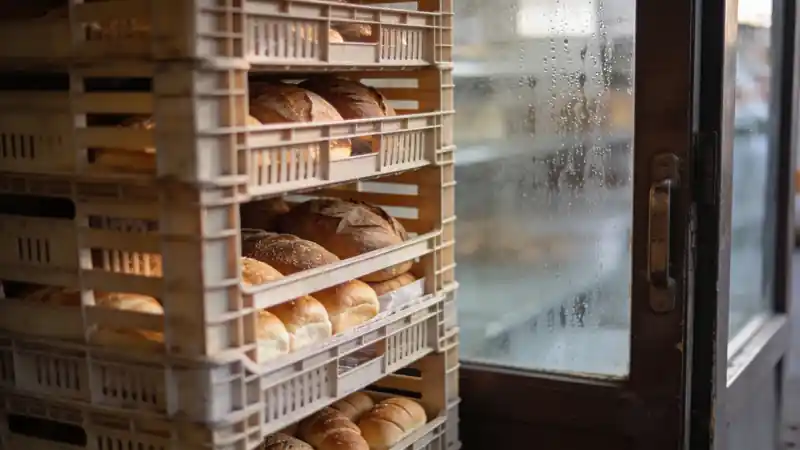
- Sales: how many went through the till. This is the easiest figure to get, and on its own the most misleading.
- Leftovers: how much was still on the shelf at closing. Without this, sales tell you nothing you can work back from.
- Time of sell-out: if something was gone by eleven, sales show the quantity you ordered, not the demand.
- Reason: leftovers aren't always about the order. A rainy Tuesday, a road closure or a promotion next door all show up here.
- Type of day: weekday, weekend, day before a holiday, around payday — these are not comparable with each other.
- Product breakdown: "bakery" is not one line. Rolls and loaves live separate lives, and need separate orders.
- Promotions: if the product or its neighbour was on offer, that day is no use as a baseline.
How to work out tomorrow's quantity
- 11. Take the last three or four of the same weekdayIf you're ordering for Tuesday, you need the last three or four Tuesdays. Don't use the weekly average: Saturday pulls it up, Monday pulls it down, and you end up with a number that is true for no day at all.
- 22. Note which days had leftovers and which sold outOn days with leftovers, sales are the real demand: people took as much as they wanted. On sell-out days you don't know how much more they would have taken — there, sales are a lower bound, not a fact.
- 33. Calculate from the days that had leftoversAverage those, then add the few units you want as a buffer. The buffer isn't hiding uncertainty: it's a deliberate decision that you'd rather have two left than turn someone away.
- 44. If it sold out every day, raise it — but by one stepIf nothing was left on three consecutive same weekdays, the quantity is definitely too low. Raise it by ten to twenty per cent and leave it alone for two weeks. A big jump is bad because afterwards you won't know how much would have been enough.
- 55. Write down what you changed and whenWithout this, in two weeks you won't know where the current number came from. One line in a notebook is enough: date, product, old and new quantity. That line is what turns ordering into a method instead of starting over every week.
The days of the week are not alike
With fresh stock the commonest mistake isn't the wrong quantity, it's the wrong comparison. A shop's weekdays and weekends differ so much that their average has nothing to do with reality — and there is a regular gap between the start and the end of the week too.
| Day | What to watch | Why |
|---|---|---|
| Monday | Often the weakest day of the week | Many stocked up at the weekend and still have supplies at home |
| Tuesday-Thursday | This is the stable base | The least disturbed days — worth averaging these |
| Friday | A rise, sometimes a big one | People shop for the weekend and take more fresh stock too |
| Saturday | Its own number, not a multiple of a weekday | Different times of day, different baskets |
| Sunday | Depends on opening hours, its own pattern | If you open for fewer hours, sales aren't comparable |
| Day before a holiday | Never the usual baseline | A separate case: last year's equivalent day is the reference |
What the weather and the calendar do
Fresh stock is the range where an outside effect shows up within a single day. You can't calculate these, but you can recognise them, and afterwards you can use them to explain a bad day — which matters, so that you don't change the order because of something that happened only once.
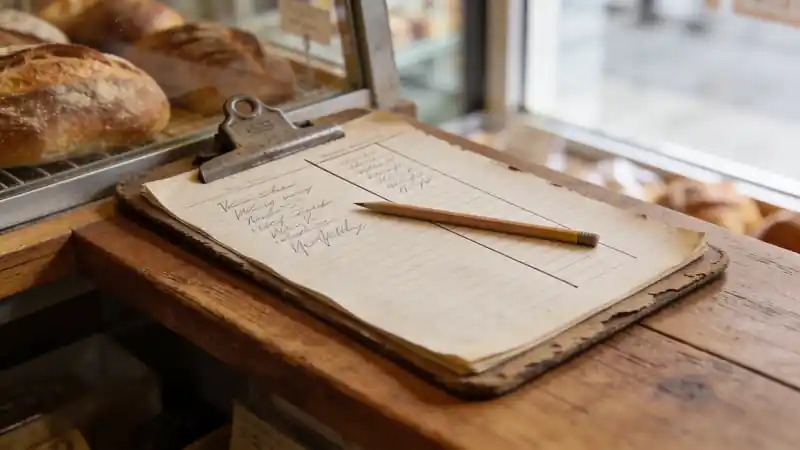
- Long spells of rain or heat: fewer people walk in, and fresh stock sales drop noticeably.
- The first genuinely warm days: bakery sales fall, while chilled goods and drinks jump.
- Around payday: the days of bigger shops, typically the start and middle of the month.
- Term time and school holidays: the morning bakery peak disappears in the holidays, or shifts later.
- A local event, a road closure, building work: one-off, but it can take a whole day with it.
- Days before a holiday: their own category — last year's equivalent day is the reference, not last week.
What to do with what is left anyway
- Make markdowns predictable and tied to a time: always the same hour, always the same marking. An occasional discount just teaches customers to wait for it.
- A markdown is not a failure: bread sold at half price is still more than bread in the bin. The loss happens where you didn't even try.
- Whatever doesn't sell even at a markdown, record as waste with a reason. That line becomes the basis of the next order.
- If the same product is regularly left over, that isn't a waste question but an ordering one — cut the quantity, don't deepen the discount.
- Stock taken for own use belongs on its own line, with a name: it's neither waste nor a sale.
- Donating or passing on surplus food has its own rules — before you start, check what applies where you are.
In summary
- Ordering fresh stock rests on two figures: how much sold, and how much was left on the same day.
- Compare the same weekdays, three or four weeks back — not a weekly average.
- Sales of a product that sold out are not demand, they're the quantity you ordered. Round up there.
- Change one product at a time, by ten to twenty per cent, and leave it for two weeks.
- Explain a bad day rather than following it: one rainy Tuesday is no reason to change an order.
- Handle leftovers by rule, not by mood — and whatever still doesn't sell goes into waste with a reason.
Frequently asked questions
How much left over is acceptable?
There is no single right number, because it varies by shop and depends on how much it's worth to you to have stock on the shelf until closing. The more useful question is whether the amount left is stable: if roughly the same amount is left every day, the order is set correctly and you only need to decide the level. If it swings between nothing and a lot, the quantity isn't the problem — you're comparing the wrong days.
Why not raise it a lot at once if it sells out three days running?
Because afterwards you won't know how much would have been enough. If you go from twenty to forty and five are left, all you learn is that forty is too many. In steps of ten to twenty per cent you reach the level where just a little is left — and that is the point you're looking for.
Should rolls and loaves be ordered separately?
Yes, and this is one of the biggest differences between a well-run and a badly run bakery shelf. They sell at different times of day, they're for different customers, and they react differently to the weather. If you keep one combined "bakery" figure, one of them is always left over and the other always runs out, while the combined number suggests it's roughly right — when neither is.
What if my supplier only delivers in fixed quantities?
Then your room for manoeuvre is the number of units, which makes it all the more important to know where you stand. Usually two things can be changed: the frequency of delivery, and how you split a larger unit between varieties. It's worth discussing this with the supplier too — with your ordering data in hand, there is often room to adjust unit size or frequency.
How should I handle the days before a holiday?
As their own category, and never from last week's figures. The reference for a pre-holiday day is the equivalent day last year: if three times the usual sold then, expect that again. A ratio is more reliable than a difference, because the shop's turnover may have changed in the meantime.
Do I really have to record leftovers every day?
The honest answer is yes — at least until the quantity settles. Without it you only see sales, and sales don't tell you whether everything went because that was exactly the right amount, or because there was too little. After a few weeks you can do it less often: look again when something around the shop changes.
What if someone else places the order?
Then they should work from the same figures, not from their own memory — and there should be one shared place where the leftovers are written down. The commonest problem isn't a bad decision, it's two people working from two separate numbers in their heads, so the order swings week by week depending on who was on shift.
Say the product's name and it's there on the till.
Boltom App takes the work behind the counter off your hands. You find a product by looking at its photo or saying its name out loud — no codes, no scraps of paper. Whatever leaves the shelf or goes in the bin is recorded right there, not in a notebook. It works alongside your existing till, not instead of it.
- A quick code with a photo — or just say the product's name and the till finds it.
- Staff consumption in three taps, recorded under the person's name.
- Daily waste with its reason: expired, broken, unsellable — totalled up in money.
No card needed · 2 minutes