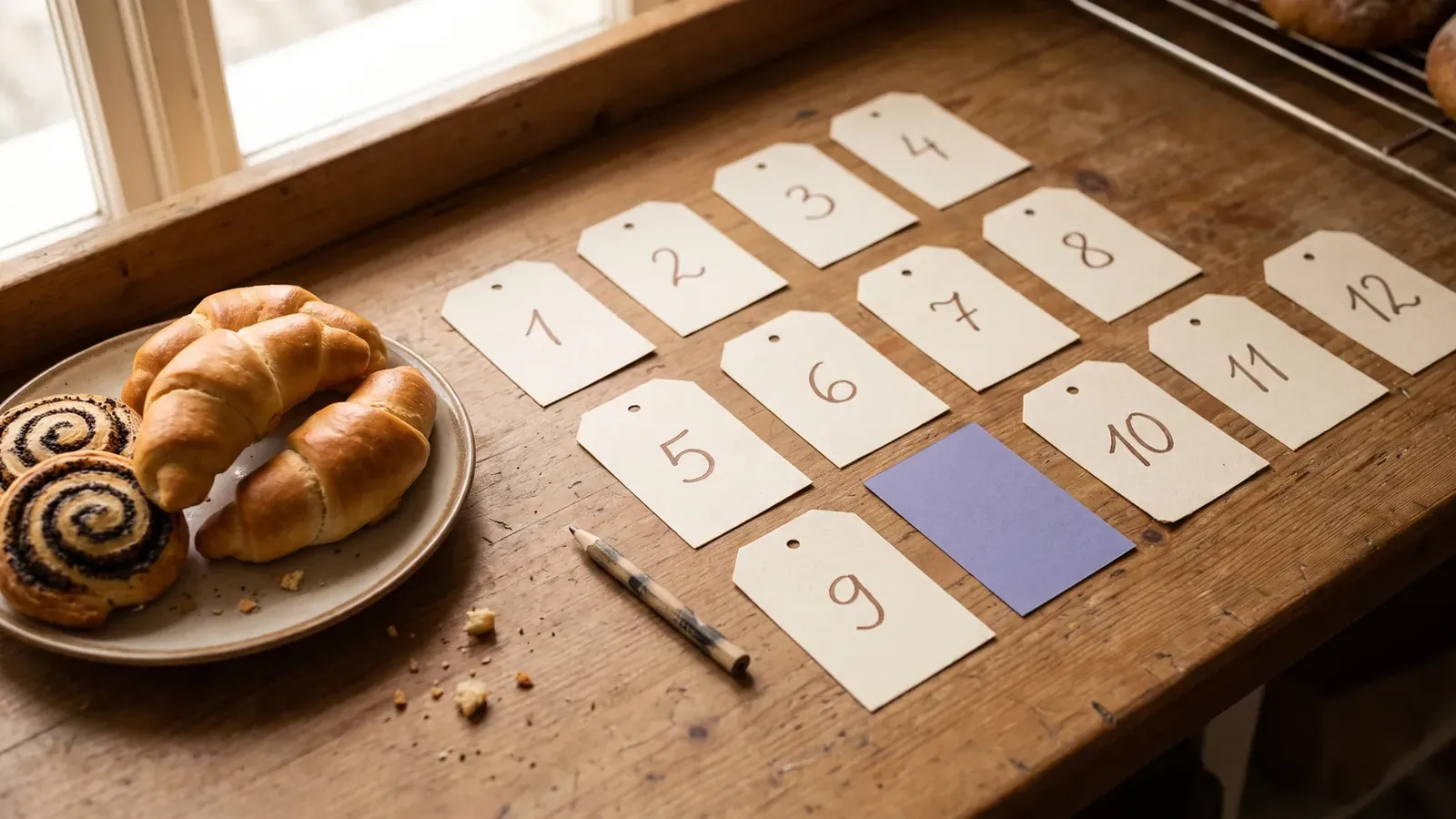
Two shops sell the same milk for the same price, yet customers think one of them is more expensive. The price is rarely the reason. Much more often it is the way the price appears: what number it ends in, what stands next to it on the shelf, whether the label can be read, and whether there is an offer nearby that makes the whole row look cheap — or expensive.
Psychological pricing is not trickery, and it is not a miracle cure either. It rests on simple observations about how customers read prices when they are in a hurry — and in a small shop they almost always are. If you know these observations, you can sell more at the same margin, or earn a better margin on the same sales. If you don't, you may unwittingly cheapen your best products, or run a promotion that takes more profit than it brings in.
This article is about how to show a price. When and by how much to raise prices is covered in When and how to raise prices without losing customers; how to calculate margin and markup in What is your margin really? Markup, margin and a shop's true profit; and how to time and set up promotions in Timed promotions: let the till ring the right price. The examples use neutral units, without tax, and are illustrations — you can only test how your own customers react in your own shop.
It's not just the price, it's how it looks
Customers don't know the price of most products by heart. The price of milk, bread, coffee and a few other staples is in their head; the rest they judge in front of the shelf, in a second or two. At that moment they don't calculate, they compare: with the product next to it, with last time's price, with what they saw in another shop. The way the price is shown influences that comparison.
- The digits: customers read from left to right and remember the first digit most strongly. That is why a price ending in 9 works — and why a round number feels expensive when it just tips over into the next whole number.
- The surroundings: a price never stands alone. A more expensive or cheaper product next to it shifts the yardstick, and the same price means something different at the start of a row than at the end.
- The pack size: more and more customers look at the unit price, and if the bigger pack is more expensive per kilo, that destroys trust.
- The label: what can't be read doesn't exist. Faced with a tiny, grubby or misplaced price tag, customers don't ask — they simply don't buy.
- Habit: if there is a promotion every week, the regular price starts to feel expensive, and customers wait.
Prices ending in 9: when they help and when they hurt
A price ending in 9 — 1.99, 199 or 19.9, depending on your currency — became widespread because customers notice the first digit. In the head, 2.99 is "two-something", not "almost three". Many shops find that on price-sensitive products and promotional lines this really helps, especially where customers compare with other shops' prices. The difference is a fraction of a unit; the impression is a whole digit.
But a 9 ending also carries a message: it says this is a place to shop cheaply. On everyday staples that is a good message; next to an artisan cheese or a bottle of wine meant as a gift it is a bad one. There, customers are not trying to save money but to buy something good, and a 9 ending suggests that the shop is haggling with them.
| Product group | Typical ending | Why |
|---|---|---|
| Everyday staples: milk, pasta, flour, soft drinks | Ending in 9 | Customers compare these with other shops — this is where the left-hand digit matters most. |
| Promotional line | Ending in 9 | The "cheap" message reinforces the promotion and sets it clearly apart from the regular price. |
| Fresh bakery goods, baked on site | Round | Simple, quick to pay, and it speaks of freshness, not of a bargain. |
| Local produce: honey, cheese, jam | Round | Customers here are looking for quality, not the cheapest option — a 9 ending devalues it. |
| Premium wine, gifts, gift boxes | Round | When buying a gift, customers don't want to save; a 9 ending makes it look cheap. |
| Small items by the till | Round, small number | Decided in seconds, and a round price is easy to add up in your head. |
Round prices: a sign of quality
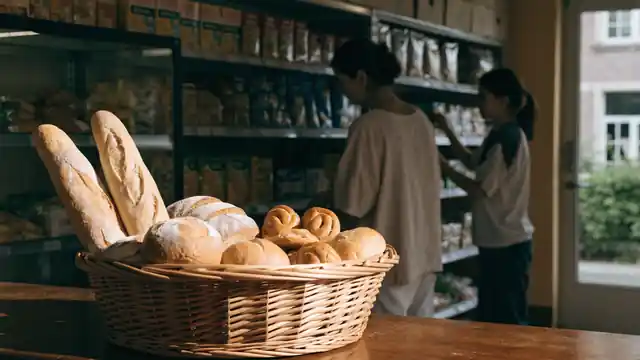
A round price says: this is what it costs, and this is what it is worth. There is no haggling in it, no discount calculated down to the last coin. On bread baked on site, honey from a nearby producer or boxed chocolates, that is exactly the message the shopkeeper wants. Many bakeries and delis find that with a round price customers weigh things up less, and ask about the product rather than its price.
Round prices have a practical advantage too. Payment is quicker, there is less small change, and where the cash total has to be rounded because of the smallest coin, there are fewer arguments at the till. In a morning queue where everyone buys two rolls and a loaf, that adds up to minutes.
Anchor prices: what stands next to it decides
Customers always measure a price against something. If there is only one olive oil on the shelf, its price stands alone, and customers compare it with a vague memory. But if a much more expensive artisan version stands next to it, the middle product suddenly looks like a sensible choice — even though its price hasn't changed at all. That more expensive product is called an anchor price.
An anchor doesn't need to sell much. Its job is to be there, clearly visible, right next to the product you want to sell. In a small shop this typically means one or two premium items within a category: a more expensive wine at eye level on the wine shelf, a honey in a decorative jar next to the everyday one, a bigger, pricier box of chocolates above the smaller ones. If the anchor sometimes sells out, that is good news — but it is not its purpose.
„The expensive product on the shelf is not always there to be sold. Sometimes it is there so that people buy the others next to it.”
An anchor works if it is believable. An obviously overpriced product that never sells, kept only for show, sooner or later catches customers' attention, and from then on the whole shelf looks suspicious. A good anchor is a real product of real quality, which some customers genuinely buy as a gift or for a special occasion. Where to put it on the shelf is covered in more detail in our article on shop layout.
Good, better, best: three price tiers
The deliberate version of the anchor is three price tiers. Within a category you offer three clearly distinct levels: an entry price for those who only want the basics, a middle tier that most people choose, and a top tier that also works as an anchor. Many shops find that with only two tiers most customers take the cheaper one; with three, more of them choose the middle.
| Tier | Example | Shelf price (units) | Its role |
|---|---|---|---|
| Good | Supermarket-style blossom honey, smaller jar | 59 | Entry price: someone who just wants honey shouldn't leave empty-handed. |
| Better | Acacia honey from a local producer | 90 | The target: most customers are drawn here, and it carries the best margin. |
| Best | Producer's creamed honey in a decorative jar | 140 | Anchor: sells less often, but next to it the middle price looks sensible. |
Three tiers work if customers can actually see the difference. It is not enough for one to be more expensive — it should be clear why: a different producer, a different pack size, a different quality. The three products should stand side by side on one shelf row, with the middle one at eye level if possible. If the tiers are scattered around the shop, customers don't compare — they look for the cheapest.
- Start in a category where there is a real difference in quality: honey, coffee, wine, cheese, chocolate, oil.
- Choose the middle tier so that it carries the best margin — that is where most customers will be drawn.
- Make the entry tier decent, not deliberately poor: the people who buy it should come back too.
- One or two units of the top tier on the shelf are enough; if it doesn't sell, that is not a problem as long as the middle one sells better next to it.
Bundles and multi-buy offers: when they eat the margin
"2 for …", "buy 3, pay for 2" and "second one half price" are attractive offers, and in many shops they really do raise the number of units sold. But the margin per unit falls, and if the customer would have bought two anyway, the shopkeeper has simply handed money back. So the question is not whether more sells, but whether the extra units make up for the margin lost on each one.
| Offer | Customer pays | Cost of goods | Total margin | Margin % | Margin per unit |
|---|---|---|---|---|---|
| One unit at the regular price | 100 | 60 | 40 | 40% | 40 |
| "2 for 180" | 180 | 120 | 60 | 33% | 30 |
| "3 for 270" | 270 | 180 | 90 | 33% | 30 |
| "Second one half price" | 150 | 120 | 30 | 20% | 15 |
| "Buy 3, pay for 2" | 200 | 180 | 20 | 10% | approx. 6.7 |
The lesson of the table is simple. "2 for 180" and "3 for 270" are modest discounts: the margin per unit falls from 40 to 30, and if they make a customer take two instead of one, the shop earns more in total. "Buy 3, pay for 2", however, cuts the margin per unit to a sixth — to keep the same margin, six times as many units would have to sell, and in a small shop that almost never happens.
- A good bundle: on a product customers would otherwise buy one at a time, and take more of because of the bundle — soft drinks, snacks, yoghurt.
- A good bundle: on goods close to their date or over-ordered, where the alternative is waste, not a unit sold at the regular price.
- A bad bundle: on a product customers buy several of anyway — there you are just handing back money.
- A bad bundle: on a low-margin staple, where the discount already takes most of the margin.
- Always work out the margin left per unit before you put the offer up — a minute of arithmetic tells you whether it is worth it.
Unit prices and pack sizes: customers compare
The unit price — the price per kilogram, litre or item — is for many customers the first thing they look at, especially if they are used to it from large stores. For a small shop this is both an opportunity and a risk. An opportunity, because a well-chosen pack size clearly looks like good value. A risk, because if the bigger pack has a higher unit price than the smaller one, customers will notice sooner or later.
| Pack size | Shelf price (units) | Unit price (units/kg) | What the customer thinks |
|---|---|---|---|
| 250 g | 40 | 160 | Small and pricey per kilo — but fine for trying. |
| 500 g | 70 | 140 | The best buy — and it really is. |
| 1 kg | 150 | 150 | "I've been had": the big pack costs more per kilo than the medium one. |
If the cost price means the big pack can't be cheaper per kilo, consider whether it belongs on the shelf at all. A small shop rarely has room for three pack sizes of the same product; two, with clearly different unit prices, are usually enough. And for goods weighed out on the scale, the unit price is the price — there a round number helps mental arithmetic in particular.
Price labels and the shelf edge: make them readable
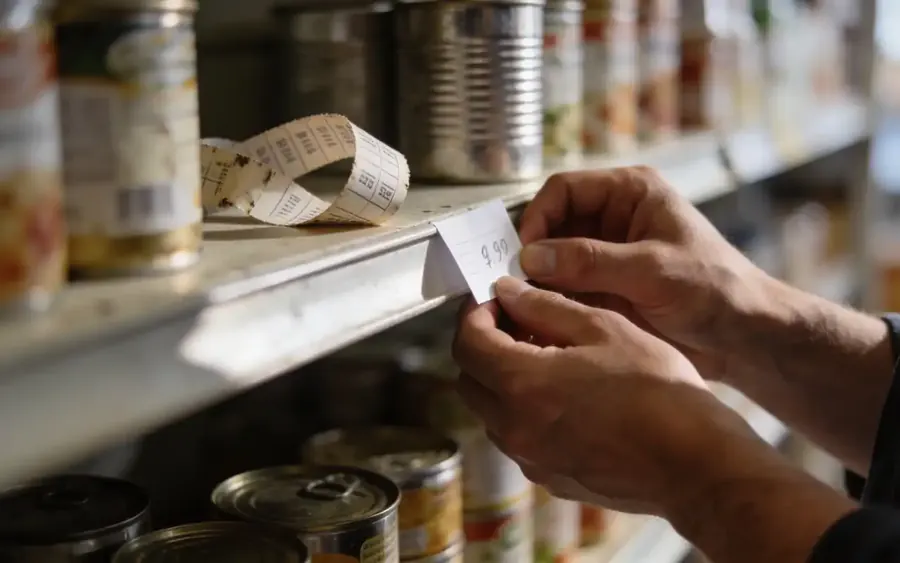
Even the best-judged price is worth nothing if the customer can't see it. The shelf edge is the smallest surface in the shop, yet it is where most purchases are decided. It is worth walking through your shop once, on a quiet afternoon, with a customer's eyes: standing in front of the shelf, without glasses, quickly — which price can be read, which can't, and which belongs to which product.
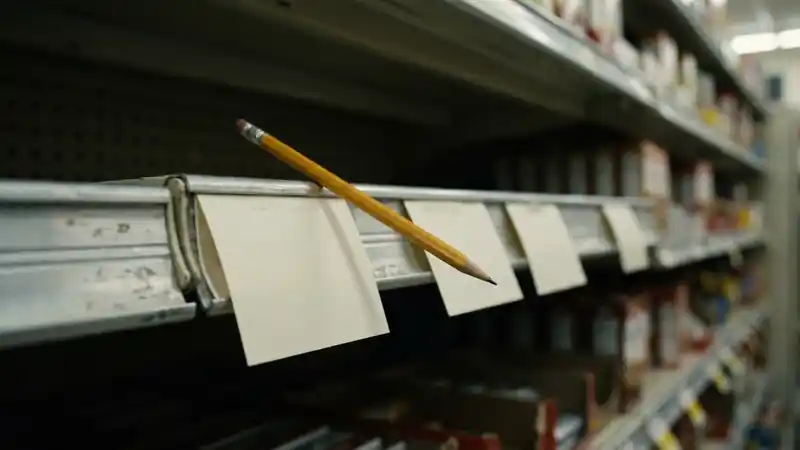
- The price should be the biggest element on the label, the product name and pack size smaller, the unit price on a separate line.
- The label should sit directly below the product. If a label has slipped between two products, customers will assume the higher price.
- Use one kind of label across the shop, in one typeface. A handwritten card can be the exception on bakery goods or local products, where the handwriting is itself a message.
- Promotional labels should be a different colour, and used only for promotions. If every other product is highlighted, none of them is.
- Show a crossed-out price only if that really was the previous price — and check what the rules say where you are.
- Replace old, faded, drooping labels. A worn tag says that nobody has looked at this shelf for a long time.
A crossed-out price is a powerful tool, because the customer sees the old and the new at once and feels the difference as a gain. That is exactly why it is regulated in many places, and exactly why it backfires if it isn't genuine. If you raise a product's price before a promotion so that you can then "reduce" it, your regulars will notice — and they won't believe the next crossed-out price.
Impulse prices by the till
The half metre in front of the counter is a category of its own. Here the customer is already about to pay, the basket is full, and they make one last, quick decision — or don't. In this spot it is not the 9 ending that does the work, but simplicity: a small, round price that is easy to add in your head and needs no thought.
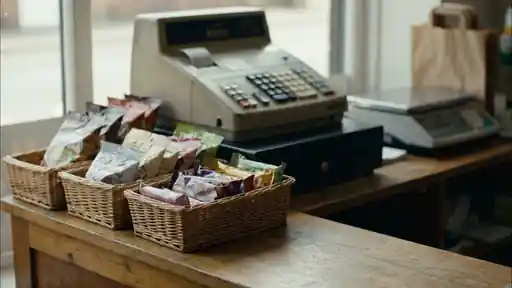
- One price per basket: if everything in a basket costs the same, the customer doesn't need to look for a label.
- A small amount: by the counter, what works is a product whose price is negligible compared with the total of the purchase.
- A good margin: this is one of the most valuable spots in the shop, so don't fill it with low-margin staples.
- No promotions: an impulse purchase by the counter doesn't depend on a discount — here a discount is mostly just lost margin.
Common mistakes
- Nines everywhere. If every price in the shop ends in .99, the premium and local products look cheap too — and the shop feels like a discounter, even when it isn't.
- Too many promotions. If something different is reduced every week, customers learn that it isn't worth buying at the regular price, and they wait.
- Bundles without the arithmetic. "Buy 3, pay for 2" looks good in the window, but if the margin per unit falls to a fraction, even the extra sales bring in less profit.
- A fake anchor. A product that never sells and is obviously overpriced is not an anchor but a reason for suspicion.
- Different prices on the shelf and at the till. If customers pay something different at the till from what they saw on the shelf, that loses trust, and in many places it is also against the rules.
- Rounding at the till. If the endings mean the cash total regularly has to be rounded, that leads to small but recurring arguments — a round price prevents them.
- Changing everything at once. If in one week you reprice the endings, rearrange the shelf and start a promotion, you won't know what worked.
How to test it in two weeks
The effect of psychological pricing differs from shop to shop and from one set of customers to another. What works in a corner shop in town may not work in a village shop or a bakery. So the best advice is not a rule but a method: try it on a small scale, measure it, and extend it only if the numbers confirm it.
- 11. Choose one product group and one changeFor example: you switch the honeys from 9 endings to round prices, or you introduce a "2 for …" offer on yoghurts. One group, one change — otherwise you won't know what worked.
- 22. Look at the two weeks beforeWrite down how much of the group sold over the past two weeks, in units, turnover and profit. This will be the baseline for the comparison.
- 33. Work out the margin in advanceFor a bundle or a promotion, work out how much is left on each unit, and how many units must sell for you not to lose out overall. If that number is unrealistic, don't start it.
- 44. Make the change in one day, then leave it aloneChange every label at once, and at the till too. After that, don't touch it for two weeks, and don't run another promotion in the same group alongside it.
- 55. Compare the two periodsLook at profit as well as units sold, not just turnover. Think about distorting factors too: holidays, the weather, payday, a promotion at a neighbouring shop.
- 66. Decide, and write it downIf profit went up, keep it, and try it on a similar group. If not, change it back. Write down what you tried and what came of it — in six months, that notebook will be worth more than any general advice.
Checklist
- I know in which product groups a 9 ending works, and in which a round price does.
- Bakery goods, local products and premium lines have round prices.
- Every important category has a believable anchor next to the middle tier, in a clearly visible place.
- Where there is a real difference in quality, I offer three price tiers side by side.
- For every bundle I have worked out how much margin is left per unit.
- The unit price is shown wherever it is required, and the bigger pack is not more expensive per kilo than the smaller one.
- Every price label is readable, sits below its product and shows the same price as the till.
- The baskets by the counter hold products with small, round prices and a good margin.
- I change only one thing at a time, and after two weeks I look at profit too.
Summary
- Psychological pricing is not about how big a price is but about how it is shown: the ending, the surroundings, the pack size, the label.
- A 9 ending can help on everyday staples and promotional lines, but it cheapens bakery goods, local and premium products — there a round price signals quality.
- Anchor prices and three price tiers steer customers towards the middle product, if the anchor is believable and the tiers stand side by side.
- Bundle prices can raise units sold, but they can also eat the margin: always work out how much is left on each unit.
- Unit prices that make sense across pack sizes are a matter of trust, and readable labels are a basic requirement — and there may be local rules for both.
- None of these techniques is guaranteed: try it on one product group for two weeks, and measure profit as well as units sold.
Frequently asked questions
What is psychological pricing?
Psychological pricing means using the way a price is shown to influence how customers perceive it. It includes prices ending in 9, round prices as a signal of quality, anchor prices, three price tiers, bundle offers and displaying unit prices. It is not the size of the price that changes, but whether it looks cheap, fair or expensive. Its effect varies from shop to shop, so it is worth trying on a small scale.
Why do prices end in 99?
Because customers read from left to right and remember the first digit most strongly. In the head, 2.99 is "two-something", not "almost three", even though the difference is a fraction of a unit. Many shops find that this helps on price-sensitive products and promotions. At the same time, a 9 ending also says that the shop is cheap, which is not a good message for every product.
Will I really sell more if I use prices ending in 9?
Not necessarily. On everyday staples and promotional lines, many shops see a positive effect, but it is not guaranteed, and it is not the same with every set of customers. On premium and local products a 9 ending can even hurt sales, because it makes them look cheap. You get a reliable answer in your own shop, by measuring one product group for two weeks.
When is a round price better?
Where customers are looking for quality rather than the cheapest option: fresh bakery goods, products baked on site, local produce, premium wine, gifts. A round price says the product is worth this much, with no haggling in it. It is also quicker at the till, and where the cash total has to be rounded, it causes fewer arguments. It also works better for impulse products by the counter, because it is easy to add up in your head.
What is an anchor price, and how do I use it in a small shop?
An anchor price is a more expensive product that makes the other prices look more reasonable. In a small shop it might be a premium wine, a honey in a decorative jar or a bigger box of chocolates, placed right next to the product you want to sell. The anchor doesn't need to sell much, but it must be a real, believable product. An obviously overpriced item that never sells creates suspicion rather than trust.
Is a "buy 3, pay for 2" offer worth it?
Rarely, because the real discount is 33%, and that takes most of the margin per unit. In the article's example, the margin on a product with a 40% margin falls from 40 units to about 6.7 units per unit, so you would have to sell six times as many units to earn the same margin. It can be worth it on goods close to their date or over-ordered, because there the alternative is waste. On regular lines, a smaller "2 for …" type of discount is usually the better choice.
How do I work out how much a bundle takes from my margin?
Multiply the number of units by the cost price and subtract it from the bundle price — that is the bundle's total margin. Divide it by the number of units, and compare it with the margin on one unit sold at the regular price. This shows how many times more units must sell for you not to lose out overall. If that number is unrealistic, don't start the bundle.
Do I have to display the unit price?
In many countries it is compulsory for certain products to show the unit price as well, per kilogram, litre or item, but the rules vary from market to market. Check the local consumer protection rules, or ask your accountant, to find out what applies to you. Even where it isn't compulsory, it is worth showing, because customers look at it more and more often. Make sure the bigger pack doesn't have a higher unit price than the smaller one.
Can I show the crossed-out old price next to the promotional one?
In many places yes, but which previous price may be shown crossed out is often regulated. Some markets, for example, require it to be the lowest price over a preceding period. Check your own country's rules before you use it. And regardless of the rules: a crossed-out price only builds trust if it is genuine.
What should go next to the till, and at what price?
Small, cheap, instantly understandable products with a good margin: sweets, chewing gum, snacks, small seasonal items. The price should be small and round, ideally with everything in one basket costing the same. Promotions are rarely needed here, because an impulse purchase doesn't depend on a discount. Low-margin staples shouldn't take up this spot.
How do I know whether a pricing change has worked?
By trying it on one product group, with a single change, for two weeks, and comparing it with the two weeks before. Look at profit as well as units sold and turnover, because a bundle offer can raise turnover and still reduce profit. Think about distorting factors too, such as holidays, the weather or a promotion at a neighbouring shop. For this you need to record sales product by product and know your cost prices.
Isn't this deceiving the customer?
Not if you do it honestly. Round prices, 9 endings, three price tiers and readable labels hide nothing: customers see every price and decide freely. Deception is when the crossed-out price was never real, when the shelf shows something different from the till, or when the bigger pack is quietly more expensive per kilo. In the long run psychological pricing only works if customers can trust the shop's prices.
Say the product's name and it's there on the till.
Boltom App takes the work behind the counter off your hands. You find a product by looking at its photo or saying its name out loud — no codes, no scraps of paper. Whatever leaves the shelf or goes in the bin is recorded right there, not in a notebook. It works alongside your existing till, not instead of it.
- A quick code with a photo — or just say the product's name and the till finds it.
- Staff consumption in three taps, recorded under the person's name.
- Daily waste with its reason: expired, broken, unsellable — totalled up in money.
No card needed · 2 minutes