Small-shop owners rarely disagree about what is hardest: the price at the discounter down the road. Your margin doesn't allow the same shelf price and your order volumes don't earn the same terms. If you enter that race, every year gets slightly worse.
The good news is that this isn't why people come to you. Whoever does the big weekly shop drives to the discounter anyway. Whoever comes to you wants something else: proximity, speed, one particular product, or being known. That something else can be strengthened — and that is specialisation.
Why 'a little of everything' fails
In a sixty-square-metre shop, shelf space is the scarcest resource, not money. Stock one or two of everything and you are weaker than the big competitor in every category and better in none. Nothing in the customer's head describes your shop — so they only come in when something has run out at home.
What specialisation means in a small shop
| Direction | Who it serves | What it costs | Watch out for |
|---|---|---|---|
| Fresh bakery, baked in-house | Daily customers, morning trade | An oven, an early shift | Short shelf life: without tuned quantities, waste eats the gain |
| Local produce | Customers who care about origin | Supplier relationships, more admin | Few producers, reliable delivery — stockouts hurt badly here |
| Coffee and quick convenience | Passing trade, commuters | A machine and a small counter | Speed is the product: a queue destroys the point |
| Ethnic and community ranges | The local community | Specialist sourcing | The strongest loyalty of all — if the neighbourhood really is like that |
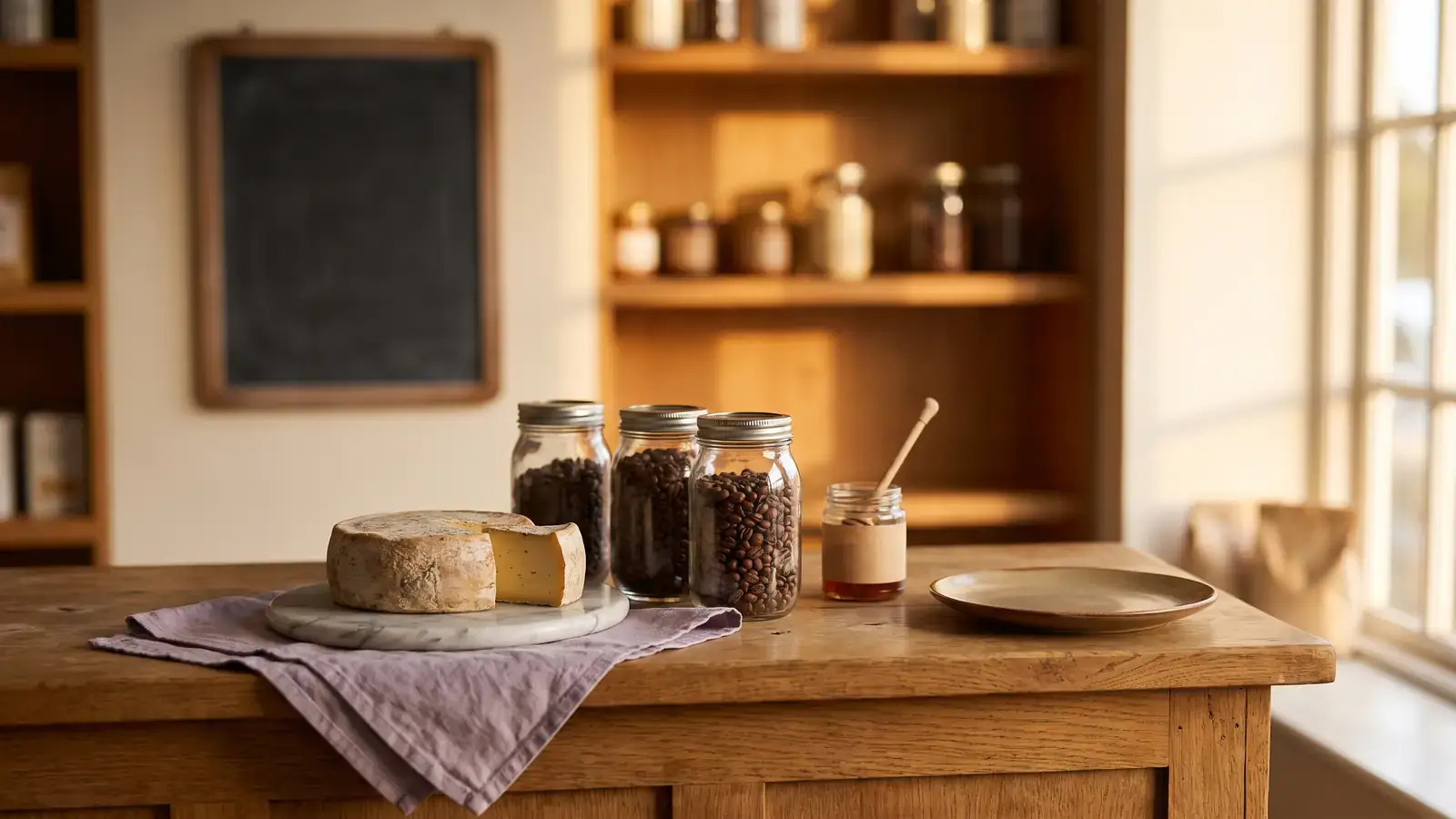
| A short quality drinks or cheese range | Gift and occasion shoppers | Higher stock value | Few lines, well chosen; nobody can sell twenty varieties |
Four questions to find yours
- 1What do you already sell more of than a shop this size should? Your own data answers this.
- 2What do people specifically come to you for? Ask the cashiers — they know.
- 3What exists nearby that you don't have, and what is missing entirely? A gap is worth more than a copy.
- 4What can you do that a chain structurally cannot? Opening hours, familiarity, pre-orders, holding items back, one-off sourcing.
The data that tells you where to specialise
- Best-selling products by unit count, not by value. Units show habit.
- Products that tend to bring other items into the basket — the 'draw' products.
- Distribution across the day: the morning customer and the afternoon customer are not the same person.
- Whatever regularly sells out. That is almost always an under-served category.

A 90-day plan, with no refit
- 1Days 1–30 — measure, change nothingDon't drop anything, don't order anything new. Just watch what sells, what sticks, and what runs out early. Most shops find their direction here — and rarely where they were looking.
- 2Days 31–60 — one direction, a narrow extensionBring in five to ten new lines in the chosen category, not thirty. Give them good shelf space, at eye level, in one place. The point is that it is visible at a glance.
- 3Days 61–90 — clear out the restNow the harder part: whatever barely sold in two months gets run out. Don't reorder it; discount the remainder. The freed shelf space is what funds the extension.
- 4After day 90 — measure againLook at the same numbers as in month one. If nothing moved, that is an answer too — and you only risked five to ten lines.
How do you know it's working?
| What to watch | If it rises | If it doesn't move |
|---|---|---|
| Average basket value | Customers buy more per visit — the direction works | No new reason to come in |
| Daily units in the chosen category | There is demand, go deeper | Either it isn't visible on the shelf, or it wasn't wanted |
| Waste in that category | You expanded too fast — pull back | The quantity is right |
| Daily customer count | New customers, not just bigger baskets | It retains rather than attracts — which is fine too |
In summary
A small shop's competitiveness doesn't come from price but from having two or three reasons to walk in. You don't invent that reason, you find it: your own sales data already says where you are strong and what is only taking up shelf space.
One direction, five to ten new lines, ninety days and four numbers. If it works, go deeper; if not, you lost very little. The worst decision is doing what the discounter does, only more expensively.
Frequently asked questions
Isn't narrowing the range risky?
Specialisation doesn't touch the staples. You only drop slow lines that were taking shelf space rather than making money.
How do I know which direction suits me?
From what you already sell more of than expected, and from what is missing locally. Your own sales report answers this better than any market study.
How long before results show?
Shopping habits change slowly: three months is the first meaningful signal. After one month you only see whether the extended category started at all.
Can I pursue several directions at once?
It isn't worth it. Two already split shelf space and attention; three leaves all of them half-finished and the customer sees no change.
What if a discounter opens nearby?
Then specialisation isn't optional. On price you lose from week one, but fresh, local, fast and personal service are areas where a chain structurally cannot compete.
Say the product's name and it's there on the till.
Boltom App takes the work behind the counter off your hands. You find a product by looking at its photo or saying its name out loud — no codes, no scraps of paper. Whatever leaves the shelf or goes in the bin is recorded right there, not in a notebook. It works alongside your existing till, not instead of it.
- A quick code with a photo — or just say the product's name and the till finds it.
- Staff consumption in three taps, recorded under the person's name.
- Daily waste with its reason: expired, broken, unsellable — totalled up in money.
No card needed · 2 minutes