Mid-December, at closing time. A regular asks at the counter: “You'll be open on the twenty-fourth, won't you? And how late on New Year's Eve?” The shopkeeper says straight away “same as last year”, then realises in the evening that they can't remember exactly how it was last year. Nor do they know who's working between the holidays, or what day the bread supplier makes their last delivery.
Holidays work differently from an ordinary week. Customers buy in a few hours what they would otherwise buy over a week, then hardly come in for days. Suppliers take a break, the team deserves the holiday too, and in many places there are separate rules on when a shop can open. Decide out of habit at this time of year and you can easily end up paying wages in an empty shop, or being closed just when the whole neighbourhood would be queuing.
In this article we go through how to decide your holiday opening hours from your data, how to plan the team for the holidays, what to order before and after the closure, how to let customers know, and what to watch when you reopen. The examples are built around 24 December, 31 December and New Year's Day, because in many countries these are the key days, but your holidays may be different; the figures work in neutral units. How long to open in general is covered in How late should your shop stay open? The marginal hour, Sundays and early starts, and preparing for the whole year end in Getting ready for the year end: a season plan for your shop from October to January.
Why holiday opening hours are different
In an ordinary week, opening hours almost run themselves: customers are used to them, the rota repeats, and stock comes on the usual days. Around the holidays this routine is turned upside down for a few days, and several things change at once, each affecting the others.
- Customers' rhythm. Before the holiday everyone shops at the same time, often with a big basket, but during the holiday only those who have run out of something or forgotten something come in.
- Suppliers' break. Many suppliers stop for days, or deliver less often. Whatever sells out after the last delivery is missing for days.
- The team's needs. The holiday is for families too, and everyone wants the same days off. This has to be settled in advance, and fairly.
- The rules. In many places there are separate regulations on holiday and Sunday opening, on working on public holidays and on premium pay. These vary between countries, and even between localities.
- The cost. A holiday hour can cost more than an ordinary one: premium pay, heating, lighting, and the person who isn't at home at that time.
The pattern of the holidays, and what people buy
In most small shops a similar pattern appears around the holidays year after year. The exact times depend on the area, the customers and local holidays, but it's worth starting from this picture and refining it with your own figures from last year. If your holidays fall on other days, the same logic works: a peak before the holiday, a quiet holiday, another peak before the next one.
| Period | Typical trade | What people buy | What to watch |
|---|---|---|---|
| The 2–3 days before the holiday | Rising sharply, big baskets | Ingredients, drinks, sweets, small gifts | An extra person for the peak hours, and full shelves into the evening. |
| 24 December, morning | The peak, from morning to early afternoon | Bread, milk, sour cream, butter, eggs, drinks, batteries, candles, wrapping paper | Shorter opening hours; fresh goods should sell out by midday. |
| The public holidays | Closed, or very quiet | If you're open: bread, milk, drinks, snacks | Only open if last year's figures justify it. |
| The days between the holidays | Quiet, up and down | Milk, bread, bits to go with the leftovers | Shorter opening hours, fewer staff. |
| 31 December, morning and early afternoon | Second peak | Drinks, mineral water, ice, snacks, sausages, sparkling wine, small gifts | Plenty of chilled drinks, and close earlier. |
| 1 January | Very quiet, or closed | Bread, milk, mineral water, coffee | In many places it isn't worth opening, or isn't even allowed. |
| The first day after the holiday | A strong morning | Fresh bread, milk, vegetables, fruit | Fresh goods out by the morning, expiry dates checked. |
The most important thing in the table: holiday trade doesn't spread out, it squeezes into a few hours. The morning of 24 December or the early afternoon of New Year's Eve often brings in as much as a whole ordinary day, but afterwards the door hardly opens for hours. So the question isn't whether to open on a holiday, but exactly which hours.
Deciding from data: is a holiday afternoon worth opening?
A holiday hour is worth it if the profit it brings in — not the turnover! — covers what it costs to stay open. For this you need two figures: last year's hourly takings on the same day, and the cost of an hour open. Let's work through an example in neutral units. Last year on 31 December, between 2 and 6 pm, a shop took 600 units, and its average margin is 25 per cent. In the afternoon one assistant is at the counter, on 12 units an hour, and in the example we assume 50 per cent holiday premium pay, so they cost 18 units an hour. The extra heating, lighting and refrigeration in the afternoon come to 2 units an hour. So one holiday hour open costs 20 units.
| Hour | Last year's takings | Profit (25%) | Cost | Result |
|---|---|---|---|---|
| 2–3 pm | 240 units | 60 units | 20 units | +40 units |
| 3–4 pm | 180 units | 45 units | 20 units | +25 units |
| 4–5 pm | 120 units | 30 units | 20 units | +10 units |
| 5–6 pm | 60 units | 15 units | 20 units | −5 units |
| Total 2–6 pm | 600 units | 150 units | 80 units | +70 units |
The afternoon as a whole is worth it: 150 units of profit minus 80 units of cost leaves 70 units. The last hour, however, is already loss-making, because 15 units of profit come against 20 units of cost. If you close at 5 pm, 135 units of profit minus 60 units of cost leaves 75 units — so with one hour less you earn 5 units more, and your colleague can be home an hour earlier. This is the holiday marginal hour: the hour at which the profit no longer covers the cost.
- Adjust for this year. If your takings this autumn are 10 per cent down on last year, scale down last year's holiday figures too. In the example the 4–5 pm hour then brings in 108 units of takings and 27 units of profit, which is still 7 units more than the cost.
- If you're behind the counter yourself, your hour isn't free either. Count it as if you were paying a stand-in, otherwise every holiday hour will look profitable.
- Look at where the lost trade goes. If you close earlier, some customers come in the morning instead, so the trade isn't entirely lost, just shifted.
- Think about loyalty too. A quiet holiday hour brings in little money, but if you're the only one open nearby, customers will remember it. You can't measure that in units, but you can decide on it consciously.
- One year isn't a pattern. If you have two or three years of data, look at all of them: a rainy holiday or one that falls on a weekend can skew things a lot.
Rules, premium pay, rest days
Before you put anything up on the door, check what's allowed. Which days count as public holidays or bank holidays, whether a shop can open on a Sunday or a public holiday, and if so how long, varies between countries, and even between regions and towns. There may be local holidays that nobody in the next town has heard of, and what's permitted sometimes depends on the size of the shop, whether the owner works there in person, or the type of shop.
- Check on which days closing is compulsory, and on which the permitted opening hours are shorter.
- Clarify how much premium pay is due to someone working on a public holiday or a Sunday, and include it in the cost of the hours.
- Ask how much rest staff are entitled to between two shifts and within a week, because on the busy days around the holidays this is easily breached.
- If the rules change from year to year, don't start from last year's notice, but always from the current regulations.
Planning the team for the holidays
The general principles of rota planning — shifts that match trade, and wage costs — are covered in Shift planning in a shop: keeping wage costs from eating the profit. The holidays, though, have a few peculiarities of their own: everyone asks for the same days off, the peaks are short and sharp, and who worked last Christmas Eve still counts this year.
- Volunteers first. Ask who would happily work around the holidays. For some the premium pay matters, some celebrate a different holiday, and some would rather be off on New Year's Eve than on Christmas Eve.
- Rotation from year to year. Note who worked on the most sought-after days last year, and give them priority for time off this year. It's the simplest way to make the rota feel fair.
- Early requests. Collect requests four weeks ahead, and set a deadline. Anyone who hasn't said by then is rostered according to the rotation.
- An extra person for the peak. On the morning of 24 December and the morning of 31 December you need two people for the counter and the shelves; on quiet afternoons one is enough.
- Shorter opening hours. An earlier close is often worth more to the team than a whole day off, and it doesn't cost the shop much if the afternoon is quiet anyway.
- A guaranteed day off for everyone. Everyone knows in advance which holiday they definitely have off, and don't take it back at the last minute.
If the team is small and nobody volunteers, shorter opening hours are the fair solution. A small shop survives closing at midday on Christmas Eve, but a good assistant is hard to replace if every year they're the one left behind the counter while the others celebrate. Respecting rest and family time is in the shop's interest too in the long run.
„Holiday opening hours aren't about how long the shopkeeper can keep going, but about which hour is worth opening — and whose holiday we take the time from to do it.”
Ordering before and after the holiday closure
The biggest pitfall of holiday ordering isn't the quantity, it's the delivery break. Many suppliers stop for days, or deliver on combined days, so four or five days can pass between the last delivery before the holiday and the first one after. Ask each of your suppliers for their holiday delivery calendar, and fit your ordering around it. How much to order for the Christmas season is covered in detail in When to place the Christmas order, and how much to order; here we're talking about the days around the holiday closure.
| Product group | Before the holiday closure | After the holiday closure | Why |
|---|---|---|---|
| Bread, baked goods | More for the morning, but sold out by midday | For the first morning, in moderation | Unsellable within a day or two; it won't survive the closed days. |
| Milk, dairy | Plenty for the peak, less with a short date | With the first delivery, straight away | It can go out of date over the closed days, but afterwards everyone wants it. |
| Chilled, short-dated goods | Less than in an ordinary week | Only according to sales | Cold meats, salads, ready meals: the biggest source of waste at this time. |
| Fruit, vegetables | What suits the holiday, less of the rest | With a fresh delivery | Unrefrigerated produce spoils in a closed shop too. |
| Drinks, mineral water, ice | Plenty for 31 December | Usual quantity | Long-life or easy to store; a big part of the New Year's Eve peak. |
| Long-life goods, household products | Usual quantity, one delivery earlier | Usual quantity | They don't spoil, but the delivery break means ordering earlier. |
The most important principle is the last day before the closure: whatever you don't sell then ages on the shelf or in the fridge over the closed days. So size your fresh goods to sell out an hour or two before closing, even if the last customer doesn't find any bread. An empty bread shelf at midday on Christmas Eve is a smaller problem than two crates of bread in the waste on 27 December.
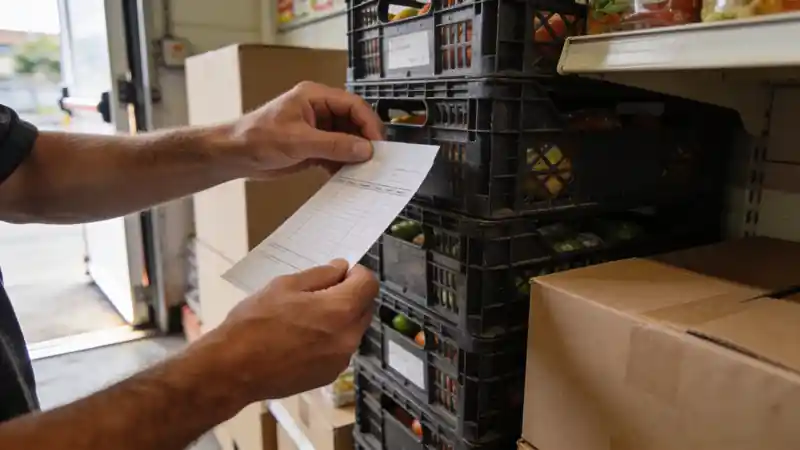
How customers find out when you're open
Even the best holiday opening hours are wasted if customers don't know about them. Anyone who finds the door locked on Christmas Eve afternoon goes elsewhere next time, and anyone who doesn't know you're open the day after New Year's Day heads to the big supermarket. So put your holiday opening hours up in as many places as possible, and at least two weeks ahead.
- On the door. A clearly readable sheet in large letters, broken down by day. Everyone who passes sees it, even when you're closed.
- At the till. A small notice on the counter or next to the till, and a sentence to the customer: “We're open until one on Christmas Eve.” That way the regulars are sure to find out.
- In the window. A board or poster where it can be seen from the street, so even people just walking past see it.
- On social media. A short post two weeks ahead, and a reminder the day before the holiday. The sample text can be copied from the door notice.
- On your map and search listing. Don't forget to update your holiday opening hours there too, because many people check it before setting off. How to manage the listing is covered in our article on appearing on maps and in search.
| Day | Open | Note |
|---|---|---|
| 23 December | 7 am – 8 pm | Extended opening hours |
| 24 December | 7 am – 1 pm | Fresh bread in the morning, closing early |
| 25 December | Closed | Happy holidays! |
| 26 December | Closed | — |
| 27–30 December | 8 am – 6 pm | Shorter opening hours |
| 31 December | 7 am – 5 pm | Plenty of drinks and ice, closing early |
| 1 January | Closed | Happy New Year! |
| 2 January | 7 am – 7 pm | Usual opening hours, fresh goods from the morning |

The most important thing about the notice is clarity. Don't write “shorter opening hours over the holidays”, because nobody can tell from that whether you close at midday or at six on Christmas Eve. Break it down by day and hour, and if you're closed on a day, say so. If you change something at the last minute, update it everywhere, otherwise customers will trust the old notice.
Week-by-week checklist
Holiday opening hours don't come together in a day. If you start four weeks ahead, there's no rush in the last week, the team knows in good time what to expect, and customers hear in good time too. The order below is a starting point you can adapt to your own holidays.
- 11. Four weeks ahead: decide the opening hoursLook at last year's hourly takings on the holidays, work out which hours are worth opening, and check the local rules. Decide how long you'll be open on each day.
- 22. Four weeks ahead: the rotaCollect the time-off requests and the volunteers, look at last year's rotation, and put together the holiday rota. Put it up where everyone can see it.
- 33. Three weeks ahead: the delivery calendarsAsk each of your suppliers for their holiday delivery and ordering days, and note when stock last arrives before the holiday and when it first arrives after.
- 44. Two weeks ahead: ordering and the noticePlace the order for long-life goods, plan the last order of fresh goods, and put up your holiday opening hours on the door, at the till, in the window, on social media and on your map listing.
- 55. In the last week: reminders and checksCheck that the final opening hours appear everywhere, tell your regulars, and make sure everyone knows when they're working. Set the markdown on perishables for the last hours before the holiday.
- 66. On the last day before closing: close properlyGo through the fridges, either sell the perishables or record them as waste, check the fridge temperatures, take the cash away or lock it up, switch off whatever isn't needed, and set the alarm.
- 77. On the first day after the holiday: reopeningArrive earlier, go through the fridges and the expiry dates, put out the fresh goods, and see what's missing. In the evening, use the daily summary to compare the takings with the same day last year.
Reopening after the holiday
The first day after the holiday often starts with a strong morning: customers want fresh bread, milk and vegetables, because those are what ran out first at home. If the bread shelf is empty or there's out-of-date yoghurt in the fridge, the customer starts the year with a bad impression. So reopening doesn't begin with unlocking the door, but with a thorough check.
- Fridges and temperature. Check that every fridge worked properly over the closed days, and if one broke down, don't put out the goods that were stored in it.
- Expiry dates. Go through the dairy, the cold meats and the short-dated goods. Anything that went out of date over the closed days comes off the shelf.
- Waste with a reason. Record out-of-date or spoiled goods as waste together with the reason, so next year you can see how much was lost because of the holiday and what to order less of.
- Markdowns. Short-dated goods that are still fine are worth marking down on the first day, even with a scheduled promotional price, so they sell out by the afternoon.
- Stock for the first day. Fresh goods should be out by the morning, and with long-life goods, check what sold out in the pre-holiday peak and what's missing from the shelf.

A few days after reopening it's worth sitting down with the figures. What were the takings and profit on the holidays, hour by hour, how much was wasted, which hour was unnecessary, and which product sold out too early. Write these down now, because next November you won't remember them, and that's when you'll plan the next holiday opening hours from them.
Common mistakes
- Deciding out of habit. “Same as last year” — except nobody knows whether last year was worth it. Without last year's hourly figures, the decision is guesswork.
- Looking at takings instead of profit. A holiday hour with 60 units of takings can look good, but if it brings in 15 units of profit against 20 units of cost, it's loss-making.
- Putting the opening hours up late. Most customers won't see a sheet put up the day before the holiday, and the regulars will count on the old hours.
- Forgetting the map listing. The door shows the holiday opening hours, but search shows the usual ones, and the customer finds the door locked.
- Rostering the same colleague every year. Someone who's behind the counter every Christmas Eve will sooner or later look for work elsewhere.
- Not allowing for the delivery break. Only after the last order do you find out that the supplier won't come for four days, and the milk fridge is empty.
- Ordering too many fresh goods before the closure. A full bread shelf looks good at midday on Christmas Eve, but on 27 December it's waste.
- Treating reopening as routine. If the check of the fridges and expiry dates is skipped, the year's first customer finds out-of-date goods on the shelf.
Summary
- Decide your holiday opening hours from last year's hourly takings and profit on the same days, not out of habit.
- A holiday hour is worth it if its profit covers the wages, the premium pay and the energy; in the example, closing at 5 pm on New Year's Eve left 75 units against 70 for closing at 6 pm.
- The rules on public holidays, compulsory closing, premium pay and rest days vary from place to place — always check the local regulations.
- Put the rota together four weeks ahead with volunteers, rotation and shorter opening hours, and give everyone a guaranteed holiday off.
- Fit your ordering around the delivery break: fresh goods should sell out before closing, and order less of anything perishable.
- Put your opening hours up two weeks ahead, broken down by day and hour, on the door, at the till, in the window, on social media and on your map listing.
- After the holiday, go through the fridges and the expiry dates, record waste with a reason, and write down the lessons for next year.
Frequently asked questions
How late is it worth staying open on 24 December?
In most small shops the morning of 24 December brings the pre-holiday peak, and customers thin out quickly in the early afternoon. Look at last year's hourly takings on Christmas Eve, and close where an hour's profit no longer covers its cost. For many shops that's in the early afternoon, but your area may be different. Don't forget that it's a holiday for the team too, and in many places there are separate rules for this day.
How late should the shop stay open on New Year's Eve?
In many shops the morning and early afternoon of 31 December are the last peak of the year: drinks, ice, snacks and small items sell. Late in the afternoon, though, the shop quietens down quickly, and the last hours are often already loss-making. In the article's example closing at 5 pm left 5 units more than closing at 6 pm. You can work out where your limit is in the same way with your own hourly figures from last year.
Is it worth opening on New Year's Day?
New Year's Day is very quiet in most shops, and in many places opening is also restricted by the rules. If nobody else nearby is open, a few hours can bring in enough profit to be worth it, and customers will remember it. But if hardly anyone came in last year, a guaranteed day off is worth more to the team. Check the local rules first, then last year's figures.
How do I work out whether a holiday hour is worth opening?
Take last year's takings for the same hour and multiply them by your average margin: that's the hour's profit. Subtract the cost of an hour open, that is, the wages including premium pay and the extra energy. If the result is positive, the hour is worth it; if it's negative, it's worth closing earlier. In the article's example an hour cost 20 units, and the 15 units of profit from the last hour, with 60 units of takings, no longer covered it.
Do I have to close on a public holiday?
This varies between countries and even localities: in some places closing is compulsory on certain public holidays, in others only shorter opening hours are allowed, and in others it depends on the size or type of shop. Local holidays may also differ from national ones. Don't go by last year's practice or by the shop next door, because the rules can change. Check the current local regulations and ask your accountant.
How much premium pay is due to someone working on a public holiday?
There's no general answer: the level of premium pay, and whether a day off is due instead, are set by local rules and agreements. In the article's example we assumed 50 per cent premium pay, but that's only an assumed figure. What matters is that the premium is included in the calculation when you decide whether a holiday hour is worth it. Ask your accountant about the exact rate.
How do I plan the team fairly for the holidays?
Start with the volunteers, because there's often someone for whom the premium pay matters, or whose holidays fall on other days. Roster the others by rotation: whoever worked on the most sought-after days last year gets priority for time off this year. Collect the requests four weeks ahead, and make sure everyone knows which holiday they definitely have off. The general principles of rota planning are covered in our article on shift planning.
What should I order less of before the holidays?
Short-dated chilled goods — cold meats, salads, ready meals — and baked goods, because they become unsellable over the closed days. Size the fresh goods so they sell out an hour or two before closing. Drinks, mineral water and long-life goods, on the other hand, you can safely order plenty of, because they don't spoil and they make up a big part of the New Year's Eve peak. The full quantity for the Christmas season is covered in our article on the Christmas order.
When should I place the last order before the holiday?
Your suppliers' holiday delivery calendars decide this, so ask each of them for theirs three or four weeks ahead. Many suppliers stop for days or deliver on combined days, so the last ordering deadline may be earlier than usual. Note when stock last arrives before the holiday and when it first arrives after. Order long-life goods one delivery earlier, so nothing runs short during the break.
How do I let customers know my holiday opening hours?
At least two weeks ahead, put them up on the door, at the till and in the window, broken down by day and hour. Post about it on social media, and remind your followers the day before the holiday. Don't forget to update your map and search listing too, because many people check there before setting off. Tell your regulars at the counter as well, because they're the ones who count on you most.
What should I do with perishables before a longer closure?
In the last opening hours it's worth marking them down, even with a scheduled promotional price, so they sell out by closing time. Whatever is still left and won't survive the closed days, record as waste together with the reason, so next year you can see how much was lost. For goods staying in the fridges, check that the fridges are working properly. Next year this tells you what to order less of before the closure.
What should I watch on the first day after the holiday?
Arrive earlier, and go through the fridges, the temperature and the expiry dates before you open. Take out-of-date or spoiled goods off the shelf, and record them as waste with the reason. Fresh bread, milk and vegetables should be out by the morning, because those are what most people want. In the evening, use the daily summary to compare the takings with the same day last year, and write down the lessons for next year.
Say the product's name and it's there on the till.
Boltom App takes the work behind the counter off your hands. You find a product by looking at its photo or saying its name out loud — no codes, no scraps of paper. Whatever leaves the shelf or goes in the bin is recorded right there, not in a notebook. It works alongside your existing till, not instead of it.
- A quick code with a photo — or just say the product's name and the till finds it.
- Staff consumption in three taps, recorded under the person's name.
- Daily waste with its reason: expired, broken, unsellable — totalled up in money.
No card needed · 2 minutes