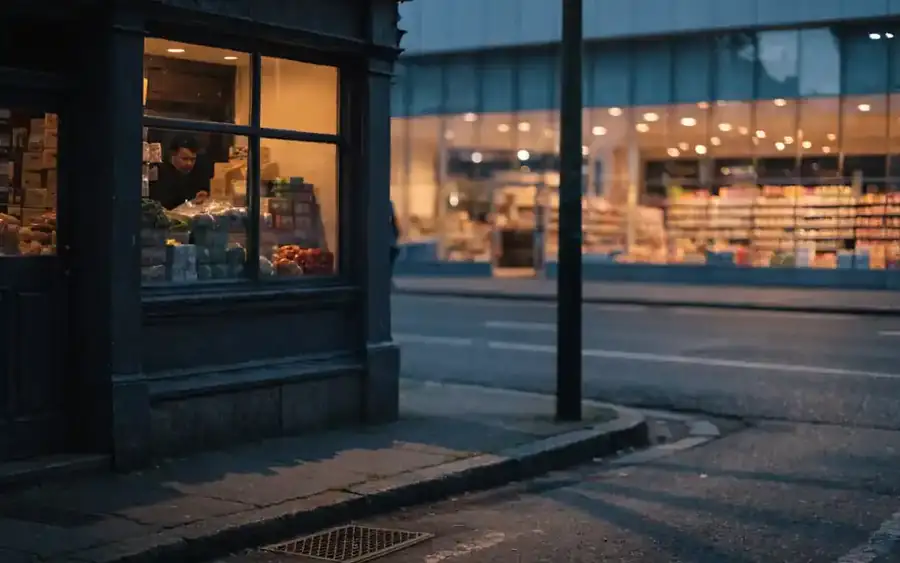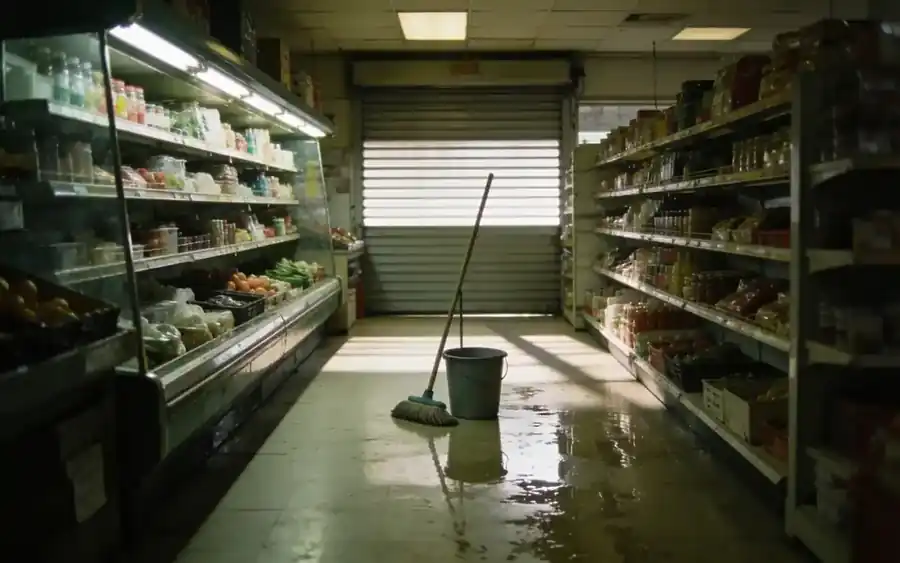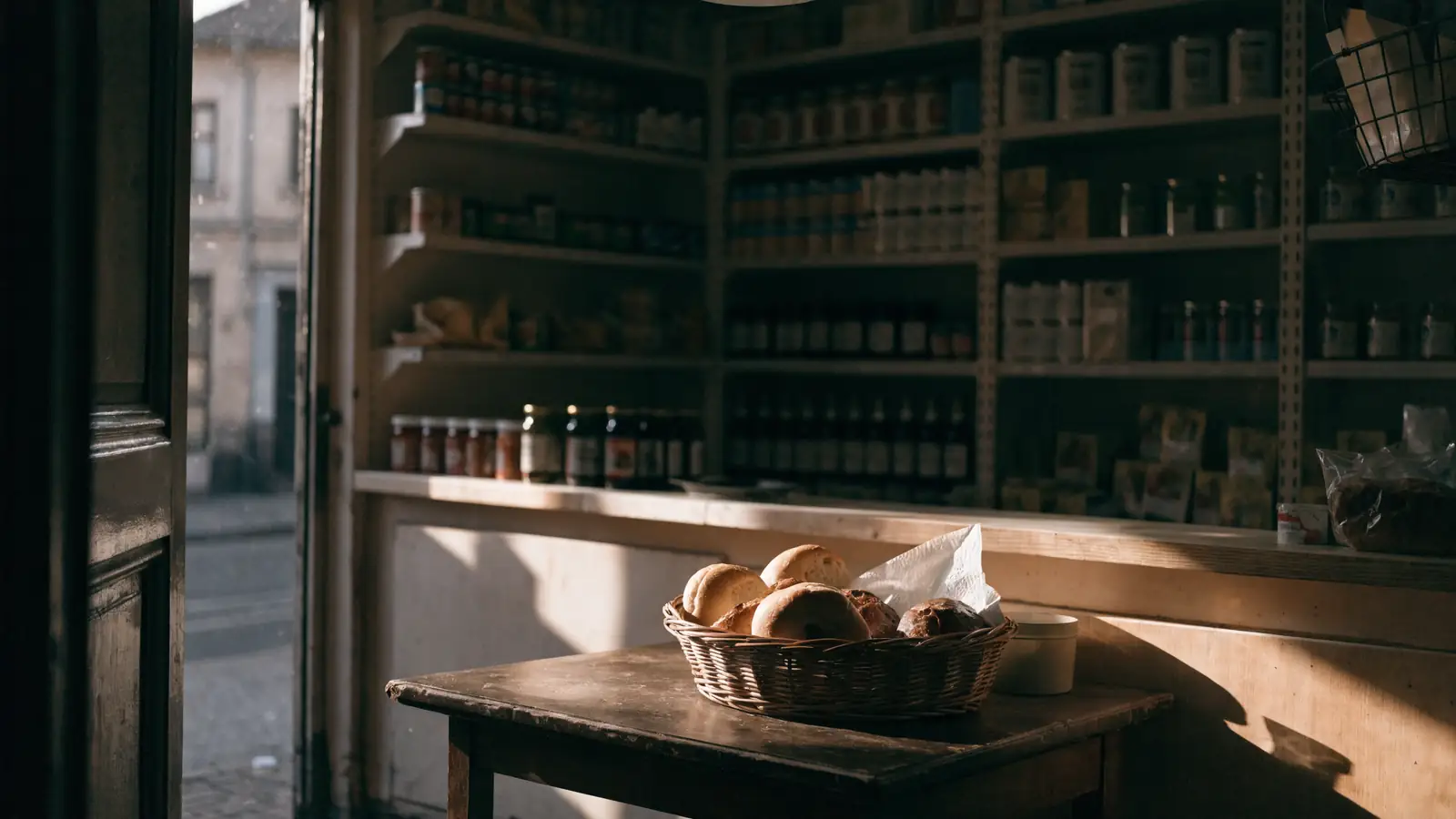
There are shops people like to drop into and shops they hurry out of, even though the shelves hold roughly the same things. The difference rarely lies in price or range. It lies much more in what customers couldn't even put into words: what the light is like, what they hear, what smell greets them, whether it is cold or draughty. We call this atmosphere, and although it never shows up on the bill, it is there in every sale.
A good atmosphere doesn't need a refit or an interior designer. Most fixes come down to a few bulbs, a lamp in a better place, a speaker turned down and a little attention. The difficulty is rather that whoever stands in the shop all day no longer notices what a customer walking in does: they get used to the hum, the flickering tube no longer registers, and they can't smell what drifts out of the stockroom.
This article is about the inside of the shop: what customers see, hear, smell and feel once they are in. What passers-by see from outside is covered in Shop window and storefront: ideas that make passers-by actually step inside; what goes where on the shelves in Where should everything go? A shop layout that actually sells more; the cleaning routine in Cleanliness in the shop: a daily, weekly and monthly routine; and the electricity cost of lighting and refrigeration in What does the chiller cost you? The energy bill in a shop. The examples are general and can be adapted to any small grocery, bakery or convenience shop.
The first ten seconds: what customers feel
Someone walking through the door doesn't look at the shelves first — they take in the feel of the place. Within a few seconds — the exact number is not a measured rule, only a rule of thumb — they form an impression: either it is pleasant to be here, or they want to be done as soon as possible. That impression decides whether they buy only the bread they came for, or look around and take something else as well.
- Light: bright and friendly, or grey, dull, flickering? Can the goods be seen, or are they in shadow?
- Sound: a quiet background, silence, or a humming chiller, a blaring radio, a jangling door chime?
- Scent: fresh bread and coffee, neutral clean air — or a stale smell, damp cardboard, rubbish?
- Temperature: comfortable, or a draught from the door in winter, stuffy heat in summer, a chill by the refrigerated cabinets?
None of the four has to be special. It is enough if none of them bothers anyone. Customers don't come back because a scented candle is burning in your shop, but because they feel at ease there and nothing rushed them. A poor atmosphere is rarely made of one big mistake; it is mostly many small irritations that reinforce one another.
„Customers don't say the lighting was bad. They say they don't like going in there — and they don't.”
Lighting: where you need more light, and what kind
Light is the strongest tool for atmosphere, and the easiest to fix. In a small shop it helps to think in three layers. General lighting lights the whole space evenly, so there are no dark corners. Accent lighting is aimed at the counter and the fresh goods, so that is where the eye goes. Mood lighting — a small lamp, a warmer corner — is only a bonus once the first two are right.
| Area | What light it needs | Typical mistake |
|---|---|---|
| General space | Even, bright light without dark corners. | The back of the shop is gloomy, and customers don't go that far. |
| Counter and till | Bright but not dazzling light, so money, goods and faces are all clearly visible. | The lamp shines into the customer's eyes, or the person behind the counter is left in shadow. |
| Bread and pastries | Warmer, yellower light that brings out the colour of the crust. | Under cold, bluish light even fresh bread looks grey and stale. |
| Fruit and veg | Warm-to-neutral, strong light directly on the produce. | A crate pushed into a shady corner, where fresh produce looks wilted. |
| Refrigerated cabinet | The cabinet's own interior lighting should work and be even. | A dead interior lamp, a dark row of shelves where customers can't read the labels. |
| Window in the evening | The window should be one of the brightest spots, with warm light. | The window is dark in the evening, and from outside the shop looks closed. |
| Entrance | A bright, welcoming way in, where the eye adjusts to the light. | A dark entrance area from which the inside of the shop looks like a cave. |
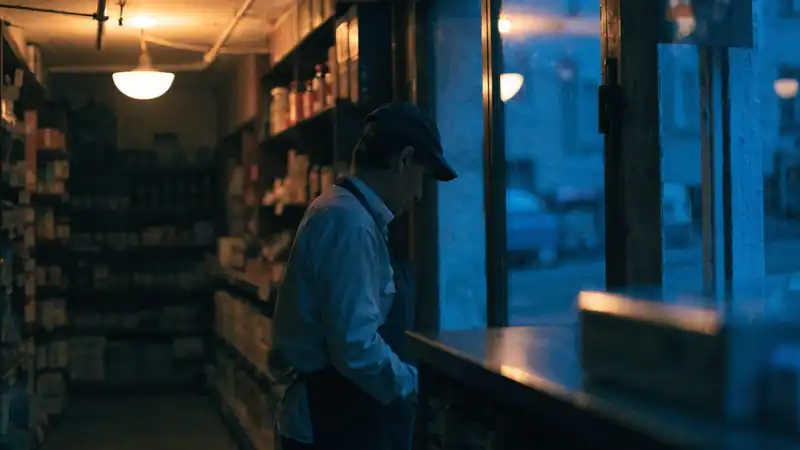
Warm or cool light?
The light from a lamp can be warmer and yellower, or cooler and bluer. The packaging usually shows this as a number and as warm, neutral or cool white. Warm light feels homely and suits bread, pastries, wood and traditional goods. Neutral white is the best general light in a small shop: clean, but not clinical. Very cool, bluish light rarely flatters food, and easily feels cold and office-like.
- Don't mix warm and cool light randomly within one space — patchy, two-tone light looks muddled.
- When you replace lamps, use one kind of general light in a room, and put the warmer light deliberately on the fresh goods and the counter.
- Don't aim a strong spotlight straight at packaged goods, as it glints and dazzles — light them slightly from the side instead.
- A refrigerated cabinet's own light is often cooler; that is fine, as long as it is even and every lamp works.
Flickering tubes and dead bulbs
Few things say as clearly that nobody is paying attention to a shop as a flickering fluorescent tube or a bulb that has been dead for weeks. Customers won't mention it, but they feel it: if this isn't right, what else isn't? Flicker is also tiring, many people find it genuinely irritating, and it hurries them without their realising. The fix takes a few minutes and the price of a bulb.
Keep spare bulbs and tubes for everything you use in the shop, and add one point to the weekly round: is every lamp working, is anything flickering? Replacing old, inefficient light sources shows on the electricity bill too — how much, and when it pays off, is worked out in What does the chiller cost you? The energy bill in a shop.
Music: volume, tempo, and who it's for
Background music cuts both ways. At its best it fills the silence, eases the awkwardness when there is only one customer inside, and makes the space friendlier. At its worst it is tiring and irritating, and customers almost flee from it. The difference comes down mainly to three things: volume, tempo and who the music is for.
- Volume: quiet enough to talk comfortably at the counter without raising your voice. If a customer has to ask you to repeat something, it is too loud.
- Who it's for: your customers, not you. The shop assistant's favourite music rarely suits the shop all day, and it isn't what most regulars like.
- Tempo: a calmer tempo usually goes with slower, more relaxed browsing, while fast, upbeat music hurries people along. In a small shop a calm, unobtrusive background is usually the safe choice.
- Talk: a loud radio station with lots of talk and adverts distracts more than music does. If you listen to the radio, notice how much of it is talk and advertising.
- Speakers: one or two smaller speakers spread around are better than a single loud one behind the counter, which is too loud at the counter and barely audible at the back of the shop.
| Time of day | What background suits | What to watch |
|---|---|---|
| Morning | Lively but not loud, a quiet background. | Morning customers are in a hurry; the music shouldn't slow the queue or be loud early in the day. |
| Mid-morning | A calm, relaxed background. | Older customers who like a chat often come at this time; keep the volume low. |
| Midday | Neutral, medium tempo. | Short lunch breaks: the music shouldn't drown out orders at the counter. |
| Afternoon | A friendly, slightly livelier background. | Children coming home from school, parents — keep it family-friendly. |
| Evening | A calmer, warmer mood. | Customers on their way home are tired; loud music is a real turn-off now. |
| Quiet hours | A soft background or silence. | If there's no one inside, loud music emphasises an empty shop, not a lively one. |
When there shouldn't be music
Silence is not a mistake. In a small bakery where people chat at the counter, the quiet bustle and the conversation are often the atmosphere itself. If the music only plays because it always has, try switching it off for a week and see whether anyone misses it. There shouldn't be music either if the speaker crackles, if the radio is wall-to-wall adverts, or if the person at the counter struggles to hear orders over it.

Scent: what draws people in, and what drives them away
Smell is the most direct sense: customers notice it before they see anything, and find it hard to resist. The smell of fresh bread, roasted coffee and fruit has been the natural advertisement of markets and bakeries for centuries. The good news is that a food shop doesn't need to buy anything for it — the best source of scent is the goods themselves, as long as they are fresh and well kept.
| Smell | Where it comes from | What to do |
|---|---|---|
| Fresh bread and pastries | Morning delivery, goods baked on site. | Keep fresh bread near the entrance or the counter, not waiting in the back room. |
| Coffee | Coffee machine, freshly ground coffee. | If you have a coffee counter, its smell is the advertisement — but keep the machine clean, as old grounds smell sour. |
| Fruit and veg | Ripe, fresh produce. | Sort it daily: one rotting piece of fruit quickly overpowers the fresh smell. |
| Chiller smell | Spilled liquid, missed cleaning, a blocked drain. | Clean the shelves and the drain regularly; a smell at the chiller is a cleaning indicator. |
| Rubbish | An open bin, waste emptied too rarely. | A lidded bin, emptied daily, and no rubbish standing in the customer area. |
| Damp cardboard | Unpacked boxes in the stockroom or on the shop floor. | Flatten cardboard and take it out daily; damp paper smells musty, like a cellar. |
| Strong air freshener | Sprays, scent diffusers, strong cleaning products. | Don't use it to cover anything up; if there is a smell, remove its source. |
Be careful with strong air fresheners. In a food shop it is odd if lavender or vanilla drowns out the smell of bread, and many people are sensitive to strong scents — they can cause headaches or coughing. An air freshener also raises suspicion: customers assume you are trying to hide something. If you do want to use something, keep it very subtle, away from the entrance, and never right next to food.

Temperature, draughts and noise
Customers notice the temperature when it is wrong. Cold air blowing in through the door in winter, stuffy heat in summer, and a chill beside the refrigerated cabinets all year round — all of these say: get it done quickly. Someone who is cold doesn't browse, and nor does someone who is sweating. The same is true of whoever stands behind the counter all day: a shivering assistant working in a coat is in a bad mood, and that rubs off on customers.
- Door: in winter, a door that opens often is the biggest source of heat loss and draughts. A self-closing door, a draught lobby or a clear strip curtain helps a lot.
- Counter: if the counter is near the door, the person behind it gets most of the draught. A small screen, an insulating mat underfoot behind the counter or a small heater under the counter is something your staff deserve too.
- Refrigerated cabinets: it is colder next to them; if possible, don't have the queue there.
- Summer: shade the sunny window, air the shop in the morning and evening, and make sure the warm air from the back of the chillers doesn't build up in the shop.
- Heating and cooling settings: an overheated shop is as unpleasant as a cold one, and it shows on the energy bill too.
Sources of noise: the humming chiller and the jangling door chime
Shopkeepers get used to noise fastest, and customers notice it fastest. A loudly humming, rattling or clicking chiller is not only irritating but often a warning sign as well: the fan may be worn, the grille dirty, or the unit overloaded. It is worth having a technician look at it, because the noise is often an early sign of higher consumption and a breakdown.
- Door chime: if it is shrill, long or jangles metallically, swap it for a quieter, shorter one. You hear it all day too.
- Chiller: rattling, clicking, loud humming — have it cleaned and checked. Cleaning the rear grille helps both the noise and the consumption.
- Squeaking door, trolley, shelf: a drop of lubricant and a screwdriver.
- Noise from the stockroom: unpacking, a radio, phone calls — close the door, or schedule noisy work for the quiet hours.
- Beeping from the till, scales and machines: if it can be adjusted, turn it down.
Cleanliness is atmosphere too
The best light and the best music won't help if the floor is sticky, dust sits on the shelves and the counter is covered in paper. Customers don't praise cleanliness, but they notice its absence immediately, and they draw conclusions about freshness from it: if the shelf is dusty, is the bread really today's? Tidiness is the foundation of atmosphere; everything else is built on it.
A few things add especially much to the atmosphere: clean, gleaming chiller doors, dust-free lampshades, a tidy counter with only what is needed on it, and a clean floor instead of emptied cardboard boxes. How all this fits into the day and the week is set out in Cleanliness in the shop: a daily, weekly and monthly routine. For atmosphere, one rule is enough: the shop should be cleanest at customers' eye level and around the counter.
Low-cost fixes
Improving the atmosphere in a shop is rarely expensive. The list below collects steps that can mostly be done in an afternoon and cost little. You don't need to do them all at once — pick the two or three that bother you most in your own shop.
- Replace every dead bulb and flickering tube, and keep spares in the stockroom.
- One or two small lamps on the fresh goods, with warmer light.
- Light up the dark corner, so customers walk to the back of the shop too.
- Clean the lampshades and the chillers' interior lights — dust absorbs a surprising amount of light.
- A quieter door chime, and oil for the squeaking door.
- Turn the music down, or try a week of silence as an experiment.
- A lidded bin, cardboard taken out daily, the chiller drain cleaned out.
- A door curtain or an automatic door closer against winter draughts, and a small heater under the counter.
- Move the fresh bread and pastries near the entrance or the counter, where their smell can be noticed.
- Clear the counter: leave only what is needed for serving.
How to measure whether it worked
The effect of atmosphere is even harder to prove than that of a window. You won't be able to say exactly how many customers a better lamp kept in the shop, and be wary of anyone who promises a specific percentage increase in turnover for an air freshener or a music package. What you can check is whether anything changed in your own numbers between the periods before and after the change, on the same days.
- Average basket: turnover divided by the number of sales. If customers are happier to stay and look around, this may slowly rise.
- Number of sales per hour: especially in the hours affected by the change — evening light in the evening hours, the morning coffee smell in the morning ones.
- Sales of the products concerned: if the bread and pastries got warmer light, did you sell more of them? If the fruit moved further forward, did it sell better?
- Customer feedback: what people say unprompted — "it's got so bright in here", "at last the door isn't blowing in" — and what they say when asked.
| Measure | Before (2 weeks) | After (2 weeks) | Change |
|---|---|---|---|
| Average basket (index) | 100 | 103 | +3 |
| Number of sales between 17:00 and 19:00, per day | 24 | 26 | +2 |
| Fresh bread and pastries, units sold per day | 38 | 43 | +5 |
| Number of sales all day, per day | 142 | 144 | +2 |

Common mistakes
- Faults you've got used to. The flickering tube, the humming chiller and the musty stockroom smell no longer register with someone who is inside all day — but customers notice.
- Music too loud. The assistant's favourite, all day, at a volume where customers have to raise their voices to order.
- Radio with adverts. Loud adverts and lots of talk are more distracting than the music itself, and they advertise other shops in yours.
- A smell covered with air freshener. The source of the smell remains, and customers smell both.
- Cold, bluish light on fresh goods. Bread, meat and vegetables look pale and stale under it.
- A dark back corner. Customers don't go that far, and whatever stands there doesn't sell.
- A draughty counter. In winter the assistant works in a coat, in a bad mood, and it shows in the service.
- Everything at once. New lamps, new music, a new scent in one week — and afterwards nobody knows what helped.
How to get started, step by step
- 11. Walk in as a customerGo outside and come in as if it were your first time, both in the morning and in the evening. In the first ten seconds, notice the light, the sound, the smell and the temperature, and write down what bothers you. If you can, ask someone who rarely visits the shop to do the same.
- 22. Fix the free and cheap problemsDead bulbs, a flickering tube, a squeaking door, a jangling chime, an open bin, damp cardboard. These aren't experiments but maintenance: they can be done straight away.
- 33. Note down the baseline two weeksBefore you start on a bigger change, look at the last two weeks' average basket, the hourly number of sales, and the sales of the products the change will affect.
- 44. Choose one changeFor example, warmer light on the bread and pastries, quieter music, moving fresh goods next to the counter, or a door curtain against the draught. Only one at a time, and note the date.
- 55. Watch your customersWhat do they say unprompted? Do they stay longer, do they look around? Ask a few regulars in a sentence what they've noticed. It isn't measurement, but it tells you a lot.
- 66. Compare after two weeksPut the two weeks before and after side by side, on the same days. If something improved, keep it; if nothing changed, that is a result too — then look for the problem elsewhere.
- 77. Make it part of the routineAdd it to the weekly round: is every lamp working, is there any smell, is anything humming, is the music at the right volume? Atmosphere isn't a one-off job, it is maintenance.
Checklist
- Every lamp works, none flickers, and there are spare bulbs in the stockroom.
- There are no dark corners, and customers can see well right to the back of the shop.
- Fresh bread, pastries and vegetables get warmer, stronger light.
- At the counter the goods, the money and the assistant's face are clearly visible, and nothing dazzles the customer.
- The music is quiet, you can talk comfortably over it, and I have sorted out the licence question.
- The shop smells of fresh goods, not rubbish, cardboard, the chiller or a strong air freshener.
- In winter there is no draught at the counter, and in summer it isn't stuffy.
- The chillers don't hum or rattle, and the door chime is quiet.
- The counter is clean and tidy, and the floor and chiller doors are clean.
- The date of the change is noted, and in two weeks I will compare the periods before and after.
Summary
- Customers sense the shop's atmosphere in the first ten seconds: the light, the sound, the smell and the temperature.
- Light is the strongest tool: even general light, separate light for the counter, warmer light on fresh goods, and not a single flickering tube or dead bulb.
- Music should be quiet and meant for customers, and if you don't know who it is for, silence is a good choice too — and sort out the licence fee in advance.
- A good smell comes from fresh goods; remove a bad smell at its source rather than covering it with air freshener.
- Draughts, humming chillers and a jangling chime are small things, but together they send customers away — and wear out the assistant too.
- Most fixes are cheap; measure their effect on the average basket, the hourly number of sales and the sales of the products concerned across two periods, one change at a time.
Frequently asked questions
What makes a good atmosphere in a small shop?
Four things: light, sound, scent and temperature. None of them has to be special; it is enough if none of them bothers anyone. Bright, even light, a quiet background or silence, the natural smell of fresh goods and a comfortable, draught-free temperature — everything else is built on these. Cleanliness is the foundation, and without it the rest doesn't work.
What music should I play in my shop?
Music meant for your customers, not the person behind the counter, and quiet enough to talk comfortably over. In a small shop a calm, unobtrusive background is usually the safe choice. It can be a little livelier in the morning and calmer in the evening, and in the quiet hours a soft background or even silence. Avoid loud radio stations full of adverts.
Do I need to pay a licence fee for music in my shop?
In many countries, yes, because music in a shop counts as public performance, even if you only have the radio on. Personal music subscriptions often exclude business use. Fees are usually handled by a local collecting society, and the rules differ from country to country. Ask them before you play music, or choose a service licensed for business use.
What is the best lighting for a small shop?
For general lighting, neutral white is best: clean, but not cold. It is worth aiming warmer, yellower light at fresh goods, especially bread, pastries and vegetables, because it makes them look fresher. The counter should be bright, but the light shouldn't dazzle customers. Most important of all, there should be no dark corners, and not a single lamp should flicker.
Should I choose warm or cool light?
In most small shops, neutral white general light, with warmer light on the fresh goods and the cosier areas. Warm light feels homely and suits bread, wood and traditional goods. Very cool, bluish light rarely flatters food, and feels like an office or a hospital. Don't mix the two randomly within one space, or it will look patchy and muddled.
Does a dead bulb really matter?
Yes, more than you would think. Customers won't mention it, but they sense that nobody is paying attention to the shop, and they draw conclusions about freshness from it. A flickering tube is also tiring, and many people find it genuinely irritating. Replacing it takes a few minutes and the price of a bulb, which makes it one of the best investments in a shop's atmosphere.
Is it worth using an air freshener in the shop?
In a food shop, generally not. The best smell comes from fresh goods: bread, coffee, fruit. A strong air freshener drowns this out, gives many people headaches, and makes customers suspect you are trying to hide something. If there is a smell, remove its source: the rubbish, the damp cardboard, the dirty chiller.
What should I do if the chiller smells?
Find the source: spilled liquid, missed shelf cleaning, a blocked drain or a forgotten product that has gone off. Empty and clean the shelves, and check the drain too. A smell at the chiller is a cleaning indicator, not something to treat with air freshener. Regular cleaning belongs in the daily and weekly cleaning routine.
How do I stop the draught at the door?
A self-closing door, a draught lobby or a clear strip curtain helps a lot. If the counter is near the door, a small screen and a heater under the counter are something your staff deserve too. Check whether the door closes properly and whether there is a gap underneath. A winter draught shows on the heating bill, not just in the atmosphere.
What should I do about a loudly humming chiller?
First clean the rear grille and the area around the fan, because dust increases both the noise and the consumption. If the rattling or clicking continues, have a technician look at it, as it is often an early sign of wear or a fault. Also make sure there is enough space around the unit for ventilation. A quieter chiller is better for customers and for whoever works behind the counter.
How much will turnover grow if I improve the atmosphere?
Nobody can tell you in advance, and be wary of anyone who promises a specific percentage. The effect differs from shop to shop, and often shows in small changes that appear slowly. What you can check is the average basket, the hourly number of sales and the sales of the products concerned across two periods, before and after the change. If you change only one thing at a time, your own numbers will tell you what worked for you.
What should I fix first if money is tight?
Whatever is free or almost free: dead bulbs, a flickering tube, a squeaking door, a jangling chime, an open bin and damp cardboard. Then the dark corner and lighting the fresh goods with one or two small lamps. Turn the music down, or try a week of silence. These can be done in an afternoon, and customers feel the difference straight away.
Say the product's name and it's there on the till.
Boltom App takes the work behind the counter off your hands. You find a product by looking at its photo or saying its name out loud — no codes, no scraps of paper. Whatever leaves the shelf or goes in the bin is recorded right there, not in a notebook. It works alongside your existing till, not instead of it.
- A quick code with a photo — or just say the product's name and the till finds it.
- Staff consumption in three taps, recorded under the person's name.
- Daily waste with its reason: expired, broken, unsellable — totalled up in money.
No card needed · 2 minutes