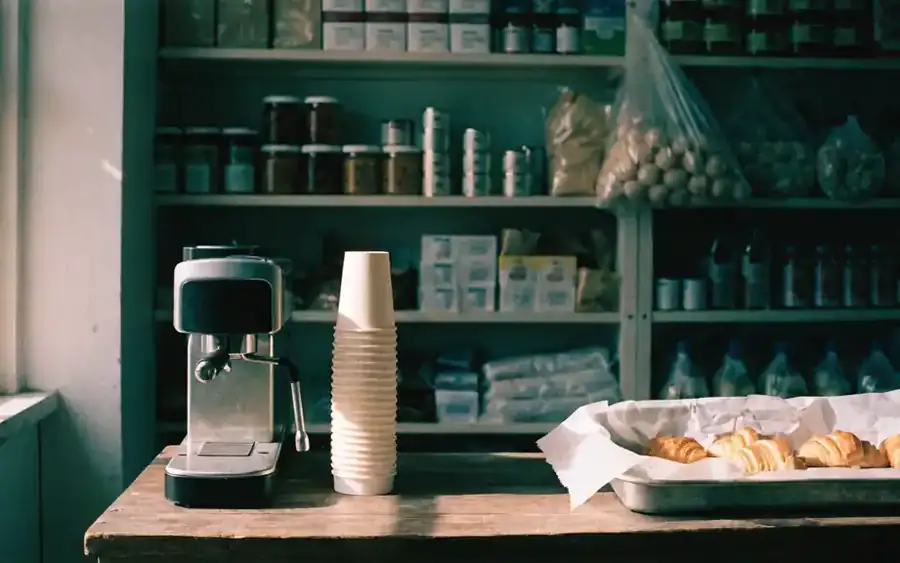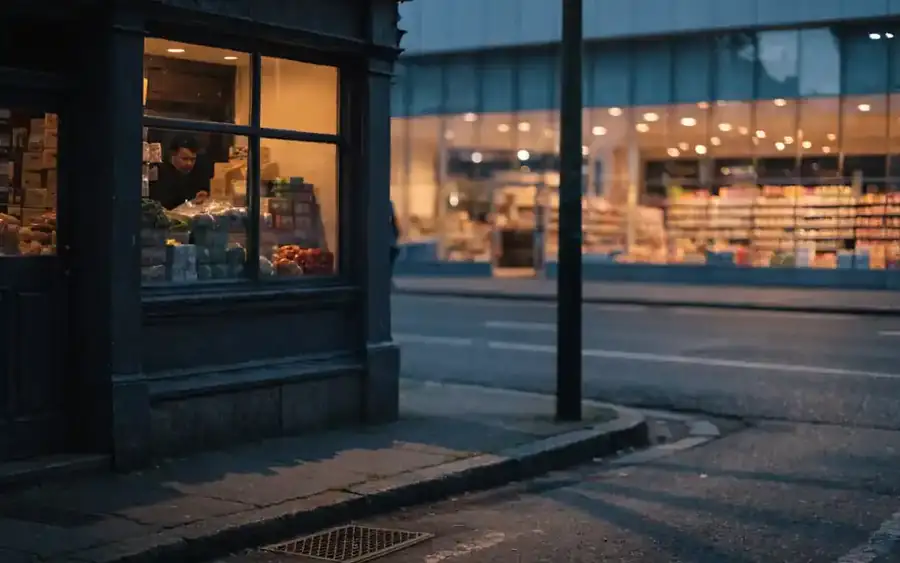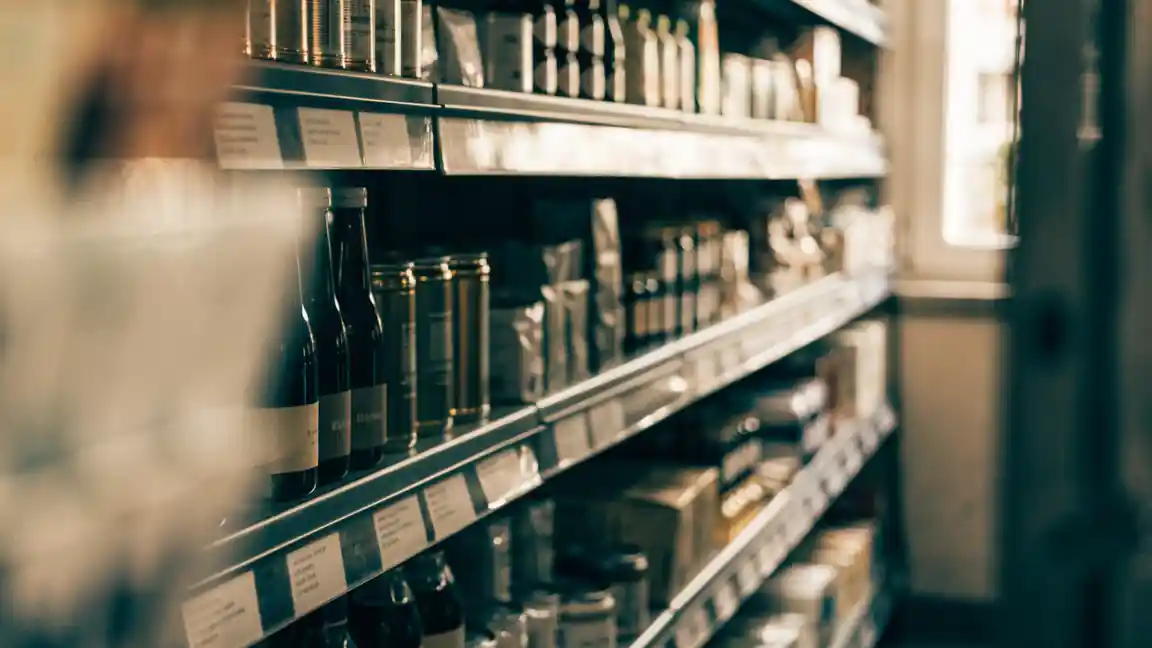
Why does it matter where things are?
There are two things you can adjust in a shop: what is on the shelf, and where it is. The first needs a supplier, money and stock. The second needs nothing — one decision and one afternoon. Which makes it odd that in most shops the layout isn't the result of a decision, but of how things happened to end up years ago.
This isn't about tricking anyone. It is that a customer spends two or three minutes inside, and in that time sees whatever happens to be in their way. If the add-on sits three aisles from the main product, they aren't skipping it because they don't want it.
The three zones of a shop
However big the shop, the same three stretches follow one another. The most common mistake is filling all three the same way — while the customer is doing something different in each.
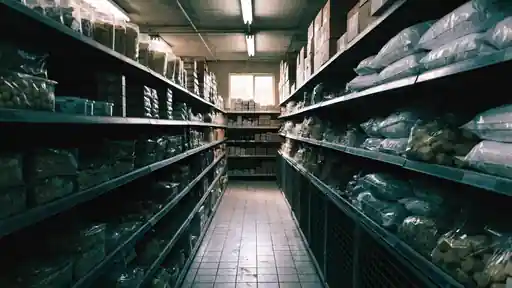
- 11. The entrance zone — they aren't buying yetIn the first few steps a customer is getting their bearings: where to go, what's here. Whatever you put here mostly gets stepped past. So don't put your best offer here — this is for baskets, big clear signs and the seasonal table.
- 22. The main route — this is where the basket is decidedThis is the spine of the shop: the way everybody walks. Everyday lines go here, and so does everything you want people to see. If there is a corner you haven't put anything into for weeks, it probably isn't on this route.
- 33. The half-metre at the counter — they're in a hurryThe customer is queueing, looking for their wallet, and will make one decision at most. Only put things here that can be understood at a glance and are cheap: gum, napkins, batteries, chocolate. Anything expensive or needing explanation is just taking up room.
Eye level: the most expensive shelf
Not all shelves are equal. A customer first sees what is opposite them, then what they'd have to bend down for. That isn't a trick, it's geometry — which is exactly why you can work with it deliberately.
| Shelf level | What belongs there | Why |
|---|---|---|
| Eye level | Your best-margin lines | This is seen first, without moving |
| Within reach | Everyday, sought-out lines | People look for these anyway; they don't need the best spot |
| Bottom shelf | Large packs, heavy goods | Whoever buys a big sack will bend for it — and that's where it belongs |
| Top shelf | Rarely asked for, backup | What goes up here gets asked for, not found |
| Child height | Whatever children ask for | Make it a decision, not an accident |
The route: where to put bread and milk
There are a few lines people come in for even when they want nothing else: bread, milk, cigarettes, coffee. They will seek those out — so they don't need to be by the door. Further back, and the customer walks past everything else and has a chance to notice something.
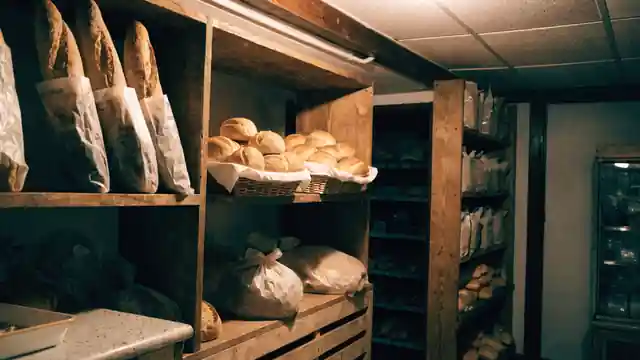
- Bread, milk and chilled goods belong in the back half — these are the shop's magnets.
- What is bought together should stand together: cold cuts by the bread, milk and sugar by the coffee, sauce by the pasta.
- The day's offer belongs on the main route, not in a separate corner — if it isn't in the way, it doesn't work.
- If one end of the shop has been empty for weeks, the problem isn't the goods — it's that nobody walks there.
- Keep the seasonal table movable: at Christmas it belongs somewhere other than in summer.
The half-metre in front of the counter
This is the tightest and most expensive space in the shop, because every single customer stops here. Which is exactly why it is the easiest to ruin: pack it full and nobody sees anything, while the counter looks cluttered.
- Few lines, plenty of each. Five products people can see beat twenty that hide one another.
- Only cheap and instantly understood items: anything that needs explaining won't sell here.
- Leave clear space on the counter — the customer has to put down a basket and a wallet.
- Change the selection monthly. What a regular has walked past three times won't sell on the fourth.
- Behind the counter, on the shelf at your back, put what people ask for — not what you'd like to sell.
What not to do
- Don't rearrange the whole shop at once. If everything changes you can't tell what made it better or worse — and your regulars get lost in it too.
- Don't hide a sought-out line just to make people see more. Someone who can't find the bread doesn't take a lap: they go to the shop next door.
- Don't leave an empty shelf slot. An empty slot isn't only a lost sale — it also says the shop isn't being looked after.
- Don't fill up the entrance. Customers aren't buying there yet, and the stock narrows the way in.
- Don't leave child height to chance. Whatever sits there should be a decision, whichever way you decide.
- Don't rearrange without moving the price labels. A relocated product under an old label is worse than not being there at all.
In summary
- Layout is the only free tool in a shop — and precisely why it usually goes undecided.
- There are three zones: entrance (not buying), main route (the basket is decided), counter (in a hurry).
- Put margin at eye level, not stock.
- Staples belong at the back, and the add-on belongs NEXT TO the main product.
- Change one thing at a time, and look at the data two or three weeks later.
- After rearranging, the price labels move too — otherwise you break more than you fix.
Frequently asked questions
How big does a shop have to be for this to be worth doing?
Any size, because the three zones exist in a twenty-square-metre shop too — they're just shorter. In a small shop it's easier, in fact: it can be rearranged in one afternoon, and the effect shows sooner because fewer lines are moving.
How do I know which lines carry the most margin?
From the margin, not the price. The most expensive product isn't necessarily the most profitable: the number that matters is what's left on one sold unit. Look at that together with unit counts — a low-margin line that sells a lot can bring in more than a high-margin one bought twice a month.
Do I really have to put the bread at the back?
It's a principle, not a rule. The principle is that whatever customers come in for anyway doesn't need the best spot. If your shop only has room for bread at the front, then focus instead on what sits beside it and along the way to it.
How do I know the rearrangement actually worked?
Only from the data. Compare the two or three weeks before and after, per product — and allow for what else happened (a holiday, the weather, a promotion). If you changed several things at once you won't know which one did it; that's why one at a time is worth the patience.
How often should I rearrange?
For the whole layout, once or twice a year is plenty — regulars need to be able to learn it. The seasonal table and the counter selection are worth refreshing monthly, though, because those work precisely because they're new.
What if I don't have enough room?
Then the question isn't layout, it's range. In a crowded shop fewer lines sell more, because they can be seen. Look at what has been sitting on the shelf in the same quantity for months — that isn't range, it's tied-up money and occupied space.
Can the chiller be rearranged too?
Yes, and the same principle applies: better-margin lines at eye level, large packs at the bottom. Watch one thing though: air has to circulate inside a chiller, so don't pack the shelves so tightly that you block it — that makes the unit consume more and cool worse.
Say the product's name and it's there on the till.
Boltom App takes the work behind the counter off your hands. You find a product by looking at its photo or saying its name out loud — no codes, no scraps of paper. Whatever leaves the shelf or goes in the bin is recorded right there, not in a notebook. It works alongside your existing till, not instead of it.
- A quick code with a photo — or just say the product's name and the till finds it.
- Staff consumption in three taps, recorded under the person's name.
- Daily waste with its reason: expired, broken, unsellable — totalled up in money.
No card needed · 2 minutes