At half past four in the afternoon a mother is standing at the counter with a loaf of bread, a litre of milk and a six-year-old. While she looks for her card, the child's eyes land on the basket by the till. Two minutes later a small chocolate bar goes into the bag too — not planned, but nobody regrets it. That is an impulse buy: a small, quick decision that happens dozens of times a day in a small shop — or doesn't.
Every shop has a spot next to the till, but few use it deliberately. On many counters the same box of sweets has stood for years, next to a pile of leaflets, last year's gift item and the delivery notes. Yet this is the one place in the shop where every customer stops and has a few seconds to look around. Use this half metre well and you can raise the value of each sale and the shop's profit without adding a single shelf.
This article is about selling at the counter: what to put there, at what price, in how much space, how often to swap it, how to suggest without being pushy, what to watch for with theft and hygiene, and how to measure whether it really pays. The psychology of pricing by the till is covered in detail in Psychological pricing in a small shop, the layout of the whole shop in Where should everything go? A shop layout that actually sells more, and theft at the counter in Shoplifting and shrinkage: what can be done from behind the counter. The examples are general and can be adapted to any small grocery, bakery or convenience shop.
Why it's decided at the till
Customers walk straight past most shelves in a shop if there's nothing on them they came for. At the counter, though, everyone stops: they wait their turn, rummage in their bag, watch as the shopkeeper rings up their items. It's the one spot in the shop where a customer's attention is free for a few seconds and their hand is close to the display. That's why impulse buying is strongest here — and why it's easiest to get wrong here.
- Every customer sees it. Some customers never see the back shelf, but everyone sees the counter, up to a hundred times a day or more.
- The decision is quick and small. Nobody spends minutes thinking about a chocolate bar or a small bottle of drink; if they don't decide in two seconds, they never will.
- The money is already in hand. Someone about to pay already has their wallet open, and adding a small item isn't a new decision, just topping up the one they've made.
- Here the child is a customer too. A basket at counter height sits at a child's eye level — that's an opportunity, but also a responsibility.
A simple estimate shows the scale. If a small shop makes two hundred sales a day and the range by the till prompts just one customer in ten to add one more small item, that's twenty extra sales a day — five to six hundred a month. Because these tend to be products with a good margin, their effect on profit is bigger than the takings would suggest. The reverse is just as true: a badly arranged counter loses a few of these sales every day, only it never shows up anywhere.
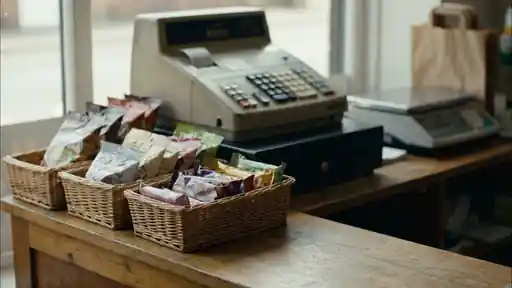
What works by the till: product groups
Not every small product is an impulse product. What works by the till is something a customer can tell at a glance what it is, what it's for and roughly what it costs — without having to pick it up, turn it over or read it to decide. The groups below work in most small shops, but you need to match them to your own customers: a shop next to a school sells different things from the counter than one on the ground floor of an office block or a village general store.
| Product group | Why it works | What to watch for |
|---|---|---|
| Chocolate, sweets, chewing gum | Small, cheap, familiar to everyone; children and adults alike decide quickly. | Melts in the sun or near the heating; choose carefully what sits at a child's eye level. |
| Small packs of snacks, biscuits, cereal bars | A bite on the go that needs nothing else; goes well with morning and afternoon shopping. | Don't stock ten kinds — three or four good sellers are enough. |
| Small bottles or cans of drink | A natural extra with pastries or a snack; sells especially well in warm weather. | Sells best chilled; a small fridge by the till only pays if it covers its electricity cost. |
| Home-baked or local treats | Unique, not available elsewhere, usually with a better margin; customers are happy to try them. | Keep them wrapped or in a covered container, with the labelling they need. |
| Forgotten essentials: batteries, tissues, plasters, lighters | The customer remembers at the till that they've run out at home; no persuasion needed. | Small, expensive items: favourite targets for theft, so keep them in sight or behind the counter. |
| Seasonal and gift products | Before a holiday, in summer, at the start of the school year customers look for them anyway; they keep the counter fresh. | Swap them in time; seasonal stock quickly becomes hard to sell after the holiday. |
| The offer of the day | A fresh pastry or the product of the day on the counter, singled out, right in front of the customer. | Always highlight the same single product, not five different ones. |
A few things almost never work by the till: large, heavy packs a customer can't carry off in one hand; products that need explaining and that people would have to ask about; low-margin staples the customer would have bought anyway; and things that have sat there for months because they didn't sell anywhere else. The counter is not the last stop for slow sellers — if a product doesn't move on the shelf, it won't move by the till either, it just takes the place of a good one. Thinking through what role each product plays in your range is helped by What to sell in a small shop: building your starter range.
Price band and margin: what it should cost
Buying at the till works because it takes no thought. For that, the price has to be small compared with what the customer is paying anyway. A good rule of thumb is that a product by the till should cost roughly five to fifteen per cent of the average sale: that's what a customer adds in their head without feeling they've made a new decision. If the price is much higher, the customer starts weighing it up — and at the counter, in front of the people queuing, weighing it up usually means no.
| Price band relative to the average sale | Example price with an average sale of 100 units | How the customer decides | What fits here |
|---|---|---|---|
| Under 5% | Under 5 units | Without thinking, often without noticing the price. | Chewing gum, sweets, small treats — children and the "just one more" purchase. |
| 5–15% | 5–15 units | One glance, a quick "why not?". This is the strongest band. | Chocolate, small snacks, small drinks, home-baked treats, batteries. |
| 15–30% | 15–30 units | Weighs it up; only buys with a strong reason: a gift, a need, a holiday. | Seasonal gifts, holiday sweets, larger packs of local products. |
| Over 30% | Over 30 units | Not an impulse but a planned purchase; rarely decided at the till. | Mostly just takes up space by the till — it belongs on the shelf. |
Margin matters especially by the till, because this is one of the most valuable spots in the shop. If a low-margin product goes here, the spot is working but brings in very little. So it's worth choosing products whose percentage margin is at least as high as the shop's average, and preferably higher. Products by the till rarely need a promotion: an impulse buy doesn't depend on a discount but on the product being right in front of the customer. Here a discount is mostly just lost margin — unless you want to sell a product quickly before it expires. When a round price or one ending in nine helps is covered in detail in Psychological pricing in a small shop.
- One price, one basket: if everything in a basket costs the same, the customer doesn't have to look for a label, and the shopkeeper doesn't have to think when ringing it up.
- A clearly readable price: the price of a product by the till should face the customer, in large print. Customers rarely ask about an unpriced product — they'd rather not buy it.
- A round price that's easy to add up in your head: someone standing in a queue doesn't want to do sums.
- Work out in advance how much is left on each item. A good seller with hardly any profit only fattens the takings by the till.
How much space, and how to arrange it
With the range by the till, less is almost always more. On a cluttered counter the customer's eye doesn't land on anything, there's no room to pay, and the whole shop looks messier. In an average small shop, thirty to sixty centimetres of counter and a small stand or two or three baskets are enough for the range to work. Only give it more space if measuring shows it pays, and if the serving part of the counter stays clear.
- Five to eight products, not thirty. If there's too much choice, the customer takes none of them. Better a few good sellers, each one properly stocked.
- Facing the customer, at hand height. Anything turned away from the customer, or that they have to reach across the counter for, doesn't sell.
- Don't get in the way of payment. Keep the card terminal, the space for change and the packing area clear — the range by the till must not slow the queue down.
- Full, but not crammed. A half-empty basket looks neglected, and goods fall out of an overfilled one. Top up once a day, in the quiet hour.
- Keep groups together. Sweets next to sweets, drinks next to drinks; the customer should see at a glance what's in front of them.
The three zones of the counter
It helps to divide the counter into three parts in your head. The queuing zone is what customers see while they wait their turn: this is the place for seasonal products, bigger items and anything that needs a moment to decide on. The payment zone is right in front of the till: this is for the smallest products that can be decided on fastest, which the customer adds while paying. The zone behind the counter belongs to the shopkeeper: this is for things you only hand over on request — small, expensive items and age-restricted products. Where the area by the till fits into the layout of the whole shop is shown in Where should everything go? A shop layout that actually sells more.
Rotation and seasons: when to swap
A range by the till wears out. What a regular sees in the same place every day, they stop noticing after a while — their eye slides over it like the clock on the wall. So it's worth swapping at least one or two products every two to four weeks, and matching the range to the season, the holidays and the time of day. You don't have to change everything at once: it's enough to always have one new product, one seasonal product and a few proven sellers.
| Period | What can go by the till | What to watch for |
|---|---|---|
| Autumn, back to school | Small snacks and drinks for school bags, small stationery, tissues | They sell in the morning hours; afternoon customers want something else. |
| Winter and before holidays | Small gifts, holiday sweets, gift-wrapped treats | Put them out two or three weeks before the holiday, and take them away straight after. |
| Spring | Lighter snacks, fruity sweets, local products | A good time to try out new products. |
| Summer | Small chilled drinks, ice cream if there's room, travel essentials | Sweets left in the sun melt; use the shady side of the counter. |
| Morning | Pastries, small drinks, a quick breakfast bite | Morning customers are in a hurry; one clearly visible offer is enough. |
| Afternoon | Sweets, snacks, small things for children | This is when families with children and schoolchildren come in. |
When swapping, one rule always works: whatever has barely sold from the till in two or three weeks goes back on the shelf and makes room for something new. Don't cling to a product just because you ordered a lot of it, or because the supplier recommended it. With seasonal stock it's especially important to take it away in time: holiday sweets only sell at a reduced price once the holiday is over.

Suggesting at the till — without being pushy
Most products by the till sell on their own, but a well-timed sentence can help a lot. The difference between a good suggestion and a pushy one isn't in the words but in whether it suits the customer. If a customer asks for a coffee and you ask whether they'd like a fresh croissant with it, that's helpful. If you say the same sentence to every customer, whether it fits or not, after a while it annoys your regulars — and next time they won't even look towards the counter.
- One offer, one question. If the customer says no, that's the end of it; don't offer something else.
- It should fit the purchase. Pastries with a coffee, a drink with pastries, wrapping with a gift — not a general "anything else?".
- Not at the busiest moment of the queue. If five people are standing behind them, the customer is in a hurry; a suggestion then only slows things down.
- Not through the child. The parent should decide; don't talk the child into it.
- Be honest. If you recommend a product, do it because it's good, not because it's about to expire. If it is, say so, and give a discount.
„A good suggestion feels as if the customer had thought of it themselves. A bad one feels as if we were trying to sell them something.”
Sentences that work
- "We baked these this morning — would you like one with it?" — a natural question alongside a fresh product.
- "This is new here, we get it from nearby." — not a sales pitch, just information; the customer decides.
- "Do you need batteries for the remote?" — only if the customer mentioned earlier that something isn't working.
- "Is it a present? Shall I wrap it?" — help alongside a gift, not a sale.
- If the customer says no: "All right, thank you." — and nothing more.
Theft, hygiene and age-restricted products at the till
The range by the till is easy to reach — that's its strength and its weakness too. What a customer can pick up in one movement, they can slip into a pocket in one movement. Small, expensive items — batteries, lighters, pricier chocolate — are favourite targets for theft, especially when the shopkeeper is busy serving the queue. Preventing theft as a whole is covered in Shoplifting and shrinkage: what can be done from behind the counter; here are just a few rules for the range by the till.
- Small, expensive items go behind the counter or in front of the shopkeeper's eyes, not at the front of the counter within reach of the people queuing.
- The range by the till shouldn't block your view of the shop; it shouldn't be so tall that you can't see the queue and the door behind it.
- Count the baskets by the till from time to time: if one product keeps coming up short, move it further back.
- Sweets at a child's eye level often "disappear" — not always through theft, sometimes just because a child opens them. Record that as waste too, with the reason, so you can see what it costs.
Hygiene matters by the till too, especially with unwrapped products. The counter is where money, cards and customers' hands pass most often, so unwrapped pastries, home-baked biscuits or loose sweets should only stand here in a covered container, with tongs, or pre-wrapped. It's worth adding the baskets and stands by the till to your daily cleaning routine — a sticky basket and dusty packaging put customers off reaching for the product.
How to measure whether it pays
It's easy to feel that the range by the till is "doing well", and hard to say how much it really brings in. After a good afternoon it seems everything sells; after a quiet week it seems nothing does. A reliable picture needs two things: seeing the sales of the products by the till separately, and comparing the periods before and after a change in the same way.
- A separate category: put the products by the till into a category of their own — for example "By the till" — so they don't get lost among the other sweets and drinks. If a product stands both on the shelf and by the till, decide which is its main place and record it there.
- Takings and profit: don't just look at how much you sold, but also at how much was left on it. A good seller with a low margin only takes up space by the till.
- Two periods: two weeks before the change and two weeks after, with the same days, without holidays or unusual events.
- Hourly breakdown: in which hour most products by the till sell. This shows you when it's worth suggesting something, and when to switch the range from morning to afternoon.
- One change at a time: if you change the product, the price and the position all at once, you won't know what made the difference.
| Measure | Before (two-week average) | After (two-week average) | Change |
|---|---|---|---|
| Items sold per day | 18 | 31 | +72% |
| Takings per day | 270 units | 430 units | +59% |
| Profit per day | 80 units | 165 units | +106% |
| Margin | 30% | 38% | +8 percentage points |
| Strongest hour | 17–18 | 7–8 and 16–17 | two peaks |
Common mistakes
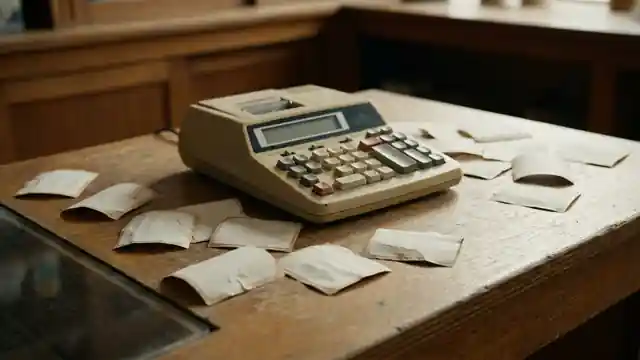
- The counter as a dumping ground. Delivery notes, leaflets, the phone charger and last year's gift item take the space away from products that sell.
- Too many products. Thirty kinds of small items side by side, and the customer's eye doesn't land on any of them.
- The same range for months. Regulars no longer notice it, and the counter loses its pull.
- The last stop for slow sellers. Whatever didn't sell on the shelf is put by the till — where it won't sell either.
- Low-margin products in the most valuable spot. They sell well but bring in little; the space is waiting for a better product.
- An unpriced range. Customers don't ask; they'd rather not buy.
- The range slows down payment. Baskets take over the space for the terminal or for packing, and the queue grows.
- Pushy suggestions. The same sentence to every customer, whether it fits or not.
- No measuring. The shopkeeper decides on gut feeling and doesn't know which change made money and which only made work.
A new counter in two weeks: step by step
- 11. Look at where you're starting fromWrite down what's by the till now, and look at the last two weeks' sales of those products: items, takings, profit. If they aren't in a category of their own yet, put them together now.
- 22. Clear the counterTake away everything that isn't for selling or serving: papers, leaflets, old gift items. Anything that hasn't sold for months goes back on the shelf or into the stockroom.
- 33. Choose five to eight productsOne or two from each group: sweets, a small snack or drink, a local or home-baked treat, a forgotten essential and a seasonal product. For each one, work out how much is left on each item.
- 44. Arrange the three zonesSeasonal and bigger items in the queuing zone, the smallest, fastest-to-decide products in the payment zone, small expensive items behind the counter. Keep the space for the terminal and packing clear.
- 55. Price them visiblyThe price of every product or basket should face the customer, in large print. Where possible, one price per basket.
- 66. Agree on how to suggestOne or two sentences that fit the purchase — pastries with a coffee, wrapping with a gift. One question, and if the customer says no, that's the end of it.
- 77. Compare after two weeksPut the two periods side by side: items, takings, profit, hourly breakdown. Whatever worked stays; whatever barely sold gets swapped, and you look again in two to four weeks.
Checklist
- The products by the till are in a category of their own, and I can see their takings and profit.
- Five to eight products stand by the till, not thirty.
- Each product costs roughly five to fifteen per cent of the average sale, and its margin is at least the shop's average.
- Every product's price is clearly visible and faces the customer.
- The space for the card terminal, change and packing is clear.
- Small, expensive items are behind the counter or in front of my eyes.
- Unwrapped products stand in a covered container or are pre-wrapped.
- I swap at least one product every two to four weeks, and seasonal stock is taken away in time.
- A suggestion is one question that fits the purchase — and if the customer says no, that's the end of it.
- I know what rules apply where I am to displaying age-restricted products.
Summary
- The half metre next to the till is the most valuable spot in the shop — every customer stops in front of it and makes one more quick decision before paying.
- It's the place for small, instantly understood products with a good margin, priced at roughly five to fifteen per cent of the average sale.
- A few tidy, visibly priced products sell more than a cluttered counter, and don't slow down payment either.
- Swap every two to four weeks, and match the range to the season, the holidays and the time of day.
- One question at the till if it fits the purchase; small expensive items behind the counter, unwrapped products in a covered place.
- Measure profit in a category of its own, comparing two periods — what matters isn't how much sells, but how much is left.
Frequently asked questions
What should go next to the till in a small shop?
Products a customer can decide on at a glance: small, easy to hold, instantly understood and with a good margin. In most small shops sweets, small packs of snacks and drinks, home-baked or local treats, forgotten essentials such as batteries or tissues, and seasonal products work well. Five to eight products are enough; you don't need thirty. Only your sales can tell you which ones work for you.
What is impulse buying?
An impulse buy is a purchase the customer didn't plan but decided on in the shop, in a moment. It typically involves low-priced products that are quick to decide on, and it happens most often by the till, because every customer stops there. In a small shop dozens of these decisions are made every day — or aren't. The point of the range by the till is to make sure they are.
How much should a product by the till cost?
A good rule of thumb is roughly five to fifteen per cent of the average sale. That's what a customer adds in their head without thinking, without feeling they've made a new decision. If the price is much higher, the customer starts weighing it up, and in front of the queue they usually say no. You can work out the value of your own average sale from your daily takings and the number of sales.
How much space should I give the range by the till?
In an average small shop, thirty to sixty centimetres of counter and a small stand or two or three baskets are enough. The key is to keep the space for the card terminal, change and packing clear, because the range by the till must not slow down payment. Only give it more space if measuring shows it pays. On a cluttered counter the customer's eye doesn't land on any product.
How often should I swap the products by the till?
It's worth swapping at least one or two products every two to four weeks, because what a regular sees in the same place every day, they stop noticing after a while. You don't have to change everything at once: it's enough to always have one new product, one seasonal product and a few proven sellers. Whatever has barely sold in two or three weeks goes back on the shelf. And take seasonal stock away straight after the holiday.
Is it worth running promotions on products by the till?
Rarely. Buying at the till doesn't depend on a discount but on the product being right in front of the customer and easy to decide on. Here a discount is mostly just lost margin, because the customer would have bought it without the promotion. The exception is a product nearing its expiry date that you want to sell quickly — then a short, timed promotion can help. When a multi-buy deal works is worked out in our article on psychological pricing.
How can I make suggestions at the till without being pushy?
Ask one question, and only one that fits the purchase: pastries with a coffee, wrapping with a gift. If the customer says no, that's the end of it; don't offer something else. Better not to suggest anything at the busiest moment of the queue, because the customer is in a hurry. Don't try to sell through the child, and only recommend what you honestly think is good.
How do I prevent theft from the range by the till?
Put small, expensive items — batteries, lighters, pricier chocolate — behind the counter or in front of your eyes, not at the front of the counter. The range shouldn't be so tall that you can't see the queue and the door behind it. Count the baskets by the till from time to time, and if one product keeps coming up short, move it further back. Preventing theft as a whole is covered in a separate article.
What should I watch for with hygiene by the till?
The counter is where money, cards and customers' hands pass most often. So unwrapped pastries, home-baked biscuits or loose sweets should only stand here in a covered container, with tongs, or pre-wrapped. Add the baskets and stands to your daily cleaning routine. A sticky basket and dusty packaging put customers off reaching for the product.
Can I keep age-restricted products next to the till?
That depends on rules that vary from country to country. In many places there are specific regulations on how age-restricted products such as alcohol and tobacco are displayed, made visible and advertised, and sometimes keeping them near the till is restricted as well. Before putting such products by the till, check the local rules. Even where it's allowed, their place is behind the counter, handed over on request, not within the customer's reach.
How do I know whether the range by the till pays?
Put the products by the till into a category of their own, and look at their takings and profit. Compare two weeks before the change with two weeks after, using the same days, without holidays or unusual events. If profit grew, the change works; if only the number sold grew but profit didn't, the wrong products got the space. Ideally change only one thing at a time, otherwise you won't know what made the difference.
What does the hourly breakdown show for products by the till?
It shows in which hour most products by the till sell. In many shops it turns out that pastries and small drinks go in the morning, sweets and snacks in the afternoon — then it's worth matching the range to the time of day. It also shows when a suggestion makes sense and when it would only slow down the queue. Most tills and counter-side apps include an hourly breakdown in their reports.
Say the product's name and it's there on the till.
Boltom App takes the work behind the counter off your hands. You find a product by looking at its photo or saying its name out loud — no codes, no scraps of paper. Whatever leaves the shelf or goes in the bin is recorded right there, not in a notebook. It works alongside your existing till, not instead of it.
- A quick code with a photo — or just say the product's name and the till finds it.
- Staff consumption in three taps, recorded under the person's name.
- Daily waste with its reason: expired, broken, unsellable — totalled up in money.
No card needed · 2 minutes