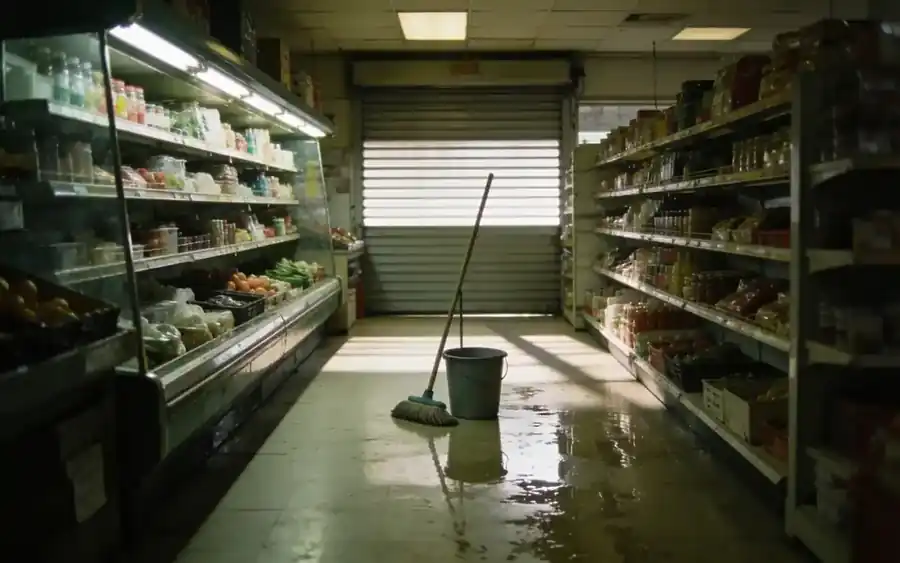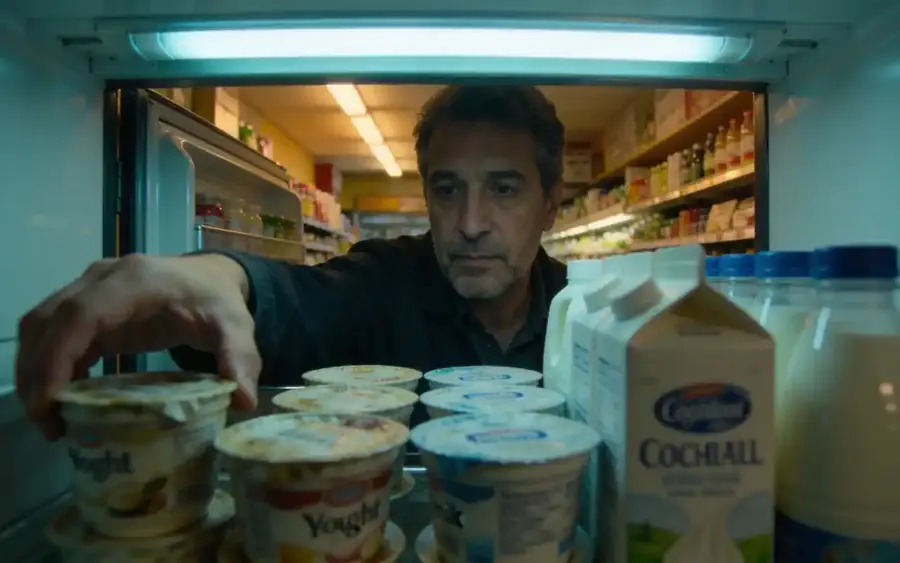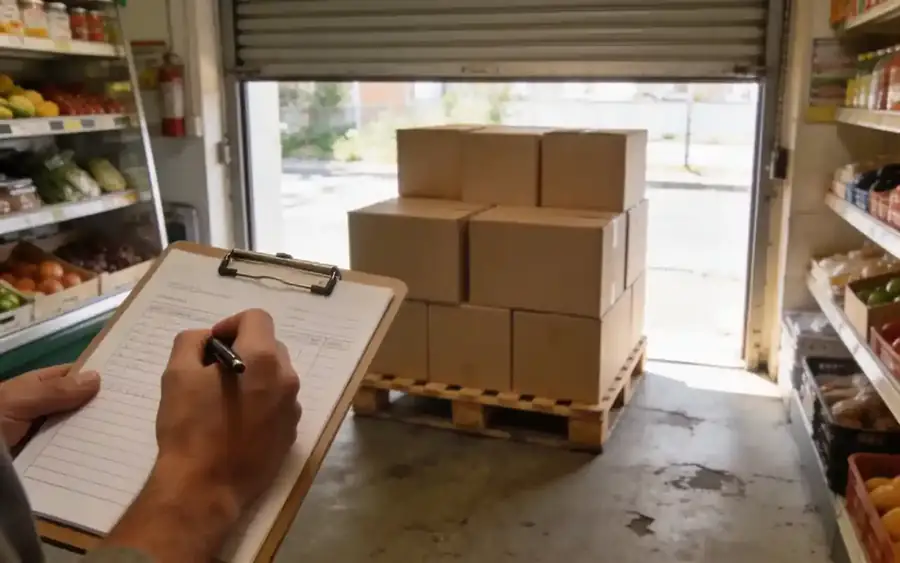
The word HACCP makes many shopkeepers wince a little. They picture a thick folder full of tables, written once with a consultant, gathering dust on top of a shelf ever since — and filled in hastily the evening before an inspection. Sadly that picture is accurate in many places, and that is exactly why it does not work.
Yet in a small shop HACCP is surprisingly simple. There is no cooking, no meat processing, and most goods arrive in sealed packaging. What remains is a handful of clearly defined points: chilled goods, fridges, use-by dates, slicing open products, bakery goods, allergens and handwashing. If you have a short, living system for these, it will stand up at an inspection — and more importantly, your customers will not fall ill from what they bought from you.
This article presents the system as a whole. Cleaning routines, rotating stock by date and receiving deliveries each have their own article (Keeping the shop clean; Use-by dates in the shop; Receiving goods step by step) — here they appear only as far as they are part of the HACCP system.
What HACCP is, in one sentence
HACCP (Hazard Analysis and Critical Control Points) is a way of thinking: instead of checking at the end whether the food is fine, you think ahead about where it can go wrong and keep watch at those points. In a small shop this means knowing which goods are dangerous if stored or handled badly, checking on them regularly, and writing down what you saw and what you did.
It is not paperwork for its own sake. The paper is only the trace — the real work is that someone actually looks at the thermometer in the morning and, if the dairy fridge is too warm, acts instead of shrugging. A good HACCP system in a small shop is short enough for the staff to know it by heart, and concrete enough that everyone knows what to do when something is off.
The seven principles in counter language
HACCP rests on seven principles. The textbook wording looks abstract at first, but translated for a small shop each one is a simple question you can answer in a sentence or two.
| Principle | What it means at the counter | Example |
|---|---|---|
| 1. Hazard analysis | You walk through your shop: with which goods, at which step, can things go wrong? | Cold cuts left somewhere warm or sliced with a dirty knife can make a customer ill. |
| 2. Identifying critical points | You choose the points where you can catch the hazard. | Receiving chilled goods, fridge temperatures, slicing. |
| 3. Limits | For each point you state what is "fine" and what is "not fine". | The fridge is within the range set by the product label and local rules; expired goods cannot stay on the shelf. |
| 4. Checking (monitoring) | You decide who checks, when and how. | At opening and before closing, the opening and closing assistant reads the thermometer and writes it down. |
| 5. Corrective action | You write down in advance what to do if something is off. | If the fridge is too warm: door, setting, moving the goods, setting doubtful goods aside, a note. |
| 6. Verification | From time to time you check that the system really works. | Each week the manager reviews the log and signs it; each month they check the thermometer. |
| 7. Documentation | You keep the description and the records. | The folder under the counter: the system description, the logs, the corrective actions. |
You think through and write down the first three principles once, on a quiet afternoon. The other four are the daily routine: measure, record, act if needed, and now and then check that all this really happens. Most shops manage the first half and slip on the second.
A small shop's typical critical points
In a general store, a corner grocery or a small bakery, almost the same points come up every time. The table below is a starting point: take it over, cross out what you do not have, and add what only you have — for example if you bake on site or make sandwiches.
| Point | Hazard | Check | What to do if it is off |
|---|---|---|---|
| Receiving chilled and frozen goods | The goods arrive already warmed up, or stand outside the fridge for too long | By hand and by eye at every delivery; a thermometer if in doubt; chilled goods go straight into the fridge | You refuse the goods or set them aside, and note the deviation on the delivery note |
| Fridges | The fridge is too warm and bacteria multiply | A thermometer in every fridge, read at least twice a day and written in the log | Check the door and the setting, re-measure shortly afterwards; if it stays warm, move the goods, remove doubtful items, call a technician |
| Freezers | Goods thaw and then refreeze | A thermometer, read daily; ice build-up and signs of thawing | Refrozen or doubtful goods are not sold; a note, a service call |
| Use-by dates | Goods past their use-by date reach the customer | A daily look at short-dated goods, a full round every week | You take the goods off straight away, record them as waste, and look at why they were still there |
| Slicing and weighing loose food | Contamination from the knife, the machine or hands; cross-contamination between raw and ready-to-eat goods | Clean tools, a separate chopping board, the slicer cleaned daily, opened products marked with the opening date | You clean the tool at once; you throw away doubtful goods; you record and make up the missed cleaning |
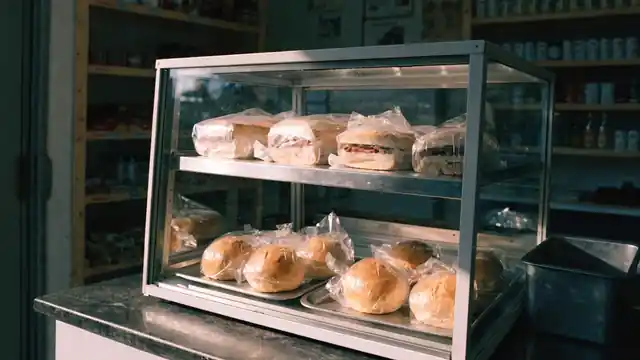
| Bakery goods | Bakery goods handled with bare hands or left uncovered, foreign bodies | Tongs or gloves, closed or covered storage, customers do not reach in with their hands | You remove the affected goods; you replace the missing tool; you talk it through with the staff member |
| Allergens | The customer does not know what is in unpackaged food, or one product "carries over" to another | Allergen information available for loose and freshly made goods; separate tools where needed | You supply the missing information and do not sell the item until then; you do not reassure the customer with guesswork |
| Handwashing | Dirt passes from hands to the goods | A working washbasin with soap and single-use towels; handwashing at the start of work and after breaks, the toilet, money and raw goods | You replace the missing supplies at once; you talk it over with the staff member; you write it down |
You can read more about receiving goods, date rotation and cleaning in the articles mentioned above. From the HACCP point of view only one thing matters: these points are not separate tasks but parts of one system, and for each of them you need to know what to do when something is not right.
Daily, weekly and monthly checklist
The system stays alive if it is spread across time. You do not need to do everything every day — but what is daily should be daily, with someone's name next to it. The detailed cleaning schedule is a separate list; this one contains only the food safety checks.
| When | What | Who | Where it goes |
|---|---|---|---|
| Daily, at opening | The temperature of every fridge and freezer; the handwashing supplies; the state of bakery goods and open food | The opening assistant | Temperature log, signed |
| Daily, before closing | Fridges and freezers again; cleaning the slicer and chopping boards; taking expired goods off | The closing assistant | Temperature log, daily checklist, waste record |
| At every delivery | The condition and temperature of chilled and frozen goods, dates, packaging | Whoever receives it | Delivery note, with a remark if something is off |
| Weekly | A full date check; reviewing and signing the log; closing corrective actions | The manager or the owner | Weekly signature on the log |
| Monthly | Checking the thermometers against a reliable one; fridge seals and defrosting; rereading the system description | The owner | Monthly sheet in the folder |
| Yearly or when something changes | Rethinking the critical points: a new product range, a new fridge, baking on site, new staff | The owner | The system description, dated |
A temperature log that actually gets filled in
The temperature log is the backbone of a small shop's HACCP system — and also its most often falsified page. Not out of malice: it simply gets skipped, and then someone fills it in during the evening or before an inspection. The answer is not strictness but making the entry easier than skipping it.
- The log should hang next to the fridge, on a clipboard with a pen on a string — not in the folder under the counter. Anything you have to go looking for gets skipped.
- Have two fixed times tied to another routine: at opening, right after the light switch; before closing, before you close the till.
- One line per reading per fridge: date, time, fridge, reading, signature. If it is off: a column for "what I did".
- Every fridge should have a name or number that is also on the fridge itself, so there is no argument over which one was "the dairy one".
- Everyone signs with their own name or initials. "Shop" or a shared monogram is not a signature.
- Write the temperature range for each fridge at the top of the sheet — according to the product label and local rules — so whoever writes it in can see at once whether it is fine.
- If a reading was missed, leave the box empty or write that it was missed. An empty box is honest; a number written in afterwards is not.
As for temperatures, in general terms chilled goods are typically kept a few degrees above freezing and frozen goods typically at around minus 18 degrees or colder. The exact limit, however, differs by product and by country: fresh meat, fish, dairy and ready-made salads may each call for a different range. The product label and local regulations always take precedence — put on the log the limit that applies to the most sensitive product in that fridge.
Corrective action: what the inspector looks for
At an inspection, the most telling thing is not whether the log is flawless but what happened when it was not. A fridge warms up now and then, a delivery arrives in poor condition, a staff member forgets to wash their hands. That is not the problem — as long as it is clear that you noticed and did something. The corrective action is the trace of that.
- What was off: which fridge, which product, what reading or what fault.
- When: date and time — ideally written when you noticed it.
- What you did with the goods: moved, set aside, threw away, sent back — and how much.
- What you did about the cause: fixed a setting, closed a door, called a technician, talked it over with the staff member.
- Who it was: name or initials, and if the manager looked at it later, their signature too.
A good entry is one or two sentences, for example: "In the morning fridge 2 was warmer than allowed; the door had been left ajar overnight. Closed the door, re-measured an hour later, fine. Threw away the cold cuts from the top shelf, recorded them as waste." That is all. No long report is needed — what matters is that it is genuine and that the thrown-away goods leave a trace too.
„An inspector is not reassured because nothing ever went wrong, but because when it did, you noticed — and wrote it down.”
Recording thrown-away goods is a natural part of that trace. If you record waste with a reason and a name — on paper or in an app, for example in Boltom App, where the reason, the name of the person recording it and the time are kept —, then after a fridge failure you can put exactly what went in the bin next to your corrective entry. You still have to keep the temperature log and the corrective entry yourself; the waste record is only one piece of the puzzle.
Training staff in 15 minutes
A new staff member does not need to learn HACCP theory, but what to do on their own shift. A quarter of an hour is enough if you do it in the shop, next to the fridges, not over a sheet of paper.
- First 3 minutes — why: one sentence about customers' health depending on it, and about how one faulty fridge can cost a whole shelf of goods.
- Next 4 minutes — the fridges: where the thermometer is, what the limit is, where the log is, how to fill it in. Have them take and write down one reading now, with you.
- Next 3 minutes — hands and tools: when to wash hands, where the tongs and gloves are, how to clean the slicer.
- Next 3 minutes — if something is off: whom to call, what to write, what to do with the goods. Show them an earlier corrective entry.
- Last 2 minutes — questions, and have them sign and date the training sheet. That is documentation too.
What an inspection looks at
Every authority inspects in its own way, but in a small food shop almost the same questions come up everywhere. It is worth walking through the list below yourself once a quarter, as if you were the inspector.
- Is there a written system: the hazards, the critical points, the limits and the actions on one or two pages?
- Is there a thermometer in every fridge and freezer, and does the reading match that day's entry in the log?
- Does the log look genuine: do the numbers vary, are the handwriting and signatures different, are there deviations?
- Where there was a deviation, is there a corrective entry next to it?
- Are there expired goods on the shelf or in the fridge, and are opened and weighed-out products marked?
- Does the washbasin work, is there soap and a towel, and do staff know when to wash their hands?
- Is allergen information available for unpackaged and freshly made goods?
- Are the supplier documents there, so that every product can be traced back to where it came from?
- Do the staff know their part — if the inspector asks the assistant what they do when the fridge is too warm?
Common mistakes
| Mistake | Why it is a problem | How to avoid it |
|---|---|---|
| A log filled in afterwards, all at once | An experienced inspector sees it at once: the same pen, the same handwriting, weeks written in one sitting | The log hangs next to the fridge, and the number goes in where and when it is measured |
| The same number everywhere | A month of identical readings is not credible; a fridge actually fluctuates | Write down what you measure, with the decimal if the thermometer shows it |
| A deviation but no corrective action | It shows the log is just paper: someone saw the bad reading and nothing happened | Next to every reading outside the limit, one sentence: what you did |
| A consultant's manual nobody has read | Staff do not know what is in it, and do not do what it says | One or two pages, in your own words, for your own shop |
| Temperature only from the fridge's display | The display does not measure where the goods are, and nobody checks it | A separate thermometer inside, compared monthly with a reliable one |
| The system stays the same, the shop does not | A new fridge, baking on site, a new product range — yet the description is the old one | Reread and date it at every change, and at least once a year |
Setting it up in one week
If you have no system at all right now, or a folder nobody uses, you can put a working base in place in a week. An hour a day is enough, and most of the work happens in the shop, next to the fridges.
- 1Day 1: walk through the shopWith a sheet of paper in hand, follow the path of the goods: delivery, stockroom, fridges, shelf, slicing, counter. At every step, write down what can go wrong. Do not gloss over anything — this is the hazard analysis.
- 2Day 2: pick the critical pointsFrom yesterday's list, choose the points where you can catch the hazard. The table above is a good starting point; cross out what you do not have and add what only you have.
- 3Day 3: limits and thermometersCheck the labels of the most sensitive goods in your fridges and ask about the local rules. Write down the range for each fridge, number the fridges, and put a separate thermometer in each one.
- 4Day 4: the log and the checklistMake a simple temperature log and a daily, weekly and monthly checklist. Hang the log next to the fridges, with a pen. Decide who takes the reading at opening and who before closing.
- 5Day 5: write down the actionsFor each critical point, write in a sentence or two what to do if it is off and how to record the corrective action. This is the last part of the system description — the whole thing should be no more than two pages.
- 6Day 6: train everyoneGive every staff member the fifteen-minute training next to the fridges, and have everyone sign the training sheet. Ask them to take and record the readings themselves that same day.
- 7Day 7: review what has come in so farLook through the entries from the first days: is every reading there, do the numbers vary, is there a corrective action where needed? Sign the first week of the log. From now on, this is the weekly routine.
Summary
- In a small shop, HACCP is a few critical points, regular checks and a genuine record of what happened.
- The typical points: receiving chilled goods, fridges, freezers, dates, slicing and weighing, bakery goods, allergens, handwashing.
- The temperature log should hang next to the fridge, filled in at fixed times and signed by name — never afterwards.
- Every deviation gets a corrective entry: what, when, what you did with the goods and about the cause, who it was.
- Staff get a fifteen-minute, hands-on training, signed off.
- Limits and documentation rules always come from the product label and local regulations.
Frequently asked questions
Does a small general store need HACCP?
In many countries every food business needs some kind of self-check system based on HACCP principles, but how detailed and how written-down it must be varies by place and product range. A shop selling only packaged, long-life goods is typically expected to do less than one that also sells chilled goods, sliced cold cuts or bakery goods baked on site. The local food safety authority can tell you the exact requirement. If you are unsure, it is better to have a short, living system than none.
How long should a small shop's HACCP documentation be?
As short as possible while still containing everything important. In a small shop the system description often fits on one or two pages: the hazards, the critical points, the limits, how they are checked and what to do if something is off. The logs and checklists that build up day by day come on top of that. A thick manual nobody reads is worth no more than a short description everyone knows.
How often should fridge temperatures be checked?
Local regulations decide this, but in practice checking at least twice a day — at opening and before closing — is common and easy to defend. Where you keep very sensitive goods, or the fridge is opened often, it is worth looking more often. The key is to tie the reading to a fixed time and a named person, otherwise it gets skipped. A data-logging thermometer helps, but someone still has to look at it and react.
At what temperature should chilled goods be kept?
In general terms, chilled goods are kept a few degrees above freezing and frozen goods at around minus 18 degrees or colder, but the exact limit differs by product and by country. Fresh meat, fish, dairy or ready-made salads may each call for a different range. The product label and local regulations always take precedence. If a fridge holds several kinds of goods, the limit of the most sensitive one applies to the whole fridge.
What should I write if the fridge was too warm?
A short corrective entry: which fridge, what reading, when, what you did with the goods and what you did about the cause, and who it was. For example: you closed the door, re-measured an hour later, threw away the doubtful goods and recorded them as waste. No long report is needed — one or two genuine sentences are worth more than a page of generalities. If the fridge keeps failing to hold its temperature, call a technician and move the goods to a working fridge.
Is it a problem if the log shows a deviation?
No — in fact a genuine log will almost certainly contain deviations, because fridges fluctuate and sometimes things go wrong. The problem is when there is no corrective entry next to a deviation, or when there are no deviations at all for months. From this the inspector sees whether the log is genuine and whether the system works. A closed deviation is a better sign than a suspiciously perfect sheet.
What if we forgot to record a reading?
Leave the box empty or write that the reading was missed, and why if you know. Do not write in an estimated number afterwards, because that is a false record, and an inspector will easily spot it. If readings are often missed, it is a sign that the system is badly organised: the log is not to hand, or nobody is responsible. Fix that, not the paper.
Is the fridge's own display enough?
Relying on it alone is usually not recommended, because the display often measures near the cooling unit, not where the goods are. It is worth placing a separate thermometer in the middle or at the warmest point of the fridge. Compare it with a reliable thermometer once a month, and replace it if it keeps disagreeing. A log kept with a faulty thermometer gives a false sense of security.
What do I need to know about allergens in a small shop?
On packaged goods the allergens are on the label; the difficulty is with unpackaged, weighed-out and freshly made goods. In many places customers must be able to get allergen information about these on request or on display. It is worth keeping a simple list at the counter of the allergens in loose and freshly made goods, and teaching staff not to guess if they do not know the answer. The local authority will tell you the exact rule.
How long should the logs be kept?
This differs by country, so ask the local authority for the exact period. In practice it is worth keeping them at least as long as your longest-lasting affected product could be on sale, and as far back as an inspection might look. Filed by month in a box, they do not take up much space. Keep old versions of the system description too, dated.
Do I need a HACCP consultant?
Not always. For a simple small shop you can think through the basics of the system yourself in a quiet afternoon with this article and the local authority's guidance. A consultant can be useful if you bake, cook or make sandwiches on site, or if the authority expects more detailed documentation. If you work with a consultant, make sure the result is about your shop and that your staff understand it.
Does Boltom App keep the temperature log?
No, Boltom App is not HACCP software and does not keep a temperature log — you have to keep that on paper or with another tool. Where it helps: it records thrown-away goods with a reason, such as "fridge failure" or "expired", along with the name of the person recording it and the time. After a fridge failure this can be one trace of the corrective action, and it also shows up in the daily summary. The rest of the system — the description, the log, the corrective entry — remains your job.
Say the product's name and it's there on the till.
Boltom App takes the work behind the counter off your hands. You find a product by looking at its photo or saying its name out loud — no codes, no scraps of paper. Whatever leaves the shelf or goes in the bin is recorded right there, not in a notebook. It works alongside your existing till, not instead of it.
- A quick code with a photo — or just say the product's name and the till finds it.
- Staff consumption in three taps, recorded under the person's name.
- Daily waste with its reason: expired, broken, unsellable — totalled up in money.
No card needed · 2 minutes