The subject of delivery usually starts off on the wrong foot: someone approaches the shopkeeper on behalf of a platform, shows a figure for how many people order in the area, and from then on the conversation is about commission. Yet the question isn't which platform the shop should join — it is which route it should take at all.
Because there are three routes, and for most small shops the cheapest and best-working one is the one least talked about: the customer orders by phone or message, you make it up, and they come for it. That needs neither a courier nor a commission, yet it delivers exactly the convenience people order for.
This article takes all three in turn: what each gives, what it costs and who it suits. At the end there is a simple calculation you can use to decide whether, on your own products, a platform would mean profit or loss.
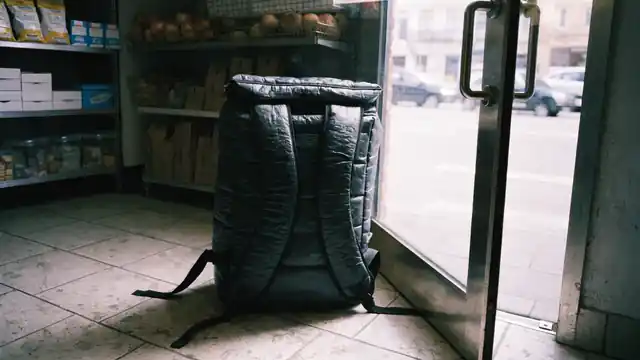
The three routes — and what each gives
| Route | What does it give? | What does it cost? | Who is it for? |
|---|---|---|---|
| Phone or message orders, collected in the shop | Convenience for your existing customers; almost no risk | Only the time to make the order up | Everyone — this is where to start |
| Your own delivery to the immediate area | Strong loyalty, elderly and less mobile customers | Time, fuel, and a person who leaves the shop | Villages, small towns, dense housing estates |
| Commission-based ordering platform | New customers who don't know you — the widest reach | 15–30% commission on the FULL price, plus admin | Where there is a high-margin convenience range |
| Mixed: platform + own collection | The platform brings the customer, collection keeps them | The cost of both, but commission on only part | Anyone who has tried the platform and can see the numbers |
It is worth noticing that the three routes aren't alternatives to each other, they build on each other. Anyone already making up orders for collection finds delivery just one more step; anyone starting with a platform is learning order handling, packing and commission arithmetic all at once — and in front of strangers, at that.
The commission arithmetic you have to do first
This is the most important section of the lot, and it rests on a misunderstanding a great many people make. Commission doesn't come out of your profit, it comes out of the full selling price. If a product is a thousand and the commission is 25%, then two hundred and fifty goes — regardless of whether your margin on that product is a hundred or four hundred.
| Type of product | Typical margin | After 25% commission | What it means |
|---|---|---|---|
| Staples, milk, bread | 10–15% | A substantial loss | Never put these on |
| Tobacco, phone top-ups | Very low | A large loss | Must not go on at all |
| Everyday goods, household | 20–30% | Barely anything or nothing | Only as a basket filler |
| Convenience items, drinks, snacks | 35–45% | Something is left | This is the platform range |
| Home-made, bakery, coffee | 50%+ | This carries it best | This is the real platform product |
From this follows the right way to use a platform: you don't put the whole shop on it, but a narrower, higher-margin range. Customers won't feel that as a gap — someone ordering on a platform isn't doing the weekly shop, they are solving something quickly.

Collection from the shop: where to start
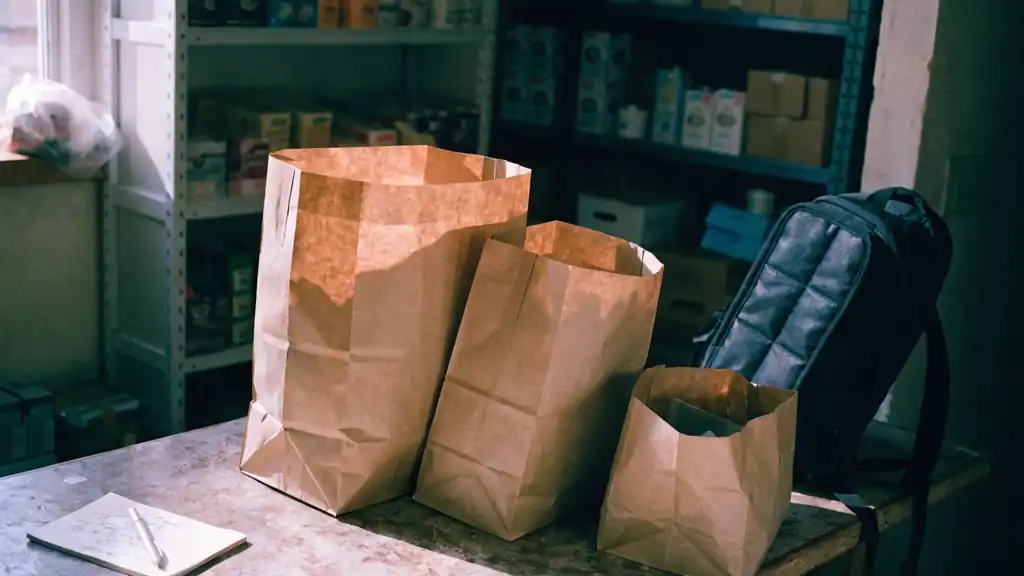
The customer calls or writes, says what they want, you make it up, and they come for it at an agreed time. That is all. No courier, no commission, no platform, no contract. And it solves precisely the problem most people order to solve: they don't want to spend twenty minutes in a queue.
- Have one channel, not five. One phone number or one messaging app — if orders come in three places, one of them will get lost.
- Write it down at once, don't keep it in your head. A notebook on the counter: name, items, when they are coming. That is the system; nothing else is needed.
- Give a time, and keep it. "Ready in half an hour" — and then it really is ready. Predictability matters as much here as it does with opening hours.
- Have a fixed place for made-up orders. A shelf behind the counter, with names on. Without it every shift change turns into a search.
- If something isn't there, SAY SO before they come for it. A message about the missing item is far better than a disappointment at collection.
- Payment on collection. Paying in advance only complicates things, and at this level the trust is there anyway.
This route matters because it is the training. If it turns out here that making orders up doesn't fit into the busy hours, it won't fit with a platform either. If it does work, the next steps are only extensions.
Your own delivery: who it is worth it for
Own delivery is primarily not a commercial tool but a relationship one. In a village, a small town or a dense housing estate, a round once or twice a week is for the people who find it hard to get to the shop — and they are the most predictable customers there are, the ones who stay for years.
The key to making it pay is the ROUND, not the individual order. A separate trip to a single customer is almost always a loss. On a set day, at a set time, with five to ten stops, it works: the time and the fuel are shared between the orders.
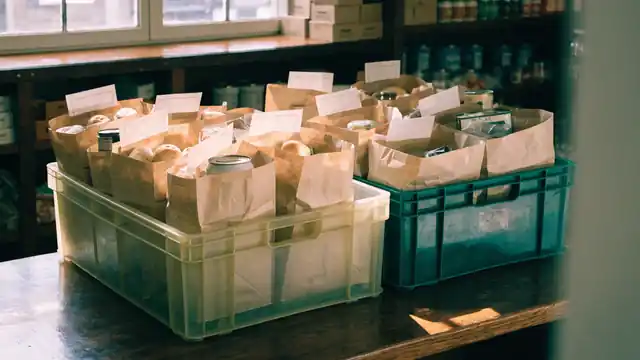
- Have a fixed day and a fixed time slot. "Tuesday and Friday afternoon" — customers arrange themselves around it, and you aren't deciding ad hoc.
- Have a minimum order value. Without one, delivering two cartons of milk costs more than it brings in.
- Draw a circle around your shop and deliver inside it. The exception further out starts as a one-off and turns into a rule.
- Count the real time. Not just the driving: making up, loading and handing over are time too, and they are the larger part.
- Don't take your only member of staff out of the shop at the busiest time. If delivery means the till is closed, you are paying for it with the customers inside.
- The delivery charge can be waived above the minimum. That encourages a bigger basket, and a bigger basket is what makes the round pay.
The platform: what it gives and what it takes
A commission platform gives one thing the other two cannot: a customer who doesn't know you. That is genuine value, and it is why many shops acquire a significant share of their new customers on a platform. In return it takes three things: commission, the relationship with the customer, and your own pace.
Losing the relationship is the least obvious item. A customer ordering on a platform isn't your customer: you don't know who they are, you can't contact them, and if another shop is cheaper in the list tomorrow they go there. That is why it is worth putting a small card of your own into every platform order, with the shop's name, address and phone number — so that next time they have the chance to order directly.
- Start with a narrow range: the high-margin lines that carry it well. You don't need to put the whole shop up.
- Calculate the price with the commission in it. If the platform price is the same as the shop price, you are paying the commission out of your own margin.
- Look monthly at what sells on the platform. If only low-margin lines go, the platform is taking money, not bringing it.
- Allow for the missing item. If an ordered product has run out, that means a rating and a problem on the platform — stock accuracy matters far more here.
- Put a card with the shop's details into the package. The platform brought the customer, but keeping them is your job.
- Don't hang the shop's operation on it. A platform is a supplement; if the shop lived on it alone, the commission would decide its future.
How to start — in six steps
- 11. Ask your customersOver two weeks, at the counter: "if I made it up for you and you just popped in for it, would you use that?" The answers show whether there is demand at all, and in what form — cheaper than any market research.
- 22. Launch collection from the shopOne phone number, one notebook, one shelf behind the counter. Tell customers on the door, at the counter and on your social page. This step costs nothing and starts immediately.
- 33. Measure how long it takesWrite down for two weeks how many orders came in and how long they took to make up. That tells you your hourly rate on this service — and when the peaks fall.
- 44. If there is demand, add the roundFixed day, fixed time slot, minimum value, defined area. Start with a single day. Extending the round later is easy; withdrawing it is always hard.
- 55. Work out your platform thresholdTake the margin on your ten best-selling products and see which stay positive after commission is deducted. If fewer than five do, a platform makes no sense with your current range.
- 66. Only then join a platformWith a narrow range, prices calculated with the commission in them, and a review after one month. Write down in advance the figure below which you will pull out — it is much harder to say afterwards.
„Delivery doesn't bring new customers by existing. It brings them because people know about it — and it keeps them because it always works the same way.”
Stock accuracy matters far more here
There is a difference that is trivial in the shop but a serious problem with orders: if the customer is inside and something has run out, it is in front of them, they accept it and buy something else. If they ordered, though, and two of the ten items are missing, that is a disappointment — and on a platform it is a rating too.
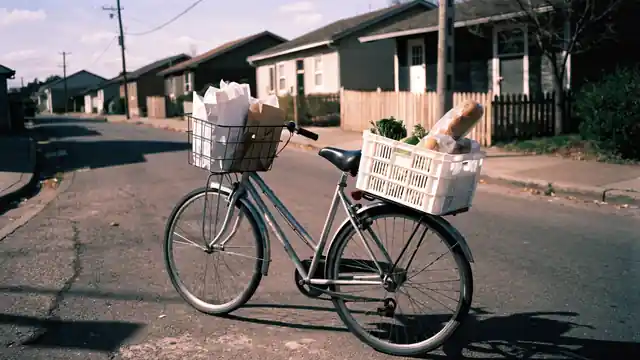
That is why it is worth narrowing the orderable range to what is always in stock, and flagging any shortfall IMMEDIATELY, before the customer sets off or the courier leaves. One message — "the yoghurt has run out, I've put in another one instead, is that all right?" — heads off most problems.
What never to do
- Don't put low-margin staples on a platform. You lose money on every unit — and those are exactly what people order a lot of.
- Don't start delivery without a minimum order value. Sending someone out for two cartons of milk costs several times what it brings.
- Don't promise a time you can't keep at the busiest hour. One missed collection does more damage than ten successful ones repair.
- Don't do it ad hoc. If delivery only happens when you have time, customers can't rely on it and won't order.
- Don't take your only shop assistant out. Delivery must never cost more than a closed till.
- Don't hide a difference between the platform price and the shop price. If they differ, say so — the customer will notice anyway.
- Don't start with the platform. That is the dearest route, and the least reversible way to learn.
Summary
- There are three routes, and you have to start with the cheapest: phone orders, collected in the shop.
- Commission is charged on the full price — if the margin is smaller, every unit is a loss.
- Put only the high-margin convenience range on a platform, not the whole shop.
- Your own delivery pays as a round: fixed day, fixed slot, minimum value.
- The real cost is the time spent making orders up, not the fuel.
- Stock accuracy matters far more with orders than in the shop — flag any shortfall at once.
Frequently asked questions
Frequently asked questions
Is it worth a small shop joining an ordering platform?
It is worth it if you have a range that still leaves a margin after commission — typically convenience items, drinks, snacks, home-made bakery and coffee. It isn't worth it with staples, tobacco or phone top-ups, because there the margin is smaller than the commission. Always try collection from the shop and your own round first: those are free, and they give your existing customers the same convenience.
What commission should I expect?
In the market it typically runs between 15 and 30 per cent, depending on whether the platform provides the courier or you do. The exact figure matters less than what it is charged on: the full selling price. So for the decision you always have to put your own products' margins beside it, rather than looking at the commission on its own.
Can I raise my prices on the platform?
Most platforms allow it and many shops do. Two things are worth bearing in mind: don't hide the difference, because customers compare; and don't raise it so far that you drop out of the comparison in the listing. The commonest solution is a moderate difference that covers part of the commission rather than all of it.
How long does it take to make up an order?
A ten-item order typically takes ten to fifteen minutes if you know the shop, and longer if you are serving customers at the same time. That is the real cost — far bigger than the fuel. It is worth measuring for two weeks: that shows your actual hourly rate on this service, and whether it fits into the busy hours.
Do I need a minimum order value?
Yes, and it is one of the most important rules. Without it, delivering small orders is guaranteed to lose money, and those are exactly the ones that will be most frequent. Set the minimum so that the time to make up and deliver fits inside the margin generated on that basket — and state it clearly before anyone orders.
What do I do if an ordered product has run out?
Say so at once, before the customer sets off or the courier arrives, and offer an alternative. That is the difference between a situation resolved and a disappointment. On a platform it matters especially, because a missing item shows up in ratings and in the ranking. In the longer run the answer is to narrow the orderable range to what is always in stock.
Should I employ my own courier?
Only if the order volume consistently fills their time. Until then, a round consolidated onto a fixed day and run by the existing team is a better solution — or a reliable local person you call on occasionally. A permanent courier is a fixed cost that runs even on a day when two orders came in.
How do I know whether it was worth it?
Look at three numbers after a month: how many orders came in, what the average basket was, and how much time went on it in total. Multiply the margin by the number of baskets, deduct the commission and the time — that is the real result. And look too at whether platform customers came into the shop: that is hard to measure, but often the biggest gain.
Do I need a separate webshop?
Typically not for a small shop. Maintaining your own webshop — stock, prices, photos — is more work than it brings in from an area of a few hundred people. A phone number and a messaging app give the same convenience for far less effort. A webshop comes into question once the order volume is no longer manageable by hand.
How will people find out they can order from me?
The same way they learn your opening hours: on the door, displayed at the counter, on your map listing and on your social page. The commonest mistake is that the service starts but only the people who happen to ask know about it. It is worth telling every customer once at the counter — in the first month that brings in most of the orders.
What should I do about a bad rating on the platform?
The same as with a public complaint: answer briefly and factually, say what happened and what you are doing differently. Don't argue. If the problem repeats — typically a missing item or a delay — then it isn't the reply that needs improving but the range, which should be narrowed, or the timing.
When should I say this isn't for me?
If after a month most orders consist of low-margin products, if making them up consistently falls in the busiest hours and damages the in-shop customers, or if delivery takes away your only person exactly when they are most needed. This too is worth writing down in advance: what situation would make you stop. Afterwards it is always harder to say.
Is there still a margin after commission? The report shows you.
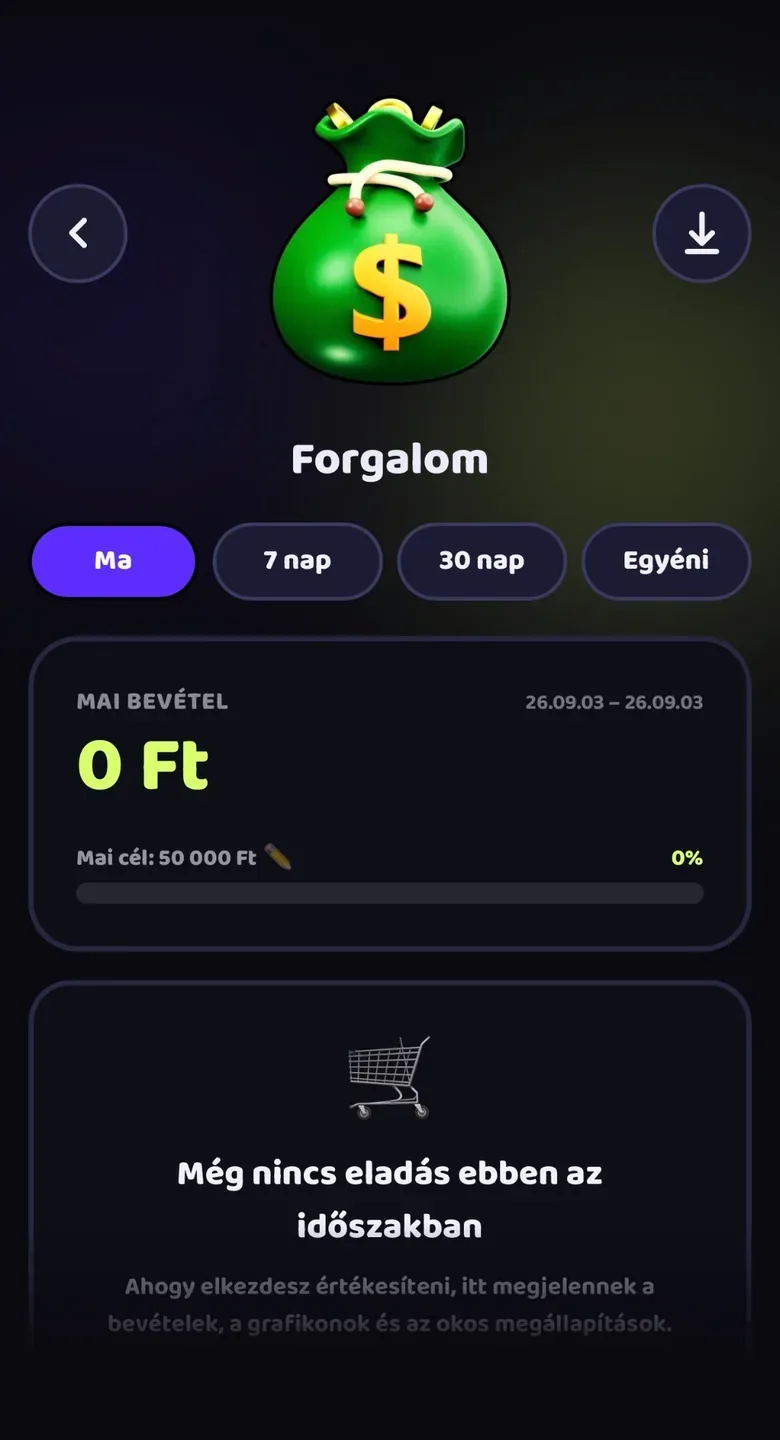
In Boltom App you see turnover and profit product by product. That is what tells you which lines can carry a platform's commission and which you would be giving away at a loss.
- Turnover AND profit per product — not just what sells a lot.
- The best-selling products each day: this is what the deliverable range is built from.
- If the connection drops, recording still works; it syncs by itself when you're back.
No card needed · 2 minutes