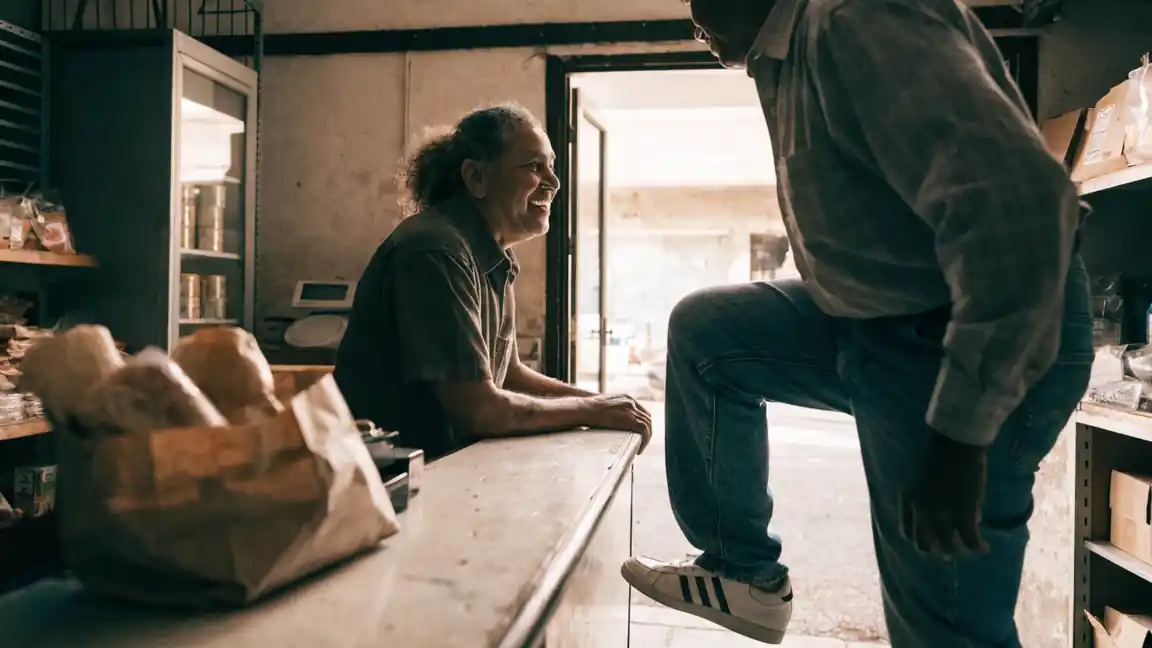
Every shopkeeper carries a list in their head. Not on paper: in their head. They know the lady from the corner comes every morning at half past seven for bread and milk, that the mechanic takes two bottles of beer on Saturdays, and that the little boy always buys the same chocolate with his Friday pocket money. That list is the shop's most valuable asset — and most shops do nothing deliberate with it.
Yet the numbers are clear. Winning a new customer always costs something: advertising, a promotion, time. Keeping an existing one typically costs nothing — or more precisely, it costs paying attention. And while the new customer buys once, the regular buys fifty or a hundred times a year. Lose one such person and you haven't lost a basket, you have lost a year.
The good news is that a small shop is unbeatable at this. A superstore cannot greet you by name, cannot put something aside, cannot bring something in because you asked. That isn't a disadvantage to overcome — it is the advantage itself, and it is exactly why the customer comes back. You just have to know what keeps them and what drives them away.
Why a returning customer is worth more
It is worth sitting down once and estimating what a regular brings in over a year. You don't need an exact figure: it is enough to look at what they typically spend at once and how often they come in a week. Multiply by fifty-two. This is where most shopkeepers get a shock — because a daily spend that feels small is already a sizeable annual figure, and there are ten or twenty such people in the shop.
And there is a second effect, harder to count but perhaps even more important: the regular talks about you. Not in a campaign, but over the fence, outside the school, at the bus stop. Much of a small shop's trade comes from that kind of recommendation — and recommendations always come from returning customers, never from one-off shoppers.
The three things that bring them back
If you ask people why they use a particular shop, the answers nearly always arrange themselves around three things. None is surprising — but all three are easy to get wrong.
| What brings them back | What it means in practice | What ruins it |
|---|---|---|
| What they came for is there | The few products they specifically come for are always in | Out of stock. Two or three wasted trips and they drop away |
| They are recognised | A greeting, a name, knowing their habits | Someone different at the counter every time, and nobody knowing them |
| It is predictable | The same hours, the same prices, the same quality | Erratic hours, a gap between the shelf price and the till |
| It is quick | They don't queue five minutes for a litre of milk | One till, one person, at the busiest hour |
| It feels good to walk in | Clean, tidy, they don't feel uncomfortable | Mess, a tense atmosphere, staff arguing with each other |
Notice that PRICE isn't on the list. Not because it doesn't matter — it does — but because a small shop's customer doesn't come to you for the price. Anyone looking for the cheapest goes to the superstore anyway, and you cannot keep them. Your regular comes for proximity, speed and familiarity; all the price has to do is not be offensively high.
The out-of-stock item that quietly costs you customers
This is the most important section, because most lost regulars are lost here — and the shopkeeper almost never finds out. The customer doesn't say anything, doesn't complain, doesn't take visible offence. They simply come in three times for their favourite yoghurt, don't find it three times, and the fourth time don't come in at all.
Out-of-stock items are insidious because they leave no trace. You see waste, because it is in your hand. You see theft, because it is missing from the stocktake. But nothing signals a stockout: nothing happens, there simply isn't a sale. That is why it has to be watched deliberately.
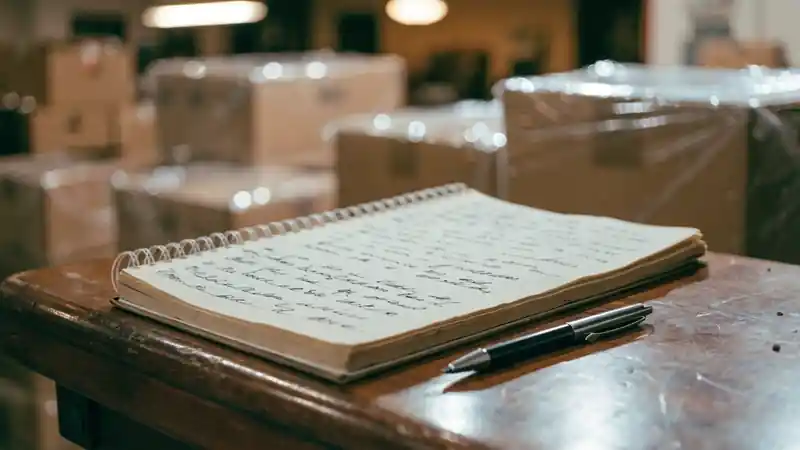
- Write it down when someone asks for something you haven't got. A notebook under the counter, three words: date, product, name. Two weeks reveals what is regularly missing.
- Don't replace a regularly exhausted product "next time". If something runs out every Wednesday, you aren't ordering properly — it isn't merely popular.
- Your regulars' few products matter more than the rest. Never let those ten or twenty items, the ones specific people come for, run out.
- If it has run out anyway, SAY when it will be back. "It comes on Thursday" is far better than "sorry, we're out" — they come back for the first, not necessarily for the second.
- If you know it matters to someone and it is running low, tell them in advance. That is the gesture they never forget.
The name and the habit: the strongest tool
Remembering a customer isn't a trick or a technique: it is a matter of attention. But you can still work on it deliberately, and you can pass it on to colleagues — because it doesn't come naturally to everyone.
- 11. A greeting that noticesYou don't need a name to start with. A "good morning" with your head up, not bent over the till, is enough. What most customers miss isn't being known — it is being seen.
- 22. The habit comes before the name"No bread today?" says more than a name. It says: I noticed what you usually take. It comes more naturally than using someone's name, and it makes nobody uncomfortable.
- 33. The name, if it comes up by itselfIf someone has introduced themselves, collected a parcel or comes in often, the name sticks by itself. Don't force it, and don't ask directly just so you can use it — that is what makes it feel artificial.
- 44. Pass it on to colleaguesThis is what most shops leave out. If only you know the customers, then half the time the shop runs with nobody recognising anyone. A short list, or a few sentences at the handover, changes a lot.
- 55. Ask if someone hasn't been in for a while"Haven't seen you in ages!" That isn't a reproach, it is what customers value most: that they were missed. Sometimes it turns out they were ill; sometimes that something in the shop put them off — and then there is something to fix.
Which loyalty scheme is worth it for a small shop
Sooner or later every shopkeeper wonders whether they need a loyalty card, a points scheme, some kind of system. The answer is: it depends — but far less often than the fashion suggests. Let us go through honestly what costs what and gives what.
| Scheme | What it gives | What it costs, what the risk is |
|---|---|---|
| Stamp card (e.g. tenth coffee) | Simple, immediately understandable, genuinely brings people back | Printing; cards get lost, but it works even so |
| Putting things aside by name | The strongest bond: they feel they are counted on | No money at all, only attention and a shelf behind the counter |
| Bringing in a requested product | A single gesture people mention for years | Risk: if they don't collect it, it stays with you — order small quantities |
| Rounding down for a regular | Small but noticeable gesture | Given inconsistently it can look unfair — have a rule for it |
| Points app | Gives you data about purchases | Monthly fee, setup, and the customer has to install it — rarely pays off in a small shop |
| Volume discount for regulars | Encourages a bigger basket | It comes out of your margin: work out first how much you can bear |
If you do decide on a card, one rule matters: make it simple and immediately understandable. "Ten purchases, then a free coffee" is clear to everybody. "One point per hundred spent, a hundred points redeemable" is not — the customer doesn't count that, and if they don't understand it, it doesn't motivate them either. A complicated scheme doesn't build loyalty, only paperwork.
What you can give for loyalty — without money
The reward for loyalty doesn't have to be a discount. In fact a discount is the most expensive form, because it comes straight out of your margin and after a while becomes an expectation. There are a few things that are often worth more to the customer and cost you nothing.
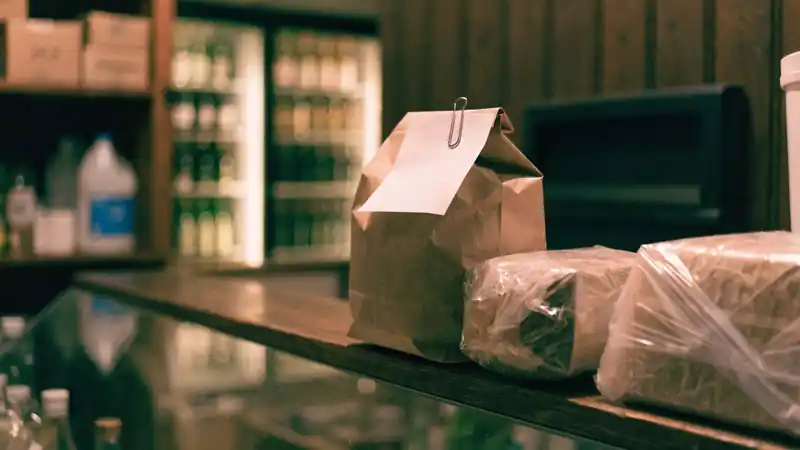
- Putting things aside: "I'll keep it, come whenever suits you before five." That gives the customer certainty and costs you nothing.
- A word in advance: if something they were after comes in, a message or a sentence at the counter.
- Order of service: if someone has come in for one loaf and there is a big shop behind them, both are often pleased if you let them through.
- Bringing things in: "I'll get some in if you'd like it." Ordering a single item is rarely a risk, and it binds someone for years.
- Patience: a regular's elderly relative who packs slowly doesn't feel awkward in your shop. That will never be the case in a superstore.
- Remembering: "You were after the lactose-free one last time — we have it now." That is enough to stop them going elsewhere.
When a regular disappears
A lost regular is the most expensive loss, and it nearly always happens quietly. They don't say anything, don't complain: they are simply no longer there. Most shopkeepers notice weeks later, and then only as "I haven't seen them lately".
- Notice it. If someone came twice a week and hasn't been in for a fortnight, that is data — even if only in your head.
- Don't dramatise it. Most of the time the reason is simple: illness, a holiday, a new job, a move.
- If they reappear, one sentence is enough: "Haven't seen you in ages!" If something was wrong, this is where it comes out.
- If you learn that something put them off, thank them for telling you and say what you are doing differently. Don't make excuses.
- If it is cheaper at the other shop, don't promise a price you cannot sustain. Say instead what you can offer that they don't get there.
What never to do
- Don't give discounts without a rule. If one customer gets one and another doesn't, with no visible reason, it looks unfair — and in a small shop that gets talked about fast.
- Don't introduce a scheme you cannot run the same way every day. A stamp card that works for six months is worse than none.
- Don't ask for data you don't need. A customer's phone number, birthday or address don't belong to the shopkeeper — ask only if you genuinely use them, and say what for.
- Don't talk about customers in front of each other. Whatever you say about one, the other will know you say about them too.
- Don't let a regular be an "exception" to the rules in a way others notice. Serving someone out of turn is fine; haggling over price in the open is not.
- Don't let loyalty be one-sided. Someone who has shopped with you for ten years may expect their favourite product to be on the shelf — that is your job, not theirs.
Summary
- A regular is worth a year of purchases — so retention always brings in more than winning a new customer.
- Three things keep them: what they came for is there; they are recognised; and what they get is predictable.
- The commonest, invisible cause of losing customers is the out-of-stock item. Keep a notebook of what people asked for and didn't get.
- The name and the remembered habit are worth more than any card — and cost nothing.
- If you introduce a scheme, make it simple, immediately understandable and workable every day.
- The reward for loyalty needn't be money: putting things aside, a word in advance and bringing things in are often worth more.
Frequently asked questions
Is it worth introducing a loyalty card in a small shop?
A simple stamp card often is, especially for one clearly defined product — coffee, bakery, a lunch menu. Complicated points collection rarely is: the customer doesn't count it, so it doesn't motivate them. The question is always whether you can run it the same way every day, on every shift. If not, don't start.
How much discount should I give a regular?
First work out your margin on the product you would discount — the discount comes straight out of it. Many shops find that even a few per cent is significant. That is why it is often better to give a service rather than money: putting things aside, bringing things in, a word in advance. Those cost nothing and are often worth more to the customer.
How do I remember customers if I'm bad with names?
Don't start with names, start with habits. "No bread today?" produces the same feeling and is far easier to retain. Names come by themselves in time. If you have colleagues, write down the few most important habits — not as data collection about customers, but so that a shift change doesn't start from scratch.
Can I ask for a customer's phone number so I can let them know?
You can if there is a genuine reason (an item set aside or ordered, for example), if you say what you will use it for, and if you only use it for that. Don't ask for what you don't need. In a small shop trust is the greatest asset: one unnecessarily collected detail does more harm than the messaging brings in.
What should I do if a regular defects to a cheaper shop?
Don't promise a price you cannot sustain — that ends in a forced retreat, which is worse. Look instead at what you can offer that the other cannot: proximity, setting things aside, bringing things in, speed. A small shop doesn't win on price. And ask them: it often turns out price wasn't the reason at all, but something you can fix.
How do I know who my regulars are without a card scheme?
The list is already in your head — it is just worth writing down. Sit down once and list the people who come in several times a week and what they typically take. Twenty or thirty names usually emerge. That list alone is enough to tell you which products must never run out.
How do I get my staff to pay attention to customers?
Show them, don't tell them. If they see you look up and say hello, and see what follows from it, they take it on. What can be taught: greeting with your head up, saying when an out-of-stock item will be back, and writing requests in the notebook. Those are three concrete things a new colleague can do from day one.
Should I let a regular buy on credit?
That is a business and a personal decision at once, and every shopkeeper handles it differently. What is worth considering: have a clear rule that applies to everybody the same way, and that you can state without making excuses. It is the case-by-case decision without a rule that eventually causes offence — not the refusal itself.
What if a customer asks for a product that isn't worth stocking?
Say so honestly and offer an alternative. "I can't keep that, because I can only order a whole case and it would go out of date — but there is something similar here." Customers understand that. What they don't understand is a request left unanswered: if they ask three times and nothing ever happens, they don't ask a fourth time, and slowly drift away.
How familiar should I be? Where is the line?
A good test is that the attention should be neither public nor a commentary. Noticing that someone hasn't been in for a while: good. Saying out loud in front of others what they usually buy: not. Be particularly careful with alcohol, medicines and quantities — never discuss those within earshot of others at the counter.
Do I need birthday discounts or similar?
In a small shop these usually create more paperwork than benefit, and they also ask the customer for data you don't otherwise need. If you want to make a gesture, spontaneous, spoken attention achieves the same thing: "I got this in, I thought of you." That needs no dates on record.
How long does it take for someone to become a regular?
Usually a few weeks, if they get the same thing every time: the stock is there, they are recognised, and it is quick. But the process can be broken by a single bad experience — most often by coming two or three times for something in vain. So the first step in building regulars isn't friendliness, it is stock.
It is the shelf that keeps a regular.
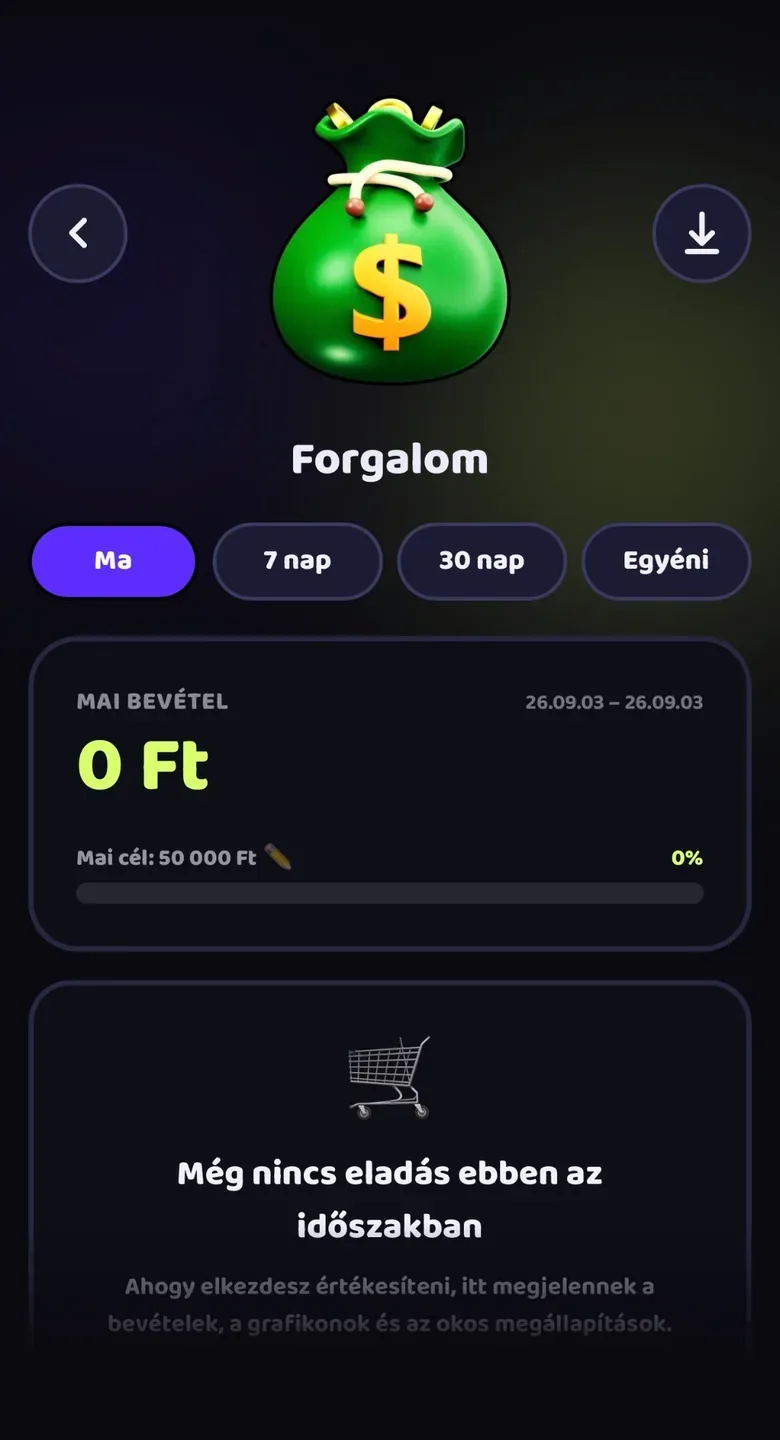
A returning customer stays because what they came for is there. In Boltom App you see what sells regularly — so the customer isn't the one telling you it has run out again.
- Sales per product: you can see what people really come back for, and what never moves.
- Whatever regularly runs out, you notice before the customer does.
- If the connection drops, recording still works — it syncs by itself when you're back.
No card needed · 2 minutes