Anyone opening a shop ends up, sooner or later, sitting over a wholesaler's list of several thousand lines and asking: what do I order from this? There are two temptations. One is to have a little of everything, so nobody leaves empty-handed. The other is to stock what you like yourself, or what you have seen in bigger shops. Both roads lead to the same place: full shelves, a lot of money tied up, and a few weeks later a row of products that don't move.
A starter range is not a matter of taste but an assumption about what the people who pass by will buy from you. It is worth putting that assumption together carefully, then checking it against real sales in the first weeks. This article helps you build a range from scratch — for a new shop, or when you relaunch an old one and want to start with a clean slate.
If your shop is already trading and you want to narrow the existing range towards one strong direction, that is covered in Specialisation for small shops. Fine-tuning your ordering is covered in Out of stock or overstocked?, daily quantities of fresh goods in How much fresh stock should you order for tomorrow?, and where to put things in Where should everything go? The question here is what should be on the shelf at all on day one.
The range starts from your customers
A small shop doesn't compete with the supermarket for the weekly shop. The people who come in are on their way somewhere, have run out of something, or value being close by more than the lowest price. So the first question for your range is not "what do convenience stores usually sell", but who walks past your door, when, and what they are missing at that moment.
- The morning round: people hurrying to work or school. Bread, pastries, milk, coffee, a bottle of water, a quick breakfast. Speed is everything for them — few lines, but always in stock.
- The daytime round: people at home, older customers, parents with small children, staff from nearby workplaces. Smaller shops, staples, vegetables, cold cuts, household odds and ends.
- The evening round: people heading home to pick up dinner or tomorrow's breakfast. Bread, eggs, dairy, drinks, something for dinner — and this is when sweets and snacks sell better too.
- The weekend: a different rhythm, a different basket. Fresher bakery goods, breakfast things, drinks for guests, and all the small "I forgot" items nobody wants to get in the car for.
- Special customers: a nearby school, office, building site, surgery or sports ground brings its own basket — snacks, drinks, a quick lunch. If there is one nearby, plan for it separately.
You don't have to guess this; you can observe it. Stand near the premises you have in mind at three times of day, and watch who passes and what they carry out of the other shops nearby. If you are relaunching an old shop, ask the neighbours and your first customers what they missed. A ten-minute chat with the hairdresser opposite sometimes tells you more about the area than a week of counting.
The category map: what you need and what it does
Before you choose a single product, decide on the categories. Every category should have a clear role in the shop. A footfall driver brings the customer in, even if it earns little. A margin earner provides the larger part of the profit. An impulse product lands in the basket at the counter or along the way. And a service gives people a reason to come to you in particular. The table's fourth column matters just as much: that is the risk — how perishable the goods are and how much money they tie up.
| Category | Why you need it | Typical role | Risk |
|---|---|---|---|
| Bread and bakery | The most common reason for a daily visit | Footfall driver | High: unsellable after a day, leftovers become waste |
| Milk, dairy, eggs | The backbone of daily shopping, morning and evening | Footfall driver | Medium: short shelf life, needs chilling |
| Water, soft drinks, juice | Bought on the go, sells fast, needed all year | Footfall driver and margin earner | Little spoilage, but takes up a lot of space and money |
| Store-cupboard: flour, sugar, oil, pasta, rice, tins | The "we've run out at home" purchase, customers expect it | Footfall driver | Low: keeps well, but can turn slowly |
| Fruit and vegetables | Makes the shop feel fresh, many come back for it | Footfall driver, sometimes margin earner | High: spoils fast, lots of sorting |
| Cold cuts, cheese, chilled ready meals | For breakfast, dinner, packed lunches | Margin earner | High: short shelf life, chilling |
| Sweets, snacks, crisps and nuts | Counter and evening purchases | Impulse and margin earner | Little spoilage, the many varieties are tempting |
| Coffee, tea, breakfast items | Regular, loyal purchases | Margin earner | Low, but tastes vary widely |
| Household, cleaning and toiletries | The "not worth going far for this" purchase | Margin earner | Little spoilage, slow turnover, expensive lines |
| Services: takeaway coffee, parcel collection, small repairs, top-ups | A reason to come to you, and buy something while there | Service | Little money tied up, but needs time and space |
The map also shows you where the risk lies. Bread, vegetables and chilled goods bring customers in, but that is where most waste comes from. Drinks and store-cupboard goods don't spoil, but they tie up a lot of money and space. In a well-built starter range, the perishable categories have few lines, ordered precisely, and in the long-life categories you don't need the big box of everything.
Daily basics and higher-margin lines: the balance
The daily basics — bread, milk, eggs, water, flour, sugar, oil — account for the most purchases but the lowest margin. Customers know the prices and compare them with the big shops, so you have little room to manoeuvre. If your range consisted only of these, you would have plenty of customers and hardly any money left. But if you leave them out, customers don't come in, and never reach the higher-margin products either.
The example below shows a small grocery on a housing estate, scaled to 100 units of turnover. The margin percentages are indicative, and your own buying and selling prices will show different ones — what matters is the structure: half of turnover is daily basics, but only about a third of the profit comes from there.
| Group | Turnover (out of 100 units) | Typical margin | Margin in units | Share of profit |
|---|---|---|---|---|
| Daily basics: bread, milk, eggs, store-cupboard | 50 units | 15% | 7.5 units | approx. 32% |
| Fresh: bakery, vegetables, cold cuts, cheese | 20 units | 25% | 5 units | approx. 21% |
| Drinks: water, soft drinks, juice, coffee | 15 units | 35% | 5.25 units | approx. 22% |
| Impulse: sweets, snacks, small items | 10 units | 40% | 4 units | approx. 17% |
| Household and toiletries | 5 units | 40% | 2 units | approx. 8% |
| Total | 100 units | approx. 24% blended | 23.75 units | 100% |
This does not mean the daily basics should be cut back. Quite the opposite: they must always be there, because they bring in the customer who picks up a drink or a chocolate bar as well. In a starter range, keep few lines of daily basics but never let them run out; in the higher-margin groups, offer enough choice for customers to find something, but not so much that your money sits on the shelf.
Few lines, good depth: starting quantities
A starter range comes down to two questions: how many different products (breadth), and how much of each (depth). Most new shops overdo the breadth and skimp on the depth: there are twelve kinds of yoghurt, two of each, and by Wednesday afternoon the customer sees half of them missing. In a small shop, reliability is worth more than choice. Customers remember that you always have bread and milk — not that they once saw twelve kinds of yoghurt.
You can start the quantities with a simple estimate: customers per day × the share of customers who buy that product. If the location suggests 200 customers a day and you reckon one in ten buys milk, that is 20 a day. If milk keeps for two or three days and deliveries come every other day, you need roughly two days' worth plus a little extra for the shelf and the fridge. For long-life goods the calculation is the same, only over a longer period: you need as many tins as will sell before the next order, not half a stockroom.
| Product group | Lines at the start | How much to hold | How to estimate |
|---|---|---|---|
| Bread, pastries | 2–4 breads, 3–5 pastries | One day's worth, the weekend separately | Customers × how many buy; go lower in the first week and watch when it sells out |
| Milk, dairy | 2–3 milks, 3–5 yoghurts and creams, 2–3 cheeses | Until the next delivery, with a small margin | The most common pack size and fat content first, the rest later |
| Eggs | 1–2 kinds | A few days' worth | Few kinds, but never run out |
| Water, soft drinks | 2–3 waters, 6–10 soft drinks and juices | One to two weeks' worth | More in small sizes, fewer in large ones |
| Store-cupboard | 1–2 lines of each staple | Two to four weeks' worth | The best-known pack size, the "need it at home" products |
| Sweets, snacks | 15–25 lines in total | One to two weeks' worth | Small, cheap, fast-selling lines, few big boxes |
| Household, toiletries | 1–2 lines per category | Two to four weeks' worth | Only urgent needs: washing-up liquid, paper, toothpaste, batteries |
When estimating, round cautiously and start with fewer lines. A missing line can be added a week later, once you can see what people ask for. A surplus line can only be cleared with a promotion or as waste — and until then, the money sits on the shelf. Fine-tuning your ordering rhythm is covered in detail in our article on running out of stock and overstocking.

What to leave out at the start
On the first order, most money is lost not on what is missing but on what is surplus. These items look harmless one by one, but together they tie up a large part of your starting capital and sit on the shelf for months.
- Long ranges within one category: eight laundry detergents, fifteen teas, twenty kinds of biscuit. Start with two or three and expand if people ask.
- Large pack sizes: family-size cleaning products, big sacks of flour, multi-litre packs. Small-shop customers buy small; they get the large packs at the supermarket.
- Seasonal items: holiday sweets, barbecue supplies, back-to-school goods. You need to know your customers first, or they will be left over at the end of the season.
- Expensive slow sellers: premium drinks, speciality imports, costly cosmetics. Even one item ties up a lot of money, and if it doesn't sell, there is nothing you can do with it.
- Short-dated specialities: fine cheeses, ready meals, exotic fruit. Only once you know who buys them.
- Things you like but nobody in the area has asked for. Your own favourite product is fine, but as a trial, in small quantities.
Impulse products around the counter
An impulse product is one nobody comes in for, but plenty of people take home: a chocolate bar, chewing gum, a small bag of nuts, a drink from the fridge. These usually carry a better margin, spoil little and fit into a small space. So in a starter range they deserve a considered, short list — not a whole run of shelving.
- Small and cheap: something the customer adds to the basket without thinking. If it is expensive or large, it is no longer impulse but a decision.
- Instantly recognisable: it must be clear at a glance what it is. Nobody reads labels at the counter.
- Suited to the time of day: in the morning gum and things to go with a pastry or small coffee; in the evening sweets, snacks and drinks.
- Few lines, changed often: five to eight well-chosen items sell more than a full stand where the eye gets lost.
- In the fridge too: one or two cold drinks near the counter often sell better than the same drinks in the big fridge at the back.
Exactly where they go, and what is worth keeping in the half-metre in front of the counter, is covered in our article on shelf layout. Here it is enough to say: at the start keep the impulse range short, and in the first weeks see which items sell. Anything that hasn't moved in two or three weeks, swap for something else — this category handles experimenting best of all.
Local and speciality products
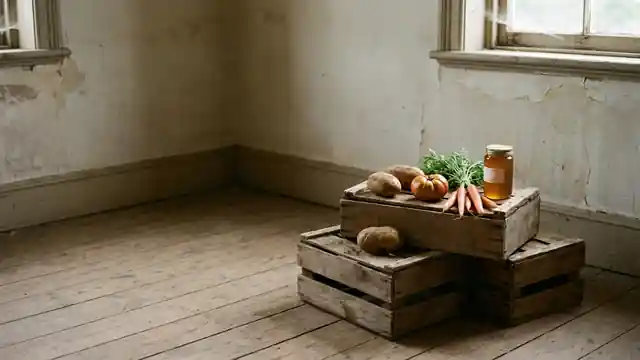
Most of your starter range will be the same as in any similar shop — and that is fine, it is what customers expect. But from the very start it is worth adding one or two things people in the area can only find at yours: a local producer's honey, eggs or jam, a nearby bakery's special loaf, home-made cakes, products favoured by communities living nearby. That gives someone a reason to come to you on purpose, and to tell others about it.
- Start small: one or two products from one producer, a few items. If they sell, expand; if not, you haven't lost much.
- Ask whether they will take back or exchange unsold goods, and how often they can deliver. With a small producer, this is often a matter of agreement.
- Make them visible: a small shelf or basket near the entrance, a handwritten sign saying where they come from. Local products sell when customers notice them.
- Work out the margin too: local products often cost more to buy in, but customers are also willing to pay more for them. If they earn nothing, they are an expensive decoration.
If after a few months it turns out that local products or a particular category are especially strong for you, that can become a whole direction. But that is already a question of specialisation — in the starter range it is enough to launch one or two such trials and watch what comes of them.
The first 4–8 weeks: measure and adjust
A starter range is never perfect, and it doesn't need to be. The first four to eight weeks are there to show which of your assumptions were right. For that you need to see three things product by product: what sells, what sits, and what goes to waste. If you don't record this, the opening weeks leave only impressions — and by impression, what sells is always what you like.
- What sells well: don't run out of these. Check whether the depth is enough, and whether you need a second variety or pack size.
- What sits: anything that has barely moved in two or three weeks, don't reorder. If it keeps, clear it with a promotion; if it is perishable, cut the order straight away.
- What goes to waste: record waste with a reason — expired, stale, damaged. The reason tells you whether you over-ordered, placed it badly or handled it poorly.
- What was asked for but missing: from the "asked for" notebook, take on the items that came up several times, in small quantities.
- What makes money: it isn't only about units. A product that sells a lot but earns little margin and one that sells less but earns well play very different roles.
Once a week, in a quiet quarter of an hour, go through these figures and make one or two decisions: what comes out, what goes in, what you order more or less of. Don't change everything at once, or you won't know what worked. For this you need records that capture sales and waste product by product; Boltom App, for example, records sales and waste with a reason alongside your existing till, and its reports can put two periods side by side, so the first and second four weeks are quick to compare.

„Your first range is not a decision but an assumption. Customers vote on it at the counter — your job is simply to count the votes.”
Common mistakes with a starter range
| Mistake | What it leads to | How to avoid it |
|---|---|---|
| A little of everything | A broad but shallow range: lots of things take turns running out, and customers can't rely on you | Few lines in good depth — expansion can wait until you have measured |
| Ordering from the catalogue, not from your customers | Goods on the shelf that nobody in the area is looking for | First observe who passes by and when, and build the categories from that |
| Daily basics only | Lots of customers, little profit — the turnover is there, the money isn't | Give every category a role, and make room for the higher-margin groups too |
| Too many perishable lines | High waste in the first weeks, when you don't yet know what sells | Start with few lines of fresh goods, and check leftovers daily |
| Large packs and expensive items in the first order | Starting capital sits on the shelf and doesn't move for months | Small packs, fast-moving lines; expensive items only on request, in small quantities |
| Not measuring the first weeks | The range changes on impressions, and the same mistakes remain | Record sales and waste product by product, and review them weekly |
Steps and checklist
- 11. Observe your customersAt three times of day, on at least three days, watch who passes the shop and what they carry out of the other shops nearby. Write down the morning, daytime, evening and weekend rounds, and what each is missing.
- 22. Draw the category mapDecide which categories you need, and give each a role: footfall driver, margin earner, impulse or service. Note the risk alongside — how perishable, how much money it ties up.
- 33. Set the balanceEstimate what share of turnover each group brings, and what margin it earns. Check where the profit comes from, and whether the higher-margin groups have enough space.
- 44. Choose the products and the quantitiesFew lines per category, in the best-known pack size. Estimate the quantities from customer numbers and the delivery rhythm, and round cautiously.
- 55. Cross out what can waitGo through the list and take out long ranges, large packs, seasonal items and expensive slow sellers. Add one or two local or speciality products in small quantities.
- 66. Measure and adjust weeklyIn the first four to eight weeks, record sales and waste product by product, keep the "asked for" notebook, and make one or two decisions each week about what stays, what goes and what comes in.
- It is written down who passes the shop in the morning, during the day, in the evening and at weekends.
- Every category has a role and a known risk.
- The daily basics — bread, milk, eggs, water, staples — are in place, with a plan so they don't run out.
- The higher-margin groups — drinks, sweets, snacks, household goods — have space too.
- There are few lines of perishable goods, and ordering follows the delivery rhythm.
- The first order contains no large packs, seasonal items or expensive slow sellers.
- There is a short impulse range around the counter and one or two local products on trial.
- You know how you will record sales and waste product by product, and which day each week you will review them.
Summary
- Build your starter range from your customers: who passes by, when, and what they are missing.
- Give every category a role — footfall driver, margin earner, impulse or service — and a known risk.
- Daily basics bring in customers, higher-margin groups bring in profit; you need both.
- Few lines, good depth: reliability is worth more than choice.
- At the start, leave out long ranges, large packs, seasonal items and expensive slow sellers.
- In the first four to eight weeks, measure product by product what sells, what sits and what goes to waste — and adjust.
Frequently asked questions
What should you sell in a small shop?
Whatever local residents and passers-by need quickly, on the way. The foundation is the daily basics: bread, bakery goods, milk, eggs, water, soft drinks and the main store-cupboard staples. Alongside them you need higher-margin categories, such as drinks, sweets, snacks, coffee and a few household items. Your customers decide the exact list, so before opening, watch who passes by, when, and what they carry.
How many products should a small shop stock at the start?
There is no single right number, because the size of the shop, the shelving and the customers override everything. A small grocery can typically start well with a few hundred lines, as long as the daily basics are always there. What matters more is having few lines per category, but enough depth in each. Start with fewer, and expand once the first weeks' sales show you what people want.
What are the best selling items in a convenience store?
In most small shops, bread and bakery goods, milk and dairy, eggs, water and soft drinks, and sweets and snacks sell most often. The order in your shop depends on the area: next to an office it may be drinks and quick lunches, on a housing estate breakfast and dinner items. But the best-selling product is not always the one that makes the most profit. That is why it is worth looking at margin as well as units.
How much money do you need for starting stock?
That depends on the size of the shop, the range, and how much you have to pay suppliers up front. Size your starting stock to last until the next order, not for months. You don't need the big box of every long-life product, and of perishables only as much as the delivery rhythm requires. Our articles on the cost of opening a shop and on the business plan cover start-up costs and reserves in detail.
What should the balance be between daily basics and higher-margin goods?
In a typical small grocery, roughly half of turnover may come from daily basics, but a much smaller share of profit. The exact balance depends on your customers and your prices. The aim is not to cut back the daily basics, because they bring customers in, but to make sure the higher-margin groups get enough space too. The reports from your first weeks will show you how this balance works out in your shop.
Is it worth selling fresh fruit and vegetables in a small shop?
Many customers come back for them, so it is often worth it, but this is one of the riskiest categories. Start with a few fast-moving lines — potatoes, onions, apples, bananas, tomatoes — and check the display daily. Record waste with a reason so you can see what it costs. If produce sells well and waste stays under control, you can expand gradually.
What shouldn't you sell in a new shop?
At the start, leave out long ranges within a category, large pack sizes, seasonal items and expensive slow sellers. The same goes for short-dated specialities, until you know who buys them. These are not products left out for good; they can simply wait until the first weeks' sales show whether there is demand. A missing product can be added later, but a surplus one ties up your money.
What are impulse products, and why do they matter?
They are small, cheap products nobody comes in for, but customers add to their basket without thinking, along the way or at the counter. Sweets, chewing gum, a small snack or a cold drink are typical. They usually carry a better margin and spoil little, so they add a lot to profit. At the start you need a short, well-chosen list of them, which you swap around in the first weeks based on what sells.
Is it worth selling local produce?
Yes, because it is one of the simplest ways to make your shop different from the rest. Local honey, eggs, jam or bakery goods give people a reason to come to you on purpose. Start small, agree deliveries and what happens to unsold goods with the producer, and make the products easy to see on the shelf. Work out the margin too, because local products often cost more to buy in.
How do I estimate how much of a product to order?
Start from your expected customers per day, and estimate what share of them buy that product. If you expect 200 customers a day and one in ten buys milk, that is 20 a day. Multiply that by the number of days between deliveries, and add a small margin. In the first weeks, adjust based on real sales, because the estimate is only a starting point.
When should I change my starter range?
In the first four to eight weeks, it is worth looking every week and making one or two small decisions. Anything that has barely moved in two or three weeks, don't reorder; anything that regularly runs out, increase the depth. Don't change everything at once, or you won't know what worked. Plan bigger changes, such as dropping a whole category or strengthening a new direction, only on several weeks of data.
How does Boltom App help with building a range?
You have to put the starter range together yourself; Boltom App doesn't place orders or track stock levels. What it does is help you see what is happening in the first weeks: alongside your existing till, it records sales, waste with a reason, and own use. Its reports show turnover and profit by product and by category, and can put two periods side by side. That way, adjusting the range is based on real sales, not impressions.
Say the product's name and it's there on the till.
Boltom App takes the work behind the counter off your hands. You find a product by looking at its photo or saying its name out loud — no codes, no scraps of paper. Whatever leaves the shelf or goes in the bin is recorded right there, not in a notebook. It works alongside your existing till, not instead of it.
- A quick code with a photo — or just say the product's name and the till finds it.
- Staff consumption in three taps, recorded under the person's name.
- Daily waste with its reason: expired, broken, unsellable — totalled up in money.
No card needed · 2 minutes