If you spent a day just watching from behind the counter what each person puts down in front of you, the story of a whole neighbourhood would take shape. At six in the morning someone on their way to work buys two rolls and a chocolate milk. At nine the elderly lady from next door takes half a loaf and a litre of milk. At noon a sandwich and a soft drink go out, at half past four a mum buys milk, yoghurt and a chocolate bar for her child, and at seven in the evening in comes someone who realised halfway through cooking that there's no onion at home.
These baskets look tiny, but together they make up the shop's turnover, and they say a lot about who lives in the area, how they live and what they need. If you understand what people buy from you and when, you know better what to put on the shelf, when two people should be at the counter, and what you must never let run out.
In this article we walk through a small shop's day, look at the missions customers come in with, see what a simple worked example shows, and explain how to look at the same thing in your own shop. One important note up front: the figures in this article are those of an example shop, not the results of a survey. They're there to show you the logic — your own shop's figures come from your own sales.
Small basket, many customers: what makes a small shop different?
People mostly go to a big store with a plan: once or twice a week, with a list, often by car and with a big trolley. They pop into a small shop on the way, often on foot, and only for what they need right now. That's why a small-shop purchase is short, the basket is small, and the customer's first question isn't how much it costs but whether you have it.
- Proximity. Most of a small shop's customers live or work nearby. They aren't comparing prices; they're saving time.
- Speed. Someone who comes in for one thing doesn't want to queue. In a small shop the length of the queue matters more than in a big store, because nobody waits five minutes for a litre of milk.
- Reliability. The customer comes because they know what they're looking for will be there. If there's no bread twice in a row, the third time they go elsewhere.
- The personal touch. In a small shop the customer is often a familiar face. They're greeted, people know what they usually buy, and sometimes something is even put aside for them.
This leads to one of the most important rules of a small shop: a good range isn't one that has everything, but one where the things needed for the customer's mission are always there. How to put together that range at the start is covered in the article What to sell in a small shop: building your starter range.
The five missions: why does the customer come in?
In retail people often talk about the "mission" of a shopping trip: the purpose with which the customer walks through the door. In a small shop five such missions come round again and again. Their share differs from shop to shop, but you'll recognise them almost everywhere.
| Mission | Typical basket | When it's typical | What the customer expects |
|---|---|---|---|
| Breakfast | Bread, pastries, milk, coffee, chocolate milk | From opening until 9 | Speed: fresh bakery goods, and no queue |
| Daytime top-up | Sandwich, soft drink, mineral water, fruit, one or two staples | Late morning and early afternoon | Convenience: a cold drink, a lunch you can grab |
| Evening meal | Cold cuts or meat, vegetables, pasta, sour cream, bread, a drink, something sweet | After work, between 4 and 7 pm | Completeness: a whole dinner should come together |
| "I forgot" | A single item: onion, eggs, sugar, butter, sour cream | Any time, especially while cooking | Reliability: what they're looking for should be there |
| Emergency product | Batteries, matches, toilet roll, light bulb, nappies, sticky tape | Unpredictably | That you have it at all — price comes second |
The most important column in the table is the last one. Each mission comes with a different expectation: the morning customer wants speed, the evening one completeness, and the one looking for an emergency product wants you to have it at all. If you know which mission is strongest in which hour, you also know what to focus on in that hour.
A day from behind the counter
Let's walk through an average weekday as it looks from behind the counter. The order is similar in many shops, but the times and the proportions depend on the area.
Morning: bread, milk, coffee — and hurry
In many small shops the morning is the busiest time of the day. Lots of people come in for a few things, and everyone is in a hurry: to work, to school, to the bus. The basket is small — two rolls, a milk, a coffee, a chocolate milk for the child — but the number of customers is high, and this is where it's decided whether someone gets into the habit of using the shop.
The morning customer finds two things hard to forgive: missing fresh bakery goods and a slow queue. If the rolls still aren't in the basket at half past six, or they have to wait five minutes for a coffee, the next day they may well buy elsewhere. So in the morning what matters most is that the bakery goods arrive on time, service is quick, and what's next to the counter fits breakfast: pastries, chocolate milk, fruit, a bar of chocolate.

During the day: lunch, pensioners and "just one thing"
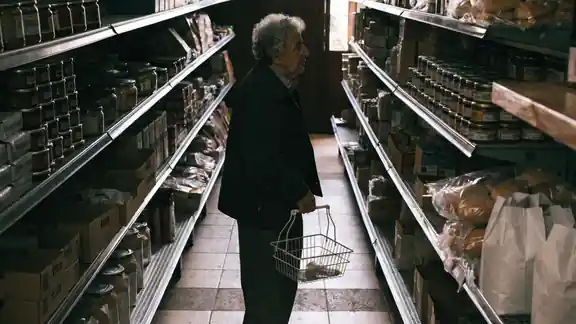
Between nine and three in the afternoon trade slows down, and the mix of customers changes. In the late morning in many places it's older people who come in: for a few things, but regularly, and they like a chat. At noon people working nearby pop in for a sandwich, a soft drink or a mineral water. In between come the "just one thing" customers, who've just run out of something at home.
The daytime customer is in less of a hurry and looks around more. They have time to notice a new product, a tasting or a seasonal shelf. If speed is the goal in the morning, during the day the shop can show what it has. This is also when the small items by the counter have their best chance: what to put there is covered in the article Products by the till: what to put next to the counter so impulse buys really pay.
Evening: dinner, "I forgot" and tomorrow's breakfast
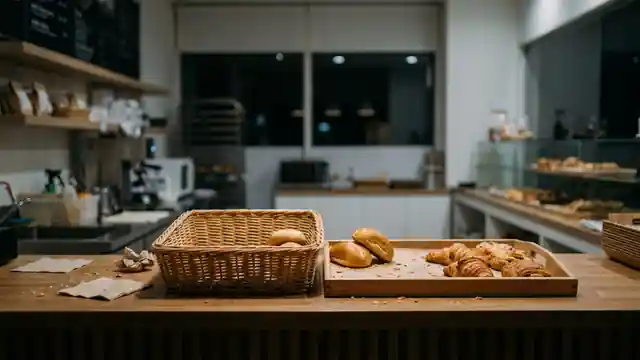
After work the shop fills up again, but differently from the morning. Fewer people come, but they take more: something for dinner, tomorrow's breakfast, something for the children and a little treat for themselves. The evening basket is usually the biggest basket of the weekday, and this is also when most "I forgot" purchases come in: the onion, the sour cream, the eggs that turn out to have run out halfway through cooking.
The evening customer expects a whole dinner to come together in the shop. If one of the ingredients is missing, you may lose not just that one item but the whole basket, because the customer would rather buy everything in one place. So in the evening it isn't the rolls that matter, but that the basics of dinner — cold cuts, vegetables, pasta, sour cream, bread — last until closing. How late it's worth staying open, and how much the last hour brings in, is covered in the article How late should your shop stay open? The marginal hour, Sundays and early starts.
Weekends, weather, match nights: when the basket changes
The weekday rhythm doesn't hold for every day. Many shopkeepers find that the basket changes with the calendar and the weather — and these changes are regular enough that you can prepare for them in advance.
- Weekends. The morning starts later, but the breakfast basket is bigger: fresh bakery goods for the whole family, cold cuts, eggs, fruit. In the afternoon, having guests round and day trips drive the shopping: soft drinks, snacks, cakes, disposable plates.
- Warm weather. Water, soft drinks, ice cream and fruit sell, and people look for chilled drinks far more than ones from the shelf. If the chiller is empty by the weekend, that takes a bite out of the week's best trade.
- Cold, rainy weather. Fewer people come, but those who do often take more, because they don't want to go out again. Hot drinks, soup ingredients and quick-to-make meals come to the fore.
- Match nights and holiday evenings. A big sporting event or the evening before a holiday sells drinks, crisps and snacks, often in a short time window, with queues.
- The start and end of the month. In many places the basket is bigger at the start of the month and smaller at the end, and more people look for cheaper pack sizes. This varies a lot from area to area, so check this one against your own figures too.
There's no need to turn this into a science. It's enough to note in a notebook or on the calendar what sold out on a hot weekend or a match night, and order for it next time. How to find the balance between running out and overstocking is covered in the article Out of stock or overstocked? Finding the balance in a small shop.
Emergency products: rarely bought, badly needed
There's a group of products that, going by the sales list, you'd call unnecessary: they go once or twice a week, bring in little profit and take up space. These are emergency products. Nobody plans to buy batteries until the remote dies, and nobody thinks about matches until the power goes off.
- Household emergencies: batteries, light bulbs, matches, candles, sticky tape, toilet roll, tissues.
- Emergencies with children: nappies, wet wipes, baby food, a small toy or colouring book for a long afternoon.
- Kitchen emergencies: salt, sugar, flour, oil, baking powder, yeast — whatever turns out to have run out halfway through cooking or baking.
- Guest emergencies: a bottle of wine, a box of chocolates, a packet of coffee, when someone turns up unexpectedly.
The value of an emergency product isn't in its own turnover but in what the customer thinks of the shop. Someone who found batteries at your place at nine in the evening will come back to you next time, and not only for batteries. A small shelf or a box near the counter with a few items of each is enough — but they should be there, and they shouldn't run out.
„A small shop isn't good because it stocks everything, but because whatever the customer came in for is there.”
What does the basket reveal? A day in figures
Let's look at an average weekday in an example shop, in neutral units. The figures are made up, but we chose them so that the logic works the same way in a real shop. On that day the shop has 240 purchases, daily turnover is 1,440 units, so the average basket is 1,440 / 240 = 6 units. We grouped the purchases by their mission.
| Mission | Purchases | Average basket | Turnover | Share of purchases | Share of turnover |
|---|---|---|---|---|---|
| Breakfast | 90 | 4 units | 360 units | 37.5% | 25% |
| Daytime top-up | 60 | 7 units | 420 units | 25% | 29% |
| Evening meal | 50 | 9 units | 450 units | 21% | 31% |
| "I forgot" | 30 | 3 units | 90 units | 12.5% | 6% |
| Emergency product and other | 10 | 12 units | 120 units | 4% | 8% |
| Total | 240 | 6 units | 1,440 units | 100% | 100% |
The table shows two things that are hard to spot from behind the counter. The first: the morning is the busiest, yet it doesn't bring in the most money. 37.5 per cent of customers come in the morning, but they bring in only a quarter of turnover. The evening dinner shop brings in 31 per cent of turnover with barely 21 per cent of customers. If you only watch when the shop is full, it's easy to put your attention on the wrong hour.
The second: the morning customer's value isn't in their basket but in the fact that they come every day. And because there are so many of them, the smallest change counts for a lot. If just one in six of the 90 morning customers, that is 15 people, takes a 1.50-unit pastry with their coffee, that's 15 × 1.50 = 22.50 units a day, and with 30 trading days 22.50 × 30 = 675 units of extra turnover a month. With a 30 per cent margin that's 675 × 0.30 = 202.50 units of profit — from a single well-placed tray.
How to look at your own shop's basket
The good news is that you don't need market research for this. What you need is already there in the sales you record at the counter, plus a notebook under the counter. One average week is enough for the picture to take shape.
- 11. Pick an average weekDon't look at a holiday week or the summer holiday period, but at an ordinary week when nothing unusual happened. If you have the data, compare it with another average week too, to see how stable the picture is.
- 22. Look at the best sellers by quantityList the 20 products sold most often by quantity, and next to them the 20 with the highest turnover. The two lists rarely match: the first is topped by everyday staples, the second by more expensive products. Both matter, but for different reasons.
- 33. Break it down by hourLook at turnover by hour, and if you can see it, the number of purchases too. Where there are many purchases and low turnover, you have quick, breakfast-type baskets; where there are few purchases but high turnover, you have big, evening-type baskets.
- 44. Look at it by categoryThe share of bakery goods, dairy, drinks, household items and snacks tells you which mission is strong in your shop. If you can also see profit by category, you know which mission brings in the money and which only the turnover.
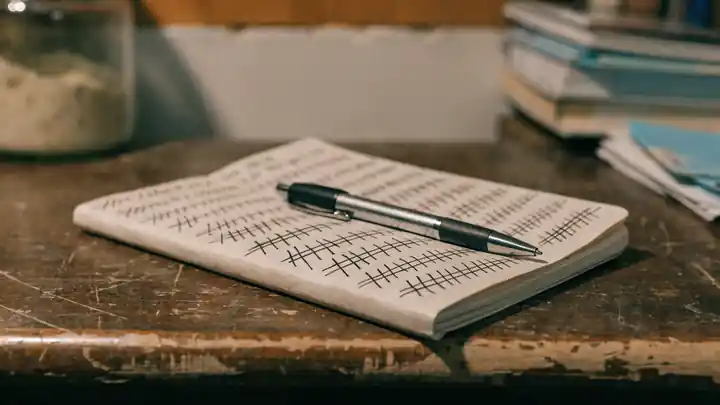
- 55. Write down what people ask for that you don't haveFor a week, keep a notebook under the counter and write down every product someone asked for that you didn't have. This is the one piece of data that doesn't show up in your sales — yet it's what tells you what you're losing.
- 66. Change one thing, then look againPick one or two changes: a missing emergency product, a morning pastry by the counter, a bigger order of an evening ingredient. A month later, compare the two periods and see what changed.
What to do with what you see
Data on its own doesn't sell anything. It's worth something when it turns into small decisions: what to put at the front, what to order more of, and who should be at the counter in which hour.
| If you see this… | …it's worth trying this |
|---|---|
| Many customers in the morning, but small baskets | Pastries, chocolate milk and fruit by the counter, and quick service so the queue doesn't put customers off |
| Big baskets in the evening, but one or two ingredients run out before closing | Make sure there's enough of the dinner basics — sour cream, onions, eggs, cold cuts — for the afternoon too, or keep some in reserve at the back |
| Lots of people ask for something you don't have | If a product appears in the notebook several times in a week, try it in a small quantity |
| The same products have topped the quantity list for months | These are the backbone of the shop: they should always be there, clearly visible, and never run out |
| A product barely sells, but people ask for it now and then | If it's an emergency product, keep a few; if not, think about whether it's worth its space |
| The basket at weekends is different from weekdays | A different order for the weekend, different products near the entrance, and more chilled drinks |
The biggest trap is that the data only shows what already sells. Whatever isn't on the shelf doesn't appear in your sales — that's why you need the notebook, and why it's worth trying a new product in a small quantity now and then. What should go by the entrance and what at the back is covered in the article Where should everything go? A shop layout that actually sells more.
Five myths about the small-shop basket
- "In a small shop only price matters." The small-shop customer is mostly not comparing prices but saving time. Price matters, of course, but in many shopkeepers' experience missing bread or a long queue loses a customer more often than a small price difference does.
- "What sells a lot brings in the money." Quantity and profit are two separate lists. Rolls sell every day but bring in little profit each; a better wine goes less often, but a single bottle can bring in more than a whole tray of rolls.
- "A good customer is one who buys a lot at once." The neighbour who pops in every morning for two rolls and a milk may leave more in the shop over a year than someone who occasionally comes with a big basket. What's more, they recommend you, they ask, and they come back.
- "A product that rarely sells is unnecessary." An emergency product rarely sells, but when it's needed, it's badly needed. If you once don't have batteries when they're needed, the customer remembers.
- "I know what people buy from me anyway." Maybe. But from behind the counter the busy hours are always the most visible, while the big baskets of the quiet hours and the products people asked for but you didn't have get lost. A week's data often brings a surprise.
Summary
- The small-shop customer mostly comes not for a big shop but on a specific mission: breakfast, a daytime top-up, the evening meal, "I forgot" or an emergency product.
- In the morning there are many customers and small baskets, in the evening fewer customers and bigger baskets; each mission comes with its own expectation: speed, convenience, completeness or reliability.
- At weekends, in warm or cold weather, on match nights and holiday evenings the basket changes — it's worth noting it down and ordering for it next time.
- Emergency products rarely sell, but running out of them loses customers; keep a few of each there at all times.
- In the example 240 purchases bring in 1,440 units of turnover with an average basket of 6 units; the morning accounts for 37.5 per cent of purchases, the evening for 31 per cent of turnover.
- A small change counts: if one in six morning customers takes a 1.50-unit pastry, that's 675 units of turnover a month, and with a 30 per cent margin 202.50 units of profit.
- You get to know your own basket from your own sales: by quantity, hour and category, plus a notebook of what people asked for that you didn't have.
Frequently asked questions
What do most people buy in a small shop?
In most small shops the everyday staples sell in the largest quantities: bread, pastries, milk, eggs, mineral water and soft drinks. People buy these every day or every other day, so they almost always sit at the top of the quantity list. The exact order differs from shop to shop and area to area, and you'll only learn it from your own sales. Besides quantity, it's worth looking at the lists by turnover and by profit too, because the three rarely match.
What is a shopping mission?
A mission is the purpose with which the customer walks into the shop: to buy breakfast, lunch, something for dinner, a forgotten item or something they need urgently. In retail people often think about shopping this way, because each mission comes with a different basket and a different expectation. In a small shop five missions come round most often: breakfast, the daytime top-up, the evening meal, "I forgot" and the emergency product. If you know which one is strong in which hour, you can match your range and your service to it.
How big is the average basket in a small shop?
That can't be said in general, because it varies a lot from shop to shop, area to area and hour to hour. Working it out, though, is simple: you divide turnover by the number of purchases. In the article's example, on a weekday 240 purchases bring in 1,440 units of turnover, so the average basket is 6 units, but only 4 units in the morning and 9 in the evening. That's why the hourly breakdown tells you more than a single daily average.
Why is the morning basket smaller than the evening one?
Because in the morning the customer is in a hurry and only buys what they need for that morning: bread, milk, coffee, a pastry. In the evening, though, they put together a whole dinner, often with tomorrow's breakfast too, so they take more products. In the article's example the morning basket is 4 units and the evening one 9. It also follows that speed matters most in the morning, and a complete range in the evening.
Which time of day brings in the most turnover?
That differs from shop to shop, and it isn't always the time of day that seems busiest. In the article's example the morning accounts for 37.5 per cent of purchases but only 25 per cent of turnover, while the evening dinner shop brings in 31 per cent of turnover with 21 per cent of purchases. How it works out in your shop you can see from turnover by hour. It's worth looking not at a single day but at a whole average week.
What are emergency products, and why should I stock them?
Emergency products are things people rarely buy but badly need when they do: batteries, matches, candles, light bulbs, toilet roll, nappies, salt or yeast. They sit at the bottom of the sales list, so it's easy to leave them out. The customer, though, remembers where they found batteries at nine in the evening, and goes there next time too, and not only for batteries. A few of each on a small shelf or near the counter is enough, but they should always be there.
How do I find out what customers buy from me?
The best source is your own sales: look at an average week's best sellers by quantity and by turnover, at turnover by hour and at the share of each category. For this you need to record sales product by product, not just as a total. Alongside that, keep a notebook under the counter for a week and write down what people asked for that you didn't have. Together the two show what missions your customers come to you with.
Why isn't it enough to look only at the best sellers?
Because the best-seller list only shows what's already on the shelf and selling. Whatever is missing doesn't appear in your sales, even though people may ask for it several times a week. Quantity also tells you nothing about profit: a product that sells a lot often brings in little profit. That's why it's worth looking at the lists by quantity, turnover and profit together, and noting the missing products separately.
How do I increase the basket value without being pushy?
The best way is to put a product that fits the mission in the customer's path: a pastry next to the coffee in the morning, a dessert or a bottle of wine near the dinner basics in the evening. You don't need to talk anyone into anything; it's enough for the product to be in the right place. In the article's example, if one in six morning customers takes a 1.50-unit pastry, that's 675 units of extra turnover a month. Products next to the counter are covered in detail in the article Products by the till.
Does the basket change at weekends and with the weather?
Yes, in many shopkeepers' experience fairly regularly. At weekends the morning starts later, but the family breakfast basket is bigger, and in the afternoon having guests round and day trips drive the shopping. In warm weather chilled drinks, water and ice cream sell better, in cold, rainy weather hot drinks and soup ingredients. It's worth noting what sold out on days like these, and ordering for it next time.
How often should I look at what people buy from me?
A thorough review two or three times a year is enough, for example before the summer and winter seasons. On top of that, it's worth glancing at the best sellers and turnover by hour every month, so you notice if something changes. A month after every change, compare the two periods. And the notebook of missing products is worth keeping under the counter all year round.
What should I do if customers often ask for something I don't have?
First, write it down every time, so you can see whether it really is frequent or only one or two customers asked. If a product appears in the notebook several times in a week, try it in a small quantity and watch whether it sells. If it sells, it can stay; if not, feel free to drop it, and note why. And be honest with the customer that you'll look into it, then tell them when it arrives — that attention is often worth more than the product itself.
Say the product's name and it's there on the till.
Boltom App takes the work behind the counter off your hands. You find a product by looking at its photo or saying its name out loud — no codes, no scraps of paper. Whatever leaves the shelf or goes in the bin is recorded right there, not in a notebook. It works alongside your existing till, not instead of it.
- A quick code with a photo — or just say the product's name and the till finds it.
- Staff consumption in three taps, recorded under the person's name.
- Daily waste with its reason: expired, broken, unsellable — totalled up in money.
No card needed · 2 minutes