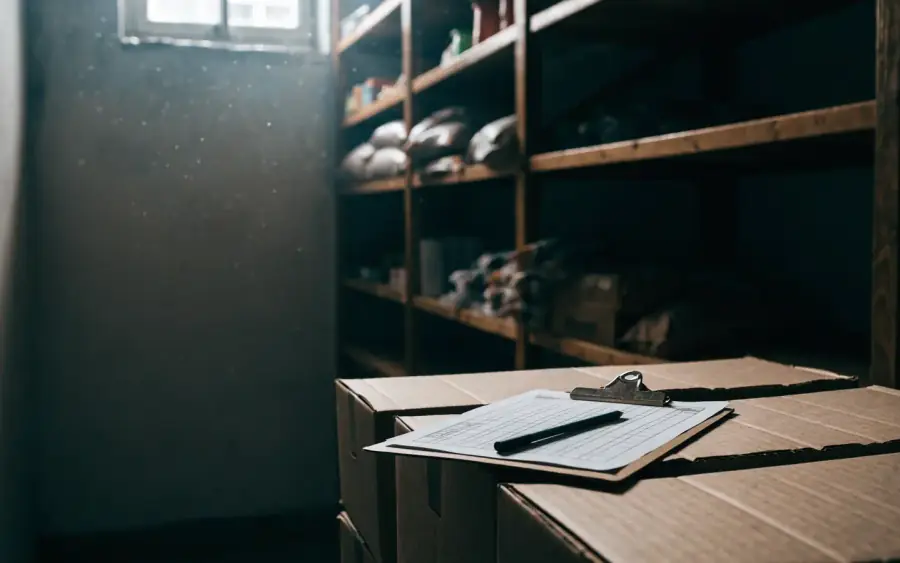
Most shopkeepers think of the year-end stocktake as an unpleasant duty to get out of the way somehow between the holidays. A long evening, tired people, handwritten sheets, and at the end a number nobody is quite sure they can trust.
Yet a stocktake can give you much more than that. It is the only time in the year when someone picks up every single product, and it turns out what is really on the shelves and in the storeroom. Whatever your records, notebook or spreadsheet say is only an assumption — the stocktake is the day you check that assumption against reality.
This article is about the practical method: when to count, what to prepare beforehand, how to lay out a count sheet, how to count, and what to do with the differences afterwards. At the end there's a checklist you can print. The accounting and legal questions — whether it's mandatory, by what deadline, at what value — are not settled by this article: clarify those with your accountant.

Why it's worth doing properly
Over a year, the stock on paper and the stock in reality almost always drift apart. Waste that nobody wrote down; a case of soft drinks the team drank; a delivery that held less than the delivery note said; a product rung up under the wrong code. None of these is a big deal on its own, but together over a year they can add up to a significant difference. The stocktake resets this: from then on you know again what you have.
A stocktake has a second benefit we talk about less: every product passes through your hands. That's when you notice the goods that haven't moved for months at the back of a shelf, the box forgotten in a corner of the storeroom, the items getting close to their date. This information is worth at least as much as the final total — it becomes next year's ordering and shelf layout.
When to count
Many shops count in the last days of the year or at the turn of their financial year, because that's when the accounts need the closing stock. Exactly which day counts for you is something your accountant will tell you — the practical question is which time within that is least disruptive.
| Timing | Advantage | Drawback | Who is it for? |
|---|---|---|---|
| After closing, in the evening | No need to close, no lost trade | Tired team, can run late into the night | Small floor area, few product lines |
| On a closed day, all day | Calm pace, daylight, time to recount | One day closed | Mid-sized shop with many lines |
| Early morning, before opening | Fresh team, the shop in its morning order | Opening time puts on the pressure | Bakery with a lot of fresh goods in the evening |
| Before the holiday rush | Less stock, faster counting | Doesn't coincide with the year-end date | Where your accountant accepts it |
| After the holiday rush | Depleted stock, less to count | Often when everyone is most tired | Where the year end is the reporting date |
Whatever time you choose: tell your suppliers in advance not to deliver on stocktake day, or ask for the delivery to arrive before the cut-off or after the count. If the bread has to come regardless, set it aside and only take it in after counting. Put a notice on the door in good time if the shop will be closed — a sign a week ahead spares your regulars a locked door.
Preparation: one to two weeks before
The secret of a good stocktake is that on the day, all that's left is counting. Everything that needs a decision — what counts as one unit, where opened packs go, which box is returns — has to be decided in advance. Whoever starts thinking in the middle of counting will be slow and make mistakes.
- Clear out expired and damaged goods, and record them as waste. Whatever you don't want to count has to disappear before the stocktake — recorded, not just thrown away.
- Try to sell down slow-moving stock. A small promotion in the weeks before means less to count and less money tied up.
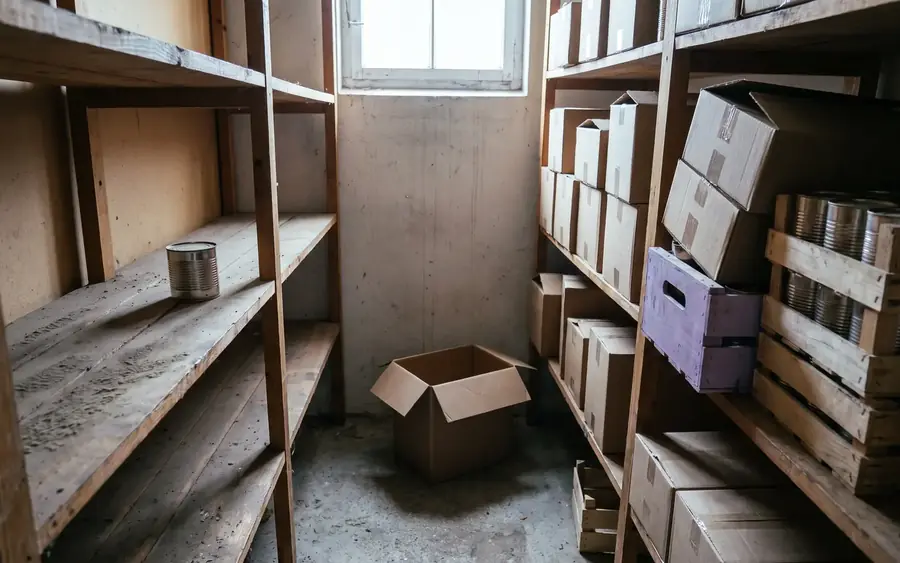
- Tidy the storeroom: the same product in one place, boxes with labels facing out, opened packs kept separate. In a messy storeroom counting takes twice as long.
- Divide the shop into numbered zones: by shelf run, by fridge, by storeroom shelf. Give each zone a small slip with its number, so nothing is missed and nothing ends up on a sheet twice.
- Prepare a count sheet for each zone. One sheet per zone — that way sheets can be handed out, and afterwards you can see which part is missing.
- Set aside and mark anything that isn't yours or isn't part of your stock: goods going back to a supplier, consignment stock, customer orders put aside but not yet paid for.
- Write down the number of the last delivery note you booked in and the time of the last sale. This lets you separate later what happened before the stocktake and what after.

Units and opened packs
The most common stocktake mistake isn't miscounting but the wrong unit. One person counts in cases, another in single items, a third takes a half-empty tray as a whole one. Decide in advance, and write on the count sheet which product is counted in which unit.
| Type of goods | Count it in | Opened pack | Example |
|---|---|---|---|
| Packaged items | Single items | The items left | 7 pots of yoghurt left from a tray: 7 items |
| Drinks stored in multipacks | Single items, not cases | Loose ones on a separate line | 3 full cases × 6 + 4 items = 22 items |
| Goods sold by weight | By weight, on the scale | Weigh it, don't estimate | Cold cuts, cheese, loose nuts |
| Bread and fresh goods | Single items, at cut-off | What can't be sold is waste | Record what's left in the evening before counting |
| Opened items for internal use | Not counted as stock | Mark it so it stays off the sheet | The opened pack of bags under the counter |
The count sheet: how to lay it out
A count sheet doesn't need to be complicated, but a few columns are essential. One sheet should belong to one zone, with room for a second count and a note. It's worth printing the product names and units in advance so the counter only has to fill in the quantity — but don't print the expected quantity on it.
| Zone | Product | Unit | Counted quantity | Second count | Note | Counted / Written by |
|---|---|---|---|---|---|---|
| 3 — drinks fridge | Mineral water 1.5 l | item | 46 | 46 | A. / B. | |
| 3 — drinks fridge | Orange juice 1 l | item | 13 | 12 | Recounted: 12 | A. / B. |
| 7 — storeroom, top shelf | Flour 1 kg | item | 38 | — | 1 bag damaged, set aside | C. / D. |
| 9 — shelf by the counter | Chocolate, small bar | item | 64 | 64 | High-value: counted by a second pair | A. / D. |
Team and roles
You can count alone, but in pairs it's far more accurate and surprisingly faster too. The person counting doesn't write and doesn't lose the thread; the person writing makes sure every product gets its turn. In a small shop two pairs are usually plenty.
- Counter: picks up the product, says the name and quantity out loud. Doesn't write, doesn't look at the sheet.
- Writer: records what they hear and makes sure every line is filled in. If something isn't on the sheet, they add a new line.
- Nobody counts their own zone. Whoever has filled that shelf all year will see the number in their head — that isn't distrust, it's human nature.
- High-value items — tobacco, spirits, coffee, sweets by the counter — are counted again by a second pair, independently.
- Have one coordinator — often you — who hands out and collects the sheets and settles disputed cases. They don't count; they keep an eye on things.
- Take a short break every two hours. A tired counter isn't slower, just less accurate.

Stocktake day, step by step
- 11. Cut-off at a fixed timeSay it out loud and write it down: from this minute, no sales and no receiving. Close the day on the till and note the time of the last receipt. Anything that moves after this has to be handled separately.
- 22. A short briefing for the teamTen minutes: which pair gets which zone, what the unit is for the tricky products, what to do with opened packs and damaged goods, and whom to ask with questions. A question settled here won't become an argument later.
- 33. Zone by zone, in numbered orderEach pair starts with its own sheets. Nobody jumps elsewhere before finishing a zone — a half-done shelf is the most common reason something is missed or appears twice.
- 44. Left to right, top to bottomThe same order on every shelf. If you always move the same way, nobody has to remember where they were, and you can carry on straight away after an interruption.
- 55. Mark each section once it's countedA slip or a tick on the zone slip: this section is done. If someone gets there later, they can see there's nothing left to do — and you can see what's still ahead.
- 66. Count blind, not from your recordsThe counter looks at the shelf, not at the sheet or a screen. Whatever they counted gets written down, even if it looks odd. You deal with odd numbers later, not now.
- 77. Sample recountsFrom every zone pick a few lines and have another pair recount them. If they match, the zone is fine. If not, it's worth recounting the whole zone — a mistake rarely stays on one line.
- 88. Collect and check the sheetsBefore anyone goes home, go through them: is there a sheet for every zone, is every line filled in, is it signed? A missing sheet takes two minutes to fix now; tomorrow it can't be fixed.
„On stocktake day you don't need to be clever. Every decision has to be made beforehand — on the day you just count, slowly and the same way, shelf after shelf.”
Afterwards: what to do with the differences
If you keep records — a spreadsheet or a program — after the stocktake you compare the counted quantity with the expected one. There will almost certainly be differences. Don't start with the total but with the biggest individual differences: one or two products often make up most of the gap, and they're where you have the best chance of finding a cause.
| Type of difference | Likely cause | What to check |
|---|---|---|
| Small shortage across many products | Unrecorded waste, staff consumption | Whether waste and consumption were logged during the year |
| Large shortage on one product | Receiving error or sale rung up under the wrong code | Delivery notes and sales of similar products |
| Surplus on one product | Rung up in place of a similar product | Whether a similar product next to it shows a shortage |
| Shortage on goods sold by weight | Weighing differences, slicing loss | The scales and how serving is done |
| Shortage on small, high-value items | Possible theft | Where the shelf is, visibility, whether it repeats |
| A whole zone is off | Zone missed or counted twice | The count sheets and zone slips |
We wrote about the causes of differences in more detail in our article on stock shrinkage: a shortage is typically made up of four things — staff consumption, waste, administrative error and theft — and each needs a different response. If waste and staff consumption were recorded during the year — for example in Boltom App, which records them at the till with a reason and a name — then part of the difference found at stocktake can be explained instead of remaining a mystery.
What price to value stock at
The counted quantity has to be turned into money at some price. For most small shops, purchase price is the usual practice, because it shows how much money is actually tied up on the shelves — the selling price shows the expected revenue, not the value of the stock. Which method is accepted in your case, and how to handle purchase prices that changed during the year, is for your accountant to decide.
Keeping records and goals for next year
Put the completed, signed count sheets in a folder and, if you can, photograph them too. If your accountant or you have a question later, this is where you can look it up. Then write down three things for yourself: which zone took longest, which product had the biggest difference, and what you'd do differently. That becomes the plan for next year's stocktake — and it often shows that a few product groups are worth counting monthly during the year too.
Checklist
Two weeks before
- Check with your accountant: which day, at what value, in what form they want the result.
- Choose the day and time of the stocktake, and tell the team.
- Tell suppliers not to deliver that day.
- Start selling down slow-moving stock.
- Put a notice on the door if the shop will be closed.
The day before
- Clear out expired and damaged goods and record them as waste.
- Tidy the storeroom and put up the zone slips.
- Print the count sheets by zone, with products and units, without expected quantities.
- Set aside and mark returns, consignment stock and customer orders put aside.
- Get pens, clipboards, a scale and a calculator ready.
On stocktake day
- Record the cut-off time, the last receipt and the last delivery note.
- Hold a ten-minute briefing assigning pairs and zones.
- Count zone by zone, left to right, top to bottom, blind.
- Have a second pair count the high-value items.
- Do sample recounts in every zone.
- Before anyone goes home, collect and check the sheets.
Afterwards
- Compare the counted quantities with your records and start with the biggest differences.
- Find a cause for every big difference before questioning anyone.
- Value the stock the way agreed with your accountant, and hand over the result.
- File and photograph the signed count sheets.
- Note what took long and what you'd do differently next year.
What not to do
- Don't count during opening hours unless you have to. Whatever sells during the count will be missing either from the stocktake or from sales.
- Don't accept deliveries on stocktake day. A half-unpacked pallet is the quickest way to make the figures not add up.
- Don't print the expected quantity on the count sheet. Whoever knows how many there should be will find exactly that.
- Don't have everyone count their own shelf. It isn't about honesty but about the fact that we see a familiar shelf with our memory.
- Don't estimate goods sold by weight. Weigh them — estimation is the weakest point of a stocktake.
- Don't start suspecting people based on the total. Find the cause of the difference first; most of the time it's admin.
- Don't throw the count sheets away as soon as you have the number. Your accountant can tell you exactly how long to keep them.
Summary
- The stocktake is the day you see reality instead of your records — it's worth doing properly.
- Pick a quiet day or count after closing, and have no deliveries that day.
- One to two weeks before: clear out, tidy the storeroom, number the zones, one count sheet per zone, units decided in advance.
- On the day: a fixed cut-off, counting in pairs, left to right and top to bottom, blind, with sample recounts.
- Afterwards, start with the big differences and find a cause for each.
- On legal and accounting questions — obligation, deadline, valuation, record keeping — your accountant has the final word.
Frequently asked questions
Is it enough to do a stocktake once a year?
Many shops need a full stocktake once a year, but that isn't enough to spot problems in time during the year. What you only see twelve months later is hard to fix. So alongside the full stocktake, it's worth counting the few dozen most expensive or most often mismatched products every month. How often the full stocktake has to be done is something your accountant can tell you.
Can you do a stocktake while the shop is open?
You can, but it's much harder to do accurately. Whatever sells or arrives during the count can easily appear twice or be missed. If you can't close, count the storeroom before opening, the shop floor zone by zone in the quietest hours, and note the exact counting time for each zone. That way you can adjust for sales afterwards, but it's more work than a closed stocktake.
How long does a small shop's stocktake take?
It depends mostly on the number of product lines and on preparation, not on floor area. In a well-prepared small shop two counting pairs typically finish in a few hours; with a messy storeroom and units not decided in advance, the same job can take all night. At your first stocktake, time each zone: next year that tells you exactly how much time and how many people you need. The quickest improvement is almost always tidying the storeroom beforehand.
What should I do with the difference?
Start with the biggest individual differences, not the total. Check the delivery notes, the sales of similar products, and whether there was waste or staff consumption that wasn't written down. A shortage on one product often sits next to a surplus on a similar one: in that case it was rung up under the wrong code. Whatever is still unexplained after all the checks is worth looking into further — our article on stock shrinkage helps with that.
Should I value stock at purchase price or selling price?
For most small shops, valuing at purchase price is the usual practice, because it shows how much money is actually in your stock. The selling price shows expected revenue, which includes your margin, so it inflates the value of the stock. Which method is accepted in your case, and what to do if the purchase price changed in the meantime, is for your accountant to decide. Ask in advance so you know what data to collect alongside the count sheets.
Do I need to tell my accountant in advance?
Yes, and well in advance. Your accountant can tell you which day the closing stock is needed for, at what value and in what form they want the result, and how long the count sheets have to be kept. If you only find this out after the stocktake, some data may be missing that can't be added afterwards. A short conversation two weeks before saves a lot of work later.
Can I do a stocktake on my own?
You can, especially in a very small shop, but it's slower and easier to make mistakes. If you count alone, dictate the numbers into a voice note on your phone, or count first and write afterwards shelf by shelf, so you don't have to look at the sheet in between. Count the high-value items twice, on separate occasions. If you can get just one helper for the day, that's worth more than any trick.
What should happen to expired and damaged goods?
Before the stocktake, clear them out and record them as waste so you don't count them as stock. Anything that turns up during the count, set aside, write it in the note column of the count sheet, and don't count it as sellable stock. If you don't record it anywhere, it shows up at stocktake as a plain shortage and you won't know what caused it. Waste is one of the most honest parts of a stocktake: it's visible, and it has an explanation.
How do I handle returns and consignment stock?
Before the stocktake, set them aside and mark them clearly so they don't get mixed into your own stock. Goods going back to a supplier are no longer yours, consignment stock typically never was, and a customer order put aside has already been sold. It's worth listing these on a separate sheet so your accountant can decide how to treat them. The point is that none of them ends up on the normal count sheet.
What do I do with opened packs?
Decide in advance and write it on the count sheet. From an opened multipack count the items left, weigh goods sold by weight, and don't count as stock anything opened for internal use — such as the bags under the counter. Most unit errors come from one person counting in cases and another in single items. If the unit is on the sheet, that mistake doesn't happen.
Do I need a barcode scanner or software for a stocktake?
Not necessarily, for a small shop's stocktake. A well-designed paper count sheet, numbered zones and counting in pairs give a reliable result. If you have a program that keeps stock levels, it helps with the comparison afterwards, but it doesn't take the counting off your hands, and the blind-count principle applies there too. The method matters more than the tool.
What if the unexplained shortage is still large after the stocktake?
First go through the big differences again and check that no zone was missed or counted twice. Then think about where recording was missing during the year: waste, staff consumption, receiving, returns. Never suspect anyone based on the total — most shortages are administrative in origin. If the unexplained part stays large, it's worth counting a few product groups monthly next year so you see in time where it arises.
Say the product's name and it's there on the till.
Boltom App takes the work behind the counter off your hands. You find a product by looking at its photo or saying its name out loud — no codes, no scraps of paper. Whatever leaves the shelf or goes in the bin is recorded right there, not in a notebook. It works alongside your existing till, not instead of it.
- A quick code with a photo — or just say the product's name and the till finds it.
- Staff consumption in three taps, recorded under the person's name.
- Daily waste with its reason: expired, broken, unsellable — totalled up in money.
No card needed · 2 minutes